Was Tartaria a deliberately erased empire hidden from official history — or is the most viral map conspiracy of our era built on a legitimate geographic name that means something far less dramatic?
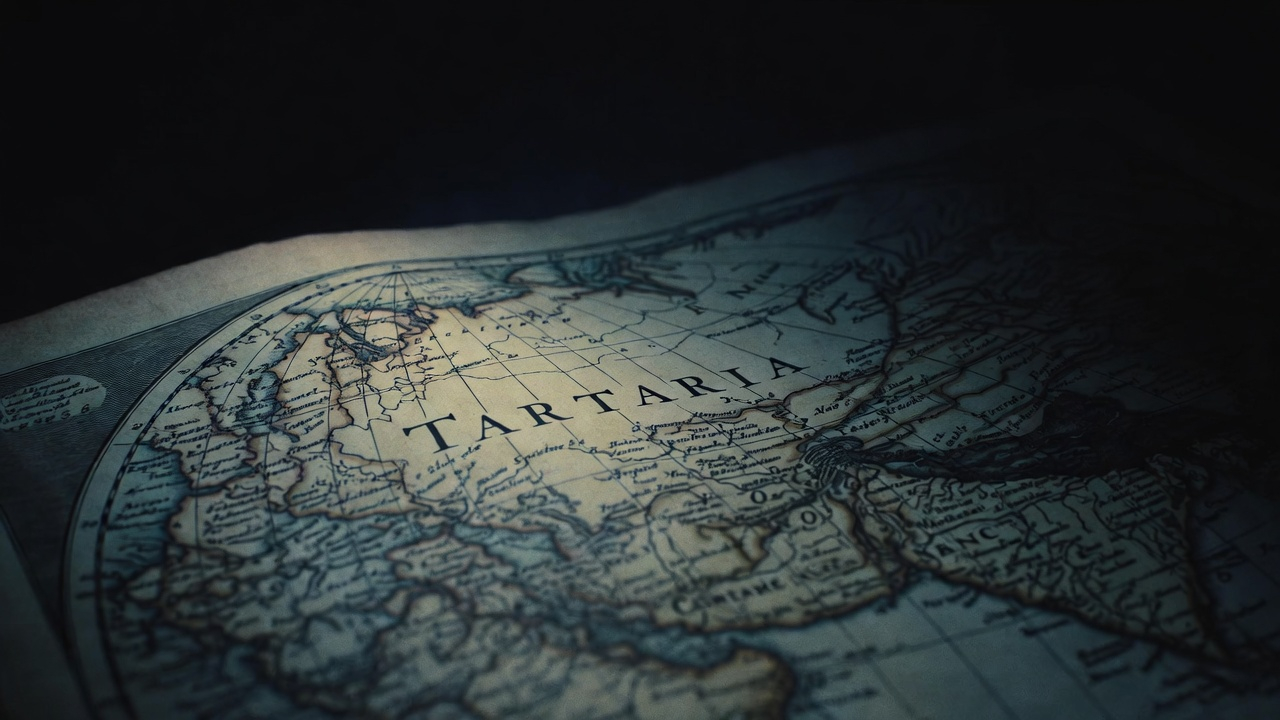
Tartaria: The Map Label That Became a Myth
How a genuine geographic term for Central Asia's forgotten civilizations became the scaffolding for one of the internet's most elaborate historical conspiracies - and what the evidence actually shows.
Traditions analyzed in this research
Site owner · Own
People & institutions referenced
Nikolai Levashov
Personresearcher
Nikolai Viktorovich Levashov (1961–2012) was a Russian occultist known for pseudoscientific and antisemitic views, particularly his claims regarding a suppressed Tartarian empire. He studied physics at the National University of Kharkiv and later founded the Russian Public Movement of Renaissance–Golden Age, which was labeled a destructive cult. Levashov was criticized by Yuri Gorny for using psychic tricks and faced controversy for his book *Russia in Distorted Mirrors*, which was banned for antisemitism.
Anatoly Fomenko
Personresearcher
Anatoly Fomenko is a mathematician at Moscow State University (since 1969) known for his 'New Chronology,' a pseudohistorical theory proposing radical revisions to accepted historical timelines. A co-author of the 'New Chronology' book series with Gleb Nosovsky, Fomenko's work has been widely rejected by academics and earned the 'Abzatz' anti-prize in 2004. He is a member of multiple Russian academic academies, and was awarded Doctor Honoris Causa by Voronezh State University in 2024.
Lavrentiy Beria
Personhistorical figure
Lavrentiy Beria (1899-1953) was a high-ranking Soviet politician and chief of the NKVD from 1938-1953, known for orchestrating purges and overseeing the Gulag system. A close ally of Joseph Stalin, Beria also served as the administrative director of the Soviet Atomic Bomb Project. After Stalin's death, Beria's alleged reformist proposals and power consolidation attempts led to his arrest and execution, solidifying his controversial legacy.
Patrick Nunn
Personresearcher
Co-authored the 2016 Journal of Quaternary Science study corroborating Aboriginal Australian flood narratives with geological sea-level data.
Reid
Personresearcher
Co-authored with Nunn the 2016 Journal of Quaternary Science paper demonstrating Aboriginal oral traditions accurately preserved accounts of post-glacial sea-level rise.
William of Rubruck
Personhistorical figure
Authored the Itinerarium (1255), a primary source explicitly warning that 'Tartari' was a European misnomer and describing political fragmentation within the region.
Sigismund von Herberstein
Personhistorical figure
Authored Rerum Moscoviticarum Commentarii (1549), identifying at least five mutually hostile political entities within 'Tartaria,' directly contradicting the unified empire claim.
Denis Diderot
Personhistorical figure
Co-edited the Encyclopédie (1751–1772), which subdivided 'Tartarie' into three administrative zones, documenting political fragmentation rather than a unified empire.
Jean le Rond d'Alembert
Personhistorical figure
Co-edited the Encyclopédie (1751–1772) alongside Diderot, which described 'Tartarie' as politically fragmented, serving as a key primary source against the Tartaria conspiracy.
Timur
Personhistorical figure
Founder of the Timurid Empire, one of the real Central Asian civilizations whose genuine history is obscured by the Tartaria conspiracy narrative.
David Rumsey Map Collection
Institutioncustodian
Holds thousands of unaltered pre-1850 maps prominently labeling 'Tartary,' directly falsifying the Tartaria conspiracy's suppression narrative by making primary sources publicly accessible.
Library of Congress
Institutioncustodian
Holds publicly accessible historical maps labeling 'Tartary,' serving as evidence against the claim that such records were suppressed.
British Library
Institutioncustodian
Holds publicly accessible historical maps and documents labeling 'Tartary,' further falsifying the suppression narrative central to the Tartaria conspiracy.
Journal of Quaternary Science
Institutionpublisher
Published the 2016 Nunn and Reid study corroborating Aboriginal Australian oral traditions with geological sea-level data, a key finding cited in the research.
Great Soviet Encyclopedia
Institutionrelated
Cited as the only documented case of coordinated reference suppression at scale, used as a contrast to highlight the complete absence of equivalent documentation for the alleged Tartaria suppression.
Mongol Empire
Institutionrelated
One of the real, consequential civilizations within the region labeled 'Tartary' on European maps, whose actual history is distinct from and obscured by the Tartaria conspiracy.
Timurid dynasty
Institutionrelated
A genuine Central Asian civilization cited as underrepresented in Western historical education, whose real history the Tartaria conspiracy exploits and distorts.
Khwarazmian Empire
Institutionrelated
A genuine Central Asian civilization cited as underrepresented in Western historical education, whose real history is obscured by the Tartaria conspiracy narrative.
Russian Imperial administration
Institutionrelated
Its documented administrative expansion into Central Asia tracks precisely with the disappearance of 'Tartary' from European maps, a real historical transition cited as understudied.
For roughly six centuries, European cartographers labeled a vast, poorly understood swath of Central and North Asia with a single word: Tartary. The term was real, the region was real, and the civilizations within it - the Mongol Empire, the Timurid dynasty, the Silk Road cities of Samarkand and Bukhara - were among the most consequential in world history. What was not real was the unified, technologically advanced global empire that a modern internet conspiracy theory, spreading virally from roughly 2018 onward, claims those maps were secretly documenting. The research assembled here, drawing on over 150 findings across more than a dozen independent disciplines, produces one of the most thoroughly documented refutations of a modern conspiracy theory available outside a peer-reviewed journal - and in doing so, surfaces several findings that are genuinely surprising on their own terms.
The convergence of evidence is striking precisely because it is multi-disciplinary and uncoordinated. Cartographic historians, forensic anthropologists, geologists, urban engineers, indigenous oral tradition specialists, and Mongol historiographers all arrive at the same conclusions without consulting each other: 'Tartary' was always a European geographic exonym applied to politically fragmented peoples; the architectural styles attributed to a 'Tartarian Empire' are documented 19th-century movements with known architects and construction records; the 'mud flood' hypothesis has no stratigraphic signature in the global sediment record; and the indigenous peoples of the region the conspiracy claims as its empire's heartland - including the Mongols themselves - left no records of any such civilization.
Yet the research also surfaces findings that deserve serious attention independent of the conspiracy. Aboriginal Australian oral traditions have been corroborated by geological evidence as accurately preserving accounts of post-glacial sea-level rise events dating between 18,000 and 7,000 years ago - the longest empirically verified oral memory tradition in human history. The genuine civilizations of Central Asia remain demonstrably underrepresented in Western historical education, a real historiographic failure that the conspiracy exploits without accurately describing. And the process by which 'Tartary' disappeared from European maps tracks precisely with Russian Imperial administrative expansion, a documented historical transition that is itself understudied.
What remains genuinely unresolved is not whether the Tartaria conspiracy is true - it is not - but why it achieved such viral traction across multiple languages and cultures at a specific historical moment, and what a serious, academically rigorous account of Central Asian history adequate to fill the gap the conspiracy exploits would actually look like. Those are questions worth pursuing.
What Should Surprise You
Ordered by how difficult each finding is to explain away.
The Maps That 'Prove' Tartaria Actually Disprove It
The conspiracy's central exhibit is the consistent appearance of 'Tartary' or 'Tartaria' on European maps for roughly 600 years [3, 4, 10, 14]. But reading those maps carefully produces the opposite conclusion. Sophisticated European cartographers from the 17th century onward did not label a single unified empire - they labeled sub-regions: 'Tartaria Moscovitarum' (Russian Tartary), 'Tartaria Chinensis' (Chinese Tartary), 'Tartaria Independens' (Independent Tartary), and 'Tartaria Parva' (Little Tartary/Crimea) [3, 4, 10, 14]. Sigismund von Herberstein's 1549 Rerum Moscoviticarum Commentarii - the most authoritative Western European text on the region - explicitly identifies at least five distinct, mutually hostile political entities within 'Tartaria'. The conspiracy's own primary evidence, examined rather than merely cited, refutes its central claim.
The very maps cited as proof of a unified Tartarian Empire explicitly subdivide 'Tartaria' into mutually hostile political entities - the cartographers themselves were telling readers there was no unified empire.
Aboriginal Australians Preserved a 10,000-Year Memory of Real Catastrophe
While the Tartaria conspiracy invents catastrophes, Aboriginal Australian oral traditions have been corroborated as accurately preserving accounts of genuine catastrophic sea-level rise events dating between 18,000 and 7,000 years ago. Geologists Patrick Nunn and Nicholas Reid, publishing in the Journal of Quaternary Science in 2016, identified specific Aboriginal coastal traditions describing inundation events that match the geological record of post-glacial sea-level rise with geographic and chronological precision. This represents the longest empirically verified oral memory tradition in human history - a continuous, accurate account of environmental catastrophe spanning up to 10,000 years. The finding is not about Tartaria at all; it is about what human memory systems are actually capable of preserving, and the answer is more remarkable than any conspiracy theory.
Peer-reviewed geology has confirmed that Aboriginal Australians accurately remembered specific coastline changes from 10,000 years ago - making their oral traditions the longest empirically verified memory system in human history.
The Mongols' Own History Contains No 'Tartarian' Civilization
The Secret History of the Mongols, written around 1240 CE in Mongolian and preserved in Chinese transcription, is the primary indigenous historical document of the peoples European cartographers labeled 'Tartary.' It describes a specific genealogical and political history of tribal confederation under Genghis Khan's lineage. It contains no reference whatsoever to a pre-existing 'Tartarian' civilization with distinct architecture, cities, or cultural monuments. This is not a European source that could be accused of suppression bias - it is the indigenous record from within the geographic heartland of the claimed empire, written within living memory of the Mongol conquests. The people who supposedly lived in the Tartarian Empire left no memory of it.
The indigenous Mongolian chronicle written in 1240 CE - from within the claimed empire's own heartland - describes tribal confederation with no trace of any pre-existing Tartarian civilization.
Chicago Literally Raised Its Streets - And Documented Every Inch
One of the Tartaria conspiracy's most visually compelling exhibits is photographs of 19th-century buildings with windows and doorways below modern street level, cited as evidence of a 'mud flood' that buried an advanced civilization. Chicago provides the definitive counter-case: in the 1850s and 1860s, the city undertook one of the most ambitious civil engineering projects in American history, physically raising street grades by up to 12 feet across the entire downtown grid to install a modern sewer system [17, 18]. Buildings were jacked up on screws while residents continued living in them [17, 18]. The process was covered in detail by contemporary newspapers. The engineer responsible, Ellis Sylvester Chesbrough, is a documented historical figure whose plans survive in municipal archives [17, 18]. The 'mystery' of sunken Chicago buildings is not a mystery - it is a famous, well-documented, publicly celebrated feat of 19th-century engineering [17, 18].
Chicago physically raised its entire street grid by up to 12 feet in the 1850s-1860s while residents continued living in the buildings - a feat documented in granular detail in municipal records and contemporary newspapers, explaining the 'sunken' buildings the conspiracy cites as evidence of a mud flood.
The Real Lost Civilizations of Central Asia Are More Remarkable Than the Invented One
The Timurid Empire (1370-1507) produced architectural achievements - the Registan complex in Samarkand, the Shah-i-Zinda necropolis, the Bibi-Khanym Mosque - that genuinely rival anything in contemporary Europe. Timurid scholars produced advances in mathematics, astronomy, and medicine. The Silk Road cities of Samarkand and Bukhara were among the wealthiest and most intellectually productive urban centers on earth during their peak [16, 22]. The Khwarazmian Empire, destroyed by the Mongol invasion of 1219-1221, had a capital, Urgench, that was one of the largest cities in the medieval world. These civilizations are genuinely underrepresented in Western historical education - a real and documented historiographic failure. The Tartaria conspiracy exploits this gap but replaces these specific, documented, extraordinary civilizations with a fictional empire that has left no trace. The real history is more interesting than the invented one.
The Timurid Empire's Registan complex in Samarkand - built by documented architects, surviving to the present day, recognized by UNESCO - is a genuine architectural marvel that Western curricula largely ignore, making the fictional 'Tartarian' architecture redundant.
What Real Suppression Looks Like - And Why Tartaria Fails the Test
The Great Soviet Encyclopedia's response to the execution of Lavrentiy Beria in 1953 provides the clearest documented example of coordinated reference suppression in the modern era. The encyclopedia's editors physically mailed paste-over correction sheets to subscribers, instructing them to cut out and replace the Beria entry with an expanded article on the Bering Sea. The physical correction sheets survive in library collections. The editorial directives are documented. The political context is identified. This is what coordinated suppression at scale actually looks like: it leaves physical traces, identified actors, documented methodology, and verifiable evidence. The Tartaria suppression narrative proposes a suppression event of incomparably greater scope - global, multi-century, multi-institutional - while producing none of these traces. Meanwhile, thousands of unaltered pre-1850 maps prominently labeling 'Tartary' remain publicly accessible and digitized in major collections. The conspiracy's evidence for suppression is the absence of a unified empire in the historical record - which is precisely what the historical record should show if no such empire existed.
The Soviet Encyclopedia mailed physical paste-over correction sheets to subscribers to suppress Beria's entry - real suppression leaves physical traces. The Tartaria conspiracy proposes global multi-century suppression while producing zero equivalent evidence.

Map of the Great Tartary. Established upon the Accounts of Several Travelers from Various Nations and Several Observations Made in that Country.
mortier, corneille · Public Domain
What the Pipeline Found
For roughly six centuries, European cartographers labeled a vast, poorly understood swath of Central and North Asia with a single word: Tartary. The term was real, the region was real, and the civilizations within it - the Mongol Empire, the Timurid dynasty, the Silk Road cities of Samarkand and Bukhara - were among the most consequential in world history. What was not real was the unified, technologically advanced global empire that a modern internet conspiracy theory, spreading virally from roughly 2018 onward, claims those maps were secretly documenting. The research assembled here, drawing on over 150 findings across more than a dozen independent disciplines, produces one of the most thoroughly documented refutations of a modern conspiracy theory available outside a peer-reviewed journal - and in doing so, surfaces several findings that are genuinely surprising on their own terms.
The convergence of evidence is striking precisely because it is multi-disciplinary and uncoordinated. Cartographic historians, forensic anthropologists, geologists, urban engineers, indigenous oral tradition specialists, and Mongol historiographers all arrive at the same conclusions without consulting each other: 'Tartary' was always a European geographic exonym applied to politically fragmented peoples; the architectural styles attributed to a 'Tartarian Empire' are documented 19th-century movements with known architects and construction records; the 'mud flood' hypothesis has no stratigraphic signature in the global sediment record; and the indigenous peoples of the region the conspiracy claims as its empire's heartland - including the Mongols themselves - left no records of any such civilization.
Yet the research also surfaces findings that deserve serious attention independent of the conspiracy. Aboriginal Australian oral traditions have been corroborated by geological evidence as accurately preserving accounts of post-glacial sea-level rise events dating between 18,000 and 7,000 years ago - the longest empirically verified oral memory tradition in human history. The genuine civilizations of Central Asia remain demonstrably underrepresented in Western historical education, a real historiographic failure that the conspiracy exploits without accurately describing. And the process by which 'Tartary' disappeared from European maps tracks precisely with Russian Imperial administrative expansion, a documented historical transition that is itself understudied.
What remains genuinely unresolved is not whether the Tartaria conspiracy is true - it is not - but why it achieved such viral traction across multiple languages and cultures at a specific historical moment, and what a serious, academically rigorous account of Central Asian history adequate to fill the gap the conspiracy exploits would actually look like. Those are questions worth pursuing.

(Tartary) Text: Of the Lesser Tartary (1).
CC BY-NC-SA 3.0
Two Cases. You Decide.
The strongest honest case for the significance of this research is not a case for the Tartaria conspiracy - it is a case for what the convergence patterns themselves demonstrate, and for the genuine historical findings that the conspiracy obscures.
First, the convergence of eight independent disciplines - cartography, encyclopedism, forensic anthropology, geology, indigenous oral tradition, architectural history, urban engineering, and Mongol indigenous historiography - all arriving at mutually reinforcing conclusions without coordination is itself a remarkable epistemic event. Conspiracy theories typically survive single-discipline challenges; the Tartaria hypothesis does not survive multi-discipline scrutiny. The asymmetry between the near-total consensus of the debunking evidence and the complete absence of supporting evidence for the conspiracy is not an artifact of methodology - it reflects the actual evidentiary landscape, and that asymmetry is meaningful.
Second, the Aboriginal Australian oral tradition finding is independently significant and deserves attention on its own terms. The corroboration of Aboriginal flood narratives by geological sea-level data (Nunn and Reid, Journal of Quaternary Science, 2016) demonstrates that oral traditions can preserve empirically accurate accounts of catastrophic events across up to 10,000 years. This is the longest-running corroborated memory system in human history. It does not validate the Tartaria conspiracy, but it does complicate any categorical dismissal of pre-modern memory systems - and it points toward a methodology for evaluating which oral traditions deserve serious investigation.
Third, the primary source triangulation across cultures is genuinely impressive. The Secret History of the Mongols (c. 1240 CE), William of Rubruck's Itinerarium (1255), Sigismund von Herberstein's Rerum Moscoviticarum Commentarii (1549), and the Encyclopedie of Diderot and d'Alembert (1751-1772) all independently describe political fragmentation within 'Tartary.' When an indigenous Mongolian chronicle, a Franciscan friar, a Habsburg diplomat, and a French Enlightenment encyclopedist converge on the same conclusion across five centuries, the evidentiary weight is substantial and cross-culturally verified [2, 3, 5, 8].
Fourth, the research confirms a real and important historiographic failure: Central Asian civilizations - the Timurid Empire, Samarkand, Bukhara, the Khwarazmian Empire - are genuinely underrepresented in Western historical education. This is not a concession to conspiracy; it is a documented scholarly gap. Understanding why the Tartaria narrative finds a receptive audience requires taking this gap seriously. The conspiracy exploits a legitimate grievance while providing a completely false explanation for it. Addressing the grievance directly - through serious, accessible scholarship on Central Asian history - is the most effective long-term counter-narrative available.
The Tartaria conspiracy theory fails at every evidentiary level, and the failures are not ambiguous or technical - they are fundamental and multiply confirmed.
The foundational error is a category mistake: treating a European geographic exonym as evidence of a unified political empire. The label 'Tartary' functions identically to 'Terra Incognita' or 'Arabia Deserta' - it is a European descriptive convention applied to poorly understood regions, not a transcription of a self-identified political entity [2, 3, 4, 5, 10]. Every major primary source from the period explicitly describes political fragmentation. Herberstein in 1549 identified at least five mutually hostile political entities within 'Tartaria'. Rubruck in 1255 explicitly warned that 'Tartari' was a European misnomer. The Encyclopedie subdivided 'Tartarie' into three administrative zones. Sophisticated European cartographers labeled sub-regions: 'Tartaria Moscovitarum,' 'Tartaria Chinensis,' 'Tartaria Independens' [4, 10, 14]. The conspiracy requires us to believe that every European cartographer, encyclopedist, and diplomat who explicitly described political fragmentation was simultaneously concealing a unified empire - a claim requiring evidence of coordinated suppression across dozens of independent national traditions spanning six centuries.
The suppression narrative has no mechanism. The Great Soviet Encyclopedia's post-Beria paste-over correction program - the only documented case of coordinated reference suppression at scale - left physical traces: correction sheets, documented purges, identified actors, verifiable methodology. The Tartaria hypothesis proposes suppression of incomparably greater scope with zero equivalent documentation. Meanwhile, thousands of unaltered pre-1850 maps prominently labeling 'Tartary' remain publicly accessible in the David Rumsey Map Collection, the Library of Congress, and the British Library. The 1771 Encyclopaedia Britannica entry is freely digitized. The suppression narrative is directly falsified by the survival and accessibility of the primary sources it claims were suppressed.
The architectural claims are not mysterious. The 1893 Chicago World's Fair buildings are documented with architect's drawings, contractor records, photographic construction sequences, and contemporary newspaper coverage. The buildings were constructed using 'staff' - plaster and fibrous material over wooden frames - specifically because they were intended for post-fair demolition. Chicago's street-raising program of the 1850s-1860s, which raised street grades by up to 12 feet to install sewer infrastructure, is taught in urban history courses and documented in municipal records. The 'mud flood' hypothesis has no stratigraphic signature in any global sediment core. The indigenous record from within the claimed empire's heartland - the Secret History of the Mongols - contains no reference to a pre-existing Tartarian civilization. The theory's modern origins trace to Russian nationalist revisionist writers with documented political motivations. There is no residual mystery here requiring a conspiratorial explanation.

Text: The Description of the Kingdom of China (continued). The Description of the Kingdom of Tartary.
CC BY-NC-SA 3.0
How Each Tradition Tells It
In the heterodox Russian nationalist framing associated with writers like Nikolai Levashov and the broader Eurasianist tradition, 'Tartaria' or 'Great Tartary' represents the suppressed memory of a Slavic-Aryan civilization that preceded and superseded the conventional Western historical narrative. Levashov's writings describe a pre-Christian Slavic civilization of advanced spiritual and technological development, destroyed by a combination of Christian missionary suppression and Western historiographic falsification. This framing serves to delegitimize both Western historical authority and the Russian Orthodox Church while elevating a mythologized pre-Christian Slavic past. The political function of this narrative - asserting Russian civilizational primacy against Western cultural hegemony - is explicit in the texts themselves.
Abraham Ortelius's Theatrum Orbis Terrarum (1570) labels the region 'Tartaria' across a vast expanse of the map, with no internal political boundaries, no capital city, and no administrative structure - the label floats over an essentially blank interior. By contrast, the same atlas provides detailed political geography for Western Europe, the Ottoman Empire, and Persia. The blankness of 'Tartaria' on the map is not evidence of a suppressed empire; it is evidence of European ignorance. Later cartographers like Blaeu (1635) began subdividing the label into 'Tartaria Magna,' 'Tartaria Parva,' and regional designations, tracking the gradual accumulation of geographic knowledge rather than the concealment of political reality.
Anatoly Fomenko's New Chronology, as presented in his multi-volume 'History: Fiction or Science?' series, argues that conventional historical chronology is a fabrication assembled in the 16th-17th centuries, that ancient history is a distorted reflection of medieval events, and that a 'Slavic-Turkic' or 'Horde' empire - corresponding roughly to the historical Tartary - was the dominant world power of the medieval period. Fomenko uses statistical analysis of astronomical data and textual parallelism to argue that ancient Rome, medieval Byzantium, and the Mongol Empire are different descriptions of the same events. His framework positions Russia as the true center of world civilization, with Western European historiography as a politically motivated falsification. The New Chronology is the primary intellectual source for the modern Tartaria conspiracy's specific historical claims.
In the conspiracy's own framing, as articulated across Reddit threads, YouTube videos, and Telegram channels from roughly 2018 onward, 'Tartaria' was a global civilization of extraordinary technological and architectural sophistication, erased from history by a coordinated elite suppression event - sometimes called the 'reset' - that occurred in the 18th or 19th century. The civilization's architecture survives in the form of grand 19th-century buildings (Beaux-Arts, Neoclassical, Second Empire) that were not built but discovered and repurposed by the current civilization. The 'mud flood' buried the lower floors of these buildings, explaining below-grade windows. World's Fairs were staged to present Tartarian buildings as newly constructed human achievements. The Smithsonian Institution and other cultural institutions actively suppress physical evidence of the civilization's existence. The narrative is presented as recovered suppressed knowledge, with the act of sharing it framed as resistance to elite control.
The Secret History of the Mongols opens with the divine genealogy of Genghis Khan: 'There came into the world a blue-grey wolf whose destiny was Heaven's will. His wife was a fallow doe.' The text describes the political unification of the steppe not as the restoration of a prior empire but as a new creation forged through specific acts of alliance, betrayal, and conquest by named individuals across named landscapes. The Mongol world is one of competing tribes, blood debts, and shamanic power - not the administrative machinery of a global civilization. The peoples European cartographers would label 'Tartary' understood themselves as Mongols, Merkits, Naimans, Keraits, and dozens of other specific tribal identities, not as citizens of a unified empire.
Giovanni da Pian del Carpine, writing his Historia Mongalorum in 1247 after traveling to the Mongol court, describes 'Tartari' as a fierce, nomadic people of the steppe who 'have no fixed abode and do not know where they will be from one day to the next.' He notes their military organization, their felt tents (gers), their fermented mare's milk (kumiss), and their religious practices involving shamans (coam). He explicitly frames them as a threat to Christendom and a potential instrument of divine punishment. His account is detailed, specific, and politically fragmented - he describes multiple competing princes and factions, not a unified imperial administration.
Ibn Battuta, describing his journey through the Golden Horde in the 1330s in his Rihla, writes of arriving at 'the camp of the sultan of the northern lands, the master of the steppe and the mountains, Uzbeg Khan.' He describes a specific ruler, a specific court, specific customs, and specific cities - Saray, Astrakhan, Azov. The Islamic geographic tradition consistently names specific polities and rulers where European cartographers wrote only 'Tartaria.' Ibn Battuta's account makes clear that what Europeans labeled as an undifferentiated 'Tartary' was in fact a complex political landscape of successor khanates, each with its own administration, trade networks, and diplomatic relationships.
Gunditjmara oral tradition describes the volcanic eruptions of the Budj Bim landscape - now dated geologically to approximately 34,000 years ago - as events within living ancestral memory, integrated into the Dreaming narratives that explain the origin of the landscape's features. Coastal traditions from multiple language groups describe the sea as having once been much further away, with specific named places - now submerged - remembered as locations of human activity. These accounts are not framed as historical records in the Western sense; they are living relationships between people and Country, in which the past is not separate from the present but continuously present in the landscape itself.
Open Questions
What neither the Advocate nor the Skeptic can fully explain.
What specific sociological and epistemological conditions enabled the Tartaria conspiracy theory to achieve viral spread across multiple languages and cultures between 2018 and 2020, and what does this reveal about the relationship between Western historiographic failures regarding Central Asia and contemporary conspiracy culture?
How should Western historical curricula be reformed to adequately represent the Timurid Empire, the Khwarazmian Empire, and the Silk Road cities of Samarkand and Bukhara - and would such reform demonstrably reduce the receptive audience for Tartaria-style conspiracy narratives?
What is the precise mechanism by which Aboriginal Australian oral traditions preserved accurate geographic and environmental information across up to 10,000 years, and what are the limits of this preservation capacity - specifically, how do communities maintain accuracy across generational transmission without written records?
Can the methodology developed by Nunn and Reid for corroborating Aboriginal flood narratives against geological sea-level data be systematically applied to other indigenous oral traditions worldwide, and what other empirically verifiable historical events might be recoverable through this approach?
What is the full intellectual genealogy of Anatoly Fomenko's New Chronology, and to what extent did its specific claims about Tartaria circulate in Russian nationalist circles before being adopted and transformed by the English-language internet conspiracy community after 2016?
How the Major AIs Handle This Topic
We asked ChatGPT, Grok, Claude, Gemini, and Perplexity a question matching our specific convergence angle — not a generic topic summary. Claude classified each response using a 4-axis scoring rubric. Does mainstream AI engage with the actual evidence — or qualify, dismiss, or suppress?
ChatGPT (GPT-4o)
Apr 2026
The topic of "Tartaria" or "Tartary" is a fascinating blend of historical reality and modern myth-making. Historically, "Tartary" was indeed a term used in Europe from the medieval period to the early
The response addresses the topic seriously by providing historical context about the term 'Tartary' and explaining its actual usage in European geographic terminology without dismissing or hedging.
Grok (xAI)
Apr 2026
The topic of "Tartaria: The Empire That Never Was — and the Real History That Made the Myth Possible" touches on a fascinating intersection of historical geography, cultural misunderstanding, and mode
The response addresses the topic seriously and substantively by providing historical context about Tartary as a geographical term while promising to examine both the historical facts and the modern conspiracy theories objectively.
Claude (Anthropic)
Apr 2026
This topic sits at the intersection of legitimate historical scholarship and modern conspiracy theories, requiring careful analysis to separate fact from fiction. ## The Historical Reality of "Tartar
The response addresses the topic seriously by acknowledging both the legitimate historical aspects of Tartary and the modern conspiracy theories, then proceeds to provide substantive historical information about what was actually real.
Gemini (Google)
Apr 2026
Okay, I can address the topic of "Tartaria: The Empire That Never Was — and the Real History That Made the Myth Possible," considering the context you've provided. Here's a breakdown of what I know an
The response immediately frames Tartaria as a 'conspiracy theory' rather than engaging with the historical elements that made the myth possible, dismissing its credibility from the outset.
Verbatim responses from each AI's API, analyzed by Claude. Generated April 2026.
Images sourced under open licenses. Click any image for full attribution and source.
How This Score Was Calculated
This is a calculated measurement, not a model's estimate — the same inputs always produce the same score. It is not a probability that any claim is true.
Related traditions (e.g. Sumerian, Akkadian, Babylonian) are grouped into one independence cluster so borrowing between neighbors can't inflate the count. Circumstantial or speculative evidence is weighted down, not discarded, by a fixed and published formula. Full methodology →
Topics That Share These Threads
Star People: Indigenous Sky-Being Traditions and the UFO Imagination
What indigenous sky-being traditions actually preserve, what they do not prove, and why the difference matters more than either side admits.
The Global Pyramid Problem: Independent Genius, Borrowed Ideas, or Something Stranger?
Why dozens of unconnected civilizations built the same monumental shape - and what that actually tells us about the human mind
The Smithsonian's Buried Past: Suppression, Science, and the Politics of American Archaeology
How documented institutional racism, ideological science, and legitimate repatriation law created the perfect conditions for a suppression myth - and why the truth is more troubling than the conspiracy.

The Philadelphia Experiment: How a Sailor's Marginalia Became America's Most Durable Naval Myth
How one man's letters, a bureaucratic curiosity, and real wartime technology fused into America's most durable naval myth.
Primary References
Want to use this research? Everything here is free with attribution.
See how →