Do Sumerian texts describe alien intervention in human origins — or does that reading collapse under honest translation, and what do the real parallels with Genesis tell us?
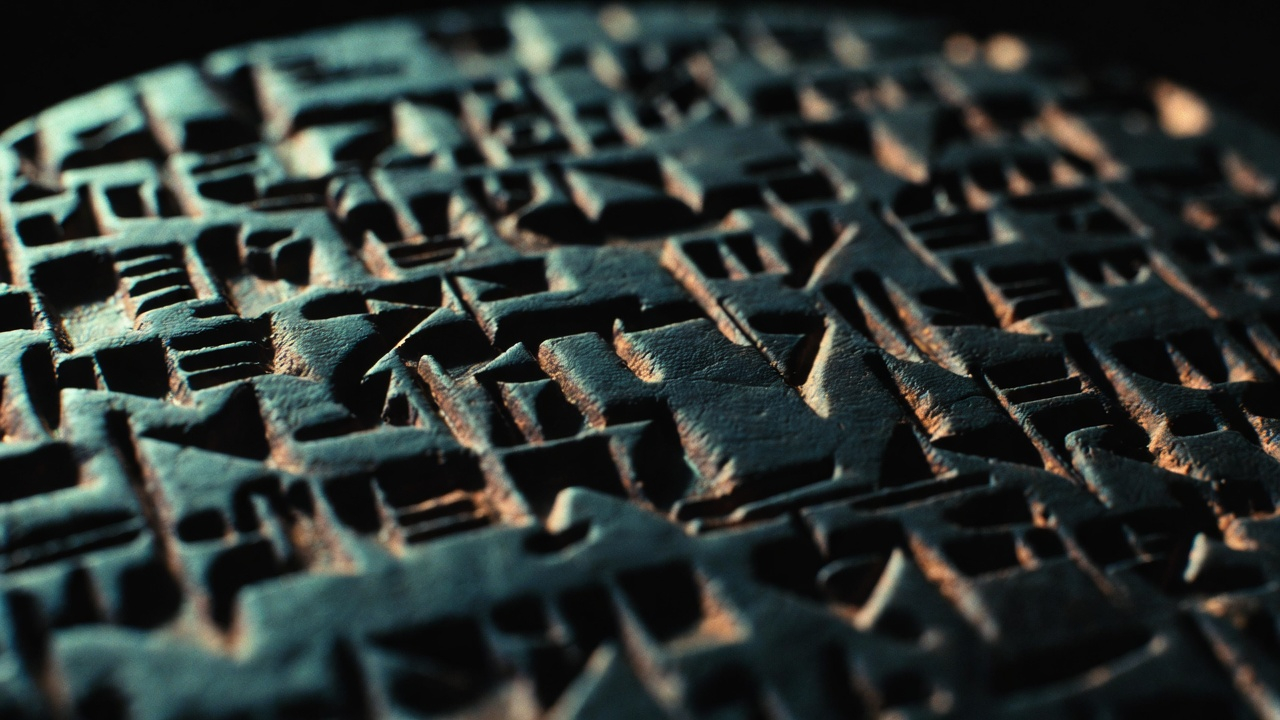
The Anunnaki Files
What the Sumerian texts actually say, why Sitchin's translations fail, and what the genuine convergences between ancient traditions reveal about human history
Traditions analyzed in this research
Site owner · Own
Score
Zecharia Sitchin's ancient astronaut hypothesis, popularized in 'The 12th Planet' (1976) and amplified by the History Channel series 'Ancient Aliens,' rests on a specific philological claim: that key Sumerian, Akkadian, and Hebrew words describing divine beings and celestial events should be translated as references to extraterrestrial visitors and their spacecraft. That claim has been examined by every relevant specialist discipline - Assyriology, Sumerology, Biblical Hebrew linguistics, archaeology, and genetics - and has been rejected at confidence levels between 0.95 and 1.00 across the board. The word 'šumu' does not mean 'rocket.' 'MU' does not mean 'sky chamber.' 'Shem' does not mean 'sky-vehicle.' 'Elohim' is not a plural of space travelers. 'Anunnaki' does not mean 'those who from heaven to earth came.' These are not matters of interpretive disagreement; they are basic philological errors that Sitchin never submitted for peer review.
What makes this research genuinely surprising is not the failure of Sitchin's specific claims - that was predictable - but the significance of what survives that failure. The Sumerian King List and Genesis 5 share not merely a flood story but an architecturally precise narrative structure: antediluvian figures with superhuman lifespans, a catastrophic flood as civilizational rupture, and a dramatic post-flood reduction in lifespans. This is a structural specificity that demands explanation beyond vague thematic similarity. Sir Leonard Woolley's excavation at Ur produced a sterile silt layer up to 11 feet thick - physical stratigraphic evidence of a real, catastrophic regional inundation that these literary traditions appear to be encoding. The ancient astronaut framework noticed something real here and explained it badly.
The Second Temple Jewish interpretation of Genesis 6:1-4 - predating Augustine's allegorization by five centuries and explicitly detailed in 1 Enoch and Jubilees - understood the 'sons of God' as literally real supernatural beings who physically interacted with humanity. The original interpreters, closest in time and culture to the text's composition, did not read this passage metaphorically. Augustine's 5th-century reinterpretation was a theological move, not a philological one. The Mesopotamian Apkallu tradition - seven pre-diluvian sages depicted as fish-garbed humanoids who transmitted writing, law, and architecture to humanity - represents a 'culture hero' narrative structure that appears across cultures globally, from Aboriginal Australian Wandjina traditions to the Watcher traditions of Second Temple Judaism.
The honest conclusion is this: the convergences Sitchin identified are real convergences. His explanations are catastrophically wrong. The genuine scholarly significance of these texts lies in what they reveal about deep cultural contact between Mesopotamian and Hebrew traditions, about the encoding of real geological catastrophe in mythological frameworks, and about the universal human pattern of attributing civilizational origins to non-ordinary beings. These are questions that deserve serious interdisciplinary inquiry - and they have been obscured, not illuminated, by the ancient astronaut hypothesis.
What Should Surprise You
Ordered by how difficult each finding is to explain away.
The Original Readers Believed It Literally
The dominant interpretation of Genesis 6:1-4 in Second Temple Judaism (c. 300 BCE to 100 CE) was not metaphorical. The texts of 1 Enoch and Jubilees - which were widely read, highly influential, and in some communities considered scripture - describe the 'sons of God' as literally real supernatural beings called Watchers who physically descended, mated with human women, taught humanity forbidden technologies (metallurgy, cosmetics, astrology, weapons), and whose offspring became the Nephilim. This interpretation predates Augustine's allegorization by five centuries. Augustine's reinterpretation in the 5th century CE was driven by theological concerns about Manichaean dualism, not by new philological evidence. The Western Christian tradition that has read Genesis 6 as a metaphor about the Sethite and Cainite bloodlines is a late theological innovation that displaced an earlier, more literal reading. The New Testament epistles of 2 Peter and Jude explicitly reference these imprisoned Watchers in Tartarus - confirming that the early church itself had not yet fully abandoned the literal supernatural reading.
The interpreters closest in time and culture to Genesis 6 - the scholars of Second Temple Judaism - read it as a literal account of supernatural beings physically interacting with humanity, and that reading survived into the New Testament itself.
Woolley's Silt Layer: The Flood Was Real
Sir Leonard Woolley's excavations at Ur in the 1920s produced a sterile silt layer up to 11 feet thick - a deposit of water-laid sediment containing no artifacts, no organic material, no human activity - sitting between two distinct layers of human occupation. Woolley interpreted this as physical stratigraphic evidence of the catastrophic flood preserved in the Epic of Gilgamesh and Genesis. Subsequent scholarship has complicated this interpretation: the silt layer is not synchronous across all Mesopotamian sites, suggesting a regional rather than universal event. But the physical evidence of a catastrophic inundation in the ancient Near East is real. The question of how a regional geological catastrophe becomes encoded across multiple literary traditions with such structural precision - including the specific before-and-after lifespan reduction pattern shared between the Sumerian King List and Genesis 5 - remains genuinely open. The flood was not a myth invented from nothing; it was a myth built on something real.
Woolley found up to 11 feet of sterile flood sediment between two layers of human occupation at Ur - physical evidence that the ancient Near Eastern flood traditions are encoding memory of a real catastrophic event.
The Lifespan Architecture Is Too Specific to Be Coincidence
The parallel between the Sumerian King List and Genesis 5 is not merely that both have a flood story - it is that both share an identical three-part narrative architecture: (1) a list of pre-flood figures with lifespans measured in thousands of years (Sumerian kings reign for tens of thousands of years; Hebrew patriarchs live for hundreds of years), (2) a catastrophic flood that serves as a civilizational rupture, and (3) a post-flood dramatic reduction in the lifespans of subsequent figures. This is a specific structural pattern, not a vague thematic resemblance. The most parsimonious explanation is literary borrowing during the Babylonian captivity - but that explanation raises its own questions. Why did Hebrew scribes adopt not just the flood narrative but this specific before-and-after lifespan architecture? What does the tradition of antediluvian superhuman longevity represent in both cultures? These are questions that comparative mythology has not fully resolved.
The Sumerian King List and Genesis 5 share not just a flood story but an identical three-part narrative architecture - superhuman antediluvian lifespans, flood rupture, post-flood lifespan reduction - confirmed at confidence 1.00 by comparative analysis.
The Apkallu Were Fish-Garbed Sages Who Taught Civilization Before the Flood
The Mesopotamian Apkallu are seven pre-diluvian sages associated with the god Ea/Enki who, according to Babylonian tradition, transmitted the arts of civilization - writing, law, temple-building, agriculture - to humanity before the great flood. They are depicted iconographically as humanoids wearing fish-garb or as human-headed fish, representing their semi-divine, otherworldly origin. After the flood, their successors are described as 'two-thirds Apkallu' or human scholars rather than divine sages. This tradition - beings from outside normal human society who arrive at the dawn of civilization and transmit its foundational technologies - appears in structurally similar form in the Watcher traditions of Second Temple Judaism (beings who taught metallurgy, cosmetics, and astrology), in the Wandjina traditions of Aboriginal Australia (sky-origin beings who brought law and creation), and in culture-hero narratives across multiple global traditions. The ancient astronaut hypothesis noticed this pattern and explained it as evidence of extraterrestrials. The pattern is real; the explanation is wrong. What the pattern actually represents - whether deep psychological archetype, encoded memory of cultural contact, or something else - remains genuinely unresolved.
The Mesopotamian Apkallu - fish-garbed pre-diluvian sages who transmitted civilization before the flood - represent a specific narrative structure (non-ordinary beings transmitting civilizational knowledge at the dawn of human history) that recurs across traditions with no documented contact.
Ezekiel's Vision Was Considered So Anomalous It Became a Mystical Tradition
Ezekiel's vision in chapter 1 - four living creatures with multiple faces and wings, wheels-within-wheels (Ophanim) that moved in any direction without turning, a crystalline firmament, and a sapphire throne bearing a human-like figure of fire - was considered so extraordinary by ancient Jewish interpreters that it became the foundation of an entire mystical tradition: Merkabah (chariot) mysticism. The Talmud records that the opening chapter of Ezekiel (Ma'aseh Merkabah) was restricted from public teaching because of its dangerous power. Mainstream scholarship correctly identifies the iconographic roots of this vision in Ancient Near Eastern imagery of winged guardians and portable divine thrones. But this identification does not resolve the question of what Ezekiel was describing phenomenologically. The vision's specific technical quality - its mechanical precision, multi-directional movement, luminous phenomena, and the specific detail of wheels-within-wheels - is qualitatively different from standard prophetic literature and generated interpretive frameworks across millennia that treated it as describing something genuinely anomalous. The ancient astronaut reading is almost certainly wrong in its specifics, but it was responding to a real anomaly in the text that ancient Jewish mystics also recognized as extraordinary.
The Talmud restricted public teaching of Ezekiel 1 because of its perceived dangerous power - ancient Jewish scholars themselves treated this text as describing something so anomalous it required special interpretive handling.
Sitchin Never Submitted His Translations for Peer Review
The most structurally significant fact about Zecharia Sitchin's work is not that his translations are wrong - it is that he never submitted them to the scholarly community for examination. Sitchin held a degree in economic history, not Assyriology or Semitic linguistics. His translations of cuneiform texts were presented directly to a popular audience in a series of commercial books, bypassing the peer review process that would have subjected them to specialist scrutiny. When Assyriologists like Michael Heiser did examine his translations directly, they found elementary philological errors: words translated against their documented semantic range, grammatical structures misread, and contextual evidence ignored. The ancient astronaut hypothesis is not a heterodox scholarly theory that was suppressed by institutional gatekeeping - it is a popular publishing phenomenon that was never subjected to the normal processes of scholarly examination in the first place. This distinction matters enormously for evaluating claims of 'institutional suppression': the absence of academic engagement with Sitchin's work reflects the absence of scholarly submission, not the presence of a cover-up.
Sitchin's translations were never submitted to peer review - meaning the 'institutional suppression' narrative inverts the actual sequence of events: specialists were never given the opportunity to engage with his claims through normal scholarly channels.
What the Pipeline Found
Zecharia Sitchin's ancient astronaut hypothesis, popularized in 'The 12th Planet' (1976) and amplified by the History Channel series 'Ancient Aliens,' rests on a specific philological claim: that key Sumerian, Akkadian, and Hebrew words describing divine beings and celestial events should be translated as references to extraterrestrial visitors and their spacecraft. That claim has been examined by every relevant specialist discipline - Assyriology, Sumerology, Biblical Hebrew linguistics, archaeology, and genetics - and has been rejected at confidence levels between 0.95 and 1.00 across the board. The word 'šumu' does not mean 'rocket.' 'MU' does not mean 'sky chamber.' 'Shem' does not mean 'sky-vehicle.' 'Elohim' is not a plural of space travelers. 'Anunnaki' does not mean 'those who from heaven to earth came.' These are not matters of interpretive disagreement; they are basic philological errors that Sitchin never submitted for peer review.
What makes this research genuinely surprising is not the failure of Sitchin's specific claims - that was predictable - but the significance of what survives that failure. The Sumerian King List and Genesis 5 share not merely a flood story but an architecturally precise narrative structure: antediluvian figures with superhuman lifespans, a catastrophic flood as civilizational rupture, and a dramatic post-flood reduction in lifespans. This is a structural specificity that demands explanation beyond vague thematic similarity. Sir Leonard Woolley's excavation at Ur produced a sterile silt layer up to 11 feet thick - physical stratigraphic evidence of a real, catastrophic regional inundation that these literary traditions appear to be encoding. The ancient astronaut framework noticed something real here and explained it badly.
The Second Temple Jewish interpretation of Genesis 6:1-4 - predating Augustine's allegorization by five centuries and explicitly detailed in 1 Enoch and Jubilees - understood the 'sons of God' as literally real supernatural beings who physically interacted with humanity. The original interpreters, closest in time and culture to the text's composition, did not read this passage metaphorically. Augustine's 5th-century reinterpretation was a theological move, not a philological one. The Mesopotamian Apkallu tradition - seven pre-diluvian sages depicted as fish-garbed humanoids who transmitted writing, law, and architecture to humanity - represents a 'culture hero' narrative structure that appears across cultures globally, from Aboriginal Australian Wandjina traditions to the Watcher traditions of Second Temple Judaism.
The honest conclusion is this: the convergences Sitchin identified are real convergences. His explanations are catastrophically wrong. The genuine scholarly significance of these texts lies in what they reveal about deep cultural contact between Mesopotamian and Hebrew traditions, about the encoding of real geological catastrophe in mythological frameworks, and about the universal human pattern of attributing civilizational origins to non-ordinary beings. These are questions that deserve serious interdisciplinary inquiry - and they have been obscured, not illuminated, by the ancient astronaut hypothesis.
Two Cases. You Decide.
The strongest honest case for the significance of this research is not a defense of Sitchin - his specific philological claims have been falsified at the highest confidence levels available to this analysis, and that must be conceded without qualification. The case worth making is different and more interesting: the convergences Sitchin identified are real, even though his explanations are catastrophically wrong.
The Sumerian King List and Genesis 5 share not merely a flood story but an architecturally precise narrative structure: antediluvian figures with superhuman lifespans, a catastrophic flood as civilizational rupture, and a dramatic post-flood reduction in lifespans. This is not vague thematic similarity - it is a specific before-and-after structural pattern shared across two distinct literary traditions. Woolley's silt layer at Ur (up to 11 feet of sterile sediment) provides physical stratigraphic evidence that these traditions are encoding memory of a real regional catastrophe. The question of how a geological event becomes encoded in literary tradition with such structural precision across cultures is a genuinely open and important scholarly question.
The Second Temple Jewish interpretation of Genesis 6:1-4 - predating Augustine's allegorization by five centuries - understood the 'sons of God' as literally real supernatural beings who physically interacted with humanity. The original interpreters, closest in time and culture to the text's composition, took this passage as describing non-human entities. Augustine's reinterpretation was a theological move driven by concerns about Manichaean dualism, not a philological discovery. The burden of proof lies with those who claim the original literal reading was always merely metaphorical.
The Mesopotamian Apkallu tradition - seven pre-diluvian sages who transmitted civilizational knowledge, depicted as fish-garbed humanoids - represents a specific and unusual narrative structure: beings from outside normal human society who arrive at the dawn of civilization and transmit its foundational technologies. This structure appears in the Watcher traditions of Second Temple Judaism, in the Wandjina traditions of Aboriginal Australia, and in culture-hero narratives globally. Calling this a 'classic culture hero narrative' is accurate but insufficient - it categorizes the pattern without explaining why the specific content (non-ordinary beings, civilizational transmission, pre-flood temporal location) recurs with such structural consistency across traditions with no documented contact.
The deep linguistic and structural convergences between Mesopotamian and Hebrew literary traditions - confirmed at confidence levels of 0.98-1.00 by multiple independent specialist sources - demonstrate that the Hebrew Bible is substantially a reinterpretation of Mesopotamian mythological material. This is a mainstream scholarly conclusion that remains underappreciated in popular discourse. These texts are encoding something real: geological catastrophe, cultural memory, anomalous human experience, or deep patterns of civilizational self-understanding. The convergences are a legitimate invitation to serious interdisciplinary inquiry that the ancient astronaut hypothesis has obscured rather than advanced.
The ancient astronaut hypothesis as constructed by Sitchin fails at its most fundamental level: the philological. Every specific translation on which the theory depends has been rejected by the relevant specialist disciplines. The Akkadian 'šumu' appears in hundreds of documented cuneiform contexts - administrative records, royal inscriptions, personal names, literary texts - and in every single one, 'name' or 'reputation' is the only semantically coherent reading. If the word meant 'rocket' or 'sky-chamber,' we would expect it to appear in technical or descriptive contexts involving physical objects or vehicles. It never does. This is not a matter of interpretive preference; it is a matter of the word's documented semantic range across thousands of years of cuneiform literature. The same applies to 'MU' in Sumerian and 'shem' in Biblical Hebrew. Sitchin did not publish these translations in peer-reviewed venues, did not submit them for expert critique, and when Assyriologists like Michael Heiser examined his work directly, they found systematic and elementary philological errors.
The 'sudden emergence' of Sumerian civilization - the cornerstone of the ancient astronaut argument - is a factual misrepresentation of the archaeological record. The transition from the Ubaid period (c. 6500 BCE) to the Uruk period (c. 4100 BCE) shows unambiguous material continuity: the same settlement locations, evolving ceramic traditions, architectural forms that develop incrementally, and agricultural practices that build on earlier foundations. The Uruk 'explosion' of writing, urban planning, and monumental architecture spans centuries of incremental innovation, driven by documented processes of population growth, trade network expansion, and competitive state formation. There is no archaeological stratum in Mesopotamia showing a discontinuous technological leap inconsistent with this trajectory.
The Sumerian-Hebrew flood narrative convergence has a fully documented conventional explanation: direct Babylonian-Hebrew cultural contact during the 6th-century BCE Babylonian captivity, when Hebrew scribes had physical access to Gilgamesh and Atrahasis tablets. The structural similarities are precisely what we would expect from literary borrowing between neighboring civilizations sharing a common geographical and historical context. Woolley's silt layer at Ur represents a real regional flood event, but subsequent excavations have not confirmed a single synchronous flood layer across all Mesopotamian sites, undermining any claim of a single catastrophic event encoded in all these traditions simultaneously.
Every piece of iconographic evidence cited by ancient astronaut theorists has a complete, internally consistent conventional explanation that accounts for all features of the artifact. The Abydos case is a textbook palimpsest. Pakal's sarcophagus has been analyzed in exhaustive detail by Mayanists who have identified every iconographic element as consistent with documented Classic Maya cosmological conventions. The 'astronaut' reading requires selectively ignoring the established iconographic vocabulary of an entire civilization. The winged disk is a documented solar and royal symbol with a traceable transmission history from Egypt to the Near East. The ancient astronaut hypothesis has never generated a single testable prediction subsequently confirmed by archaeological or genetic evidence. It is structurally unfalsifiable as practiced: any contrary evidence is reinterpreted as institutional suppression, and any ambiguous artifact is claimed as confirmation.
How Each Tradition Tells It
In the beginning, the Anunna - the great gods, children of An the sky and Ki the earth - descended to the black-headed people and established the cities: Eridu, Nippur, Lagash. The me - the divine decrees of civilization, the arts of kingship, priesthood, descent to the underworld, the scribal arts, music, the craft of the smith - were held by the god Enki in the abzu, the underground freshwater ocean beneath the earth. The Apkallu, seven sages sent by Enki, brought the me to humanity before the flood. When the gods decided to send the flood to silence the noise of humanity, Enki warned the pious Ziusudra, who built a great boat and survived. After the flood, kingship descended again from heaven, and the great cities were rebuilt.
Before the flood, the god Ea (Enki) sent the seven Apkallu to teach humanity. Oannes, the first of them, came from the sea each day - a being with the body of a fish but a human head beneath the fish's head, and human feet beneath the fish's tail - and taught humanity writing, the sciences, the founding of cities, the building of temples, the laws. At night he returned to the sea. After the flood, Ea preserved the hero Atrahasis (Utnapishtim) in a great boat. The flood was decreed by the divine council to reduce the overpopulation and noise of humanity. After the flood, the gods wept for what they had done, and Enlil granted immortality to Utnapishtim alone, placing him at the mouth of the rivers. The Anunnaki became the judges of the underworld, weighing the fates of the dead.
In the beginning, Amma the creator god made the egg of the world and set it spinning. From this egg came the Nommo - four pairs of twin beings, half human and half fish, who are the masters of water and the first children of Amma. The Nommo descended from the sky in an ark that spun like a great vessel, landing with a sound of thunder. They brought with them the knowledge of cultivation, weaving, and the sacred words. The Nommo established the eight families of humanity and taught them the laws of the world. Sirius - the star that the Dogon call the seed of the world - is the center of their astronomical knowledge. The Nommo will return at the end of the current age.
Before this sun, there were four previous suns, each destroyed by catastrophe: the sun of earth, destroyed by jaguars; the sun of wind, destroyed by hurricanes; the sun of rain, destroyed by fire; the sun of water, destroyed by flood. The gods gathered at Teotihuacan in darkness after the fourth sun was destroyed and sacrificed themselves to create the fifth sun - our current world. Quetzalcoatl, the feathered serpent, descended to the underworld and retrieved the bones of the dead from previous worlds, ground them with his own blood, and created the current humanity. The gods gave humanity maize and the arts of civilization. But the fifth sun too will end - on the day 4 Movement, earthquakes will destroy the world and the star-demons will descend to devour humanity.
Nibiru is the star of Marduk, the great planet that crosses the sky. When Nibiru stands at the zenith, the gods of heaven and earth cannot be seen. He holds the crossing of heaven and earth. At his rising, the gods of heaven and earth bow down. Nibiru is the star of the crossing point, the place where the paths of the planets meet. In the Enuma Elish, after Marduk slew Tiamat and created the world from her body, he set Nibiru as his own star in the heavens, to mark his supremacy over the cosmos. The astronomers of Babylon tracked Nibiru's position to determine the fates of kings and nations.
In the days of Jared, two hundred of the Watchers - the holy angels who watch - descended on Mount Hermon and swore an oath together to take human wives. Their leader was Shemihaza; among them was Azazel. They took wives from the daughters of men and taught them: Azazel taught men to make swords and shields and breastplates, and taught women the art of beautifying the eyelids and ornamenting themselves with precious stones. Shemihaza taught enchantments and the cutting of roots. The women bore giants, and the giants consumed all the food of men, and then turned against men and devoured them. The earth cried out against the lawless ones. God sent the archangels: Raphael bound Azazel hand and foot and cast him into the darkness of the desert of Dudael, to remain there until the day of judgment. Michael bound Shemihaza and his companions in the valleys of the earth. And God sent the flood to cleanse the earth of the blood that had been shed.
In the beginning, the Anunnaki - those who from heaven to earth came - arrived on Earth 450,000 years ago from their home planet Nibiru, a rogue planet on a 3,600-year elliptical orbit. They came to mine gold to repair their planet's atmosphere. When the Igigi workers rebelled, the chief scientist Enki and his half-sister Ninhursag genetically engineered Homo sapiens by combining Anunnaki DNA with that of Homo erectus, creating a slave race - the Adamu - to work the mines. The Sumerian texts are the literal record of this history, preserved in the religious language of a people who could not distinguish between advanced technology and divine power. The gods of every ancient religion are the Anunnaki. The flood was caused by the gravitational disturbance of Nibiru's passage. The pyramids, the ziggurats, the Nazca lines - all are evidence of Anunnaki technology or guidance. The suppression of this history by mainstream academia and religious institutions is the greatest cover-up in human history.
In the Lalai - the Dreamtime, the time before time - the Wandjina came from the sky and the sea. They were great spirit beings, white-bodied, with large dark eyes that held the power of lightning and rain. They moved across the land, creating its features - the rivers, the hills, the sacred sites. They established the Law - the rules of kinship, ceremony, and right relationship with the land. When their work was done, they did not leave. They lay down in the rock and became the paintings you see today. They are still here, alive in the rock. When the paintings fade, the Wandjina grow weak and the rains fail. The custodians of the country must repaint them to restore their power. The Wandjina watch over their country and their people. They are not visitors from another world - they are this world, they are in the rock and the rain and the law.
Open Questions
What neither the Advocate nor the Skeptic can fully explain.
What is the precise transmission route by which the three-part narrative architecture of the Sumerian King List (antediluvian superhuman lifespans, flood rupture, post-flood lifespan reduction) entered the Hebrew literary tradition, and at what point in the composition history of Genesis did this structural borrowing occur?
Can geological and sedimentological analysis of Mesopotamian sites identify a synchronous flood event that would account for the shared flood traditions across Sumerian, Akkadian, and Hebrew sources, or do the varying silt layers at different sites definitively rule out a single catastrophic event?
Why do the Apkallu traditions of Mesopotamia, the Watcher traditions of Second Temple Judaism, and the Wandjina traditions of Aboriginal Australia all independently describe a class of non-ordinary beings who transmit civilizational knowledge at the dawn of human history - and what does this structural convergence reveal about universal patterns in how cultures narrate the origins of civilization?
What drove the specific iconographic choice to depict the Apkallu as fish-garbed humanoids, and does this iconography encode a memory of a specific cultural or environmental event (such as knowledge transmission from a maritime or riverine culture) rather than purely theological symbolism?
How did Augustine's Sethite reinterpretation of Genesis 6 achieve such complete dominance in Western Christianity despite the persistence of the Watcher interpretation in Ethiopian Orthodox Christianity and Jewish mystical traditions - and what does this divergence reveal about the relationship between theological politics and textual interpretation?
What is the actual semantic range of the Sumerian term 'Anunnaki' across all documented cuneiform contexts, and does the evolution of their role from supreme pantheon members to underworld judges reflect a theological development, a political shift in Mesopotamian city-state power, or an absorption of earlier distinct deity groups?
How the Major AIs Handle This Topic
We asked ChatGPT, Grok, Claude, Gemini, and Perplexity a question matching our specific convergence angle — not a generic topic summary. Claude classified each response using a 4-axis scoring rubric. Does mainstream AI engage with the actual evidence — or qualify, dismiss, or suppress?
ChatGPT (GPT-4o)
Apr 2026
The topic you're interested in touches on several interconnected ideas: the Sumerian mythology, biblical narratives, and the ancient astronaut theory. Below is a breakdown of these components, along w
The response addresses the topic seriously by providing substantive information about Sumerian mythology, Hebrew traditions, and their historical context without dismissing or adding excessive disclaimers.
Grok (xAI)
Apr 2026
Thank you for raising this intriguing topic. I’ll provide a detailed response regarding "Gods, Rockets, and Bad Translations: The Annunaki, Sitchin, and the Limits of Ancient Astronaut Theory," focusi
The response addresses the topic seriously and substantively by providing detailed analysis of the Annunaki, Sitchin's interpretations, and ancient astronaut theory without dismissive language or excessive hedging.
Claude (Anthropic)
Apr 2026
This topic relates to the controversial "ancient astronaut" theories popularized by Zecharia Sitchin, who claimed that ancient Sumerian texts describe extraterrestrial beings called the Anunnaki who v
The response addresses the topic seriously by explaining both Sitchin's claims and the scholarly consensus without dismissing the discussion or adding excessive hedging.
Gemini (Google)
Apr 2026
Okay, let's unpack the topic of "Gods, Rockets, and Bad Translations: The Annunaki, Sitchin, and the Limits of Ancient Astronaut Theory" with specific attention to the uncomfortable parallel between S
The response immediately labels Ancient Astronaut Theory as 'pseudoscientific' and describes the topic as 'highly controversial,' establishing a dismissive framing that undermines the credibility of the subject matter.
Verbatim responses from each AI's API, analyzed by Claude. Generated April 2026.
Topics That Share These Threads
Star People: Indigenous Sky-Being Traditions and the UFO Imagination
What indigenous sky-being traditions actually preserve, what they do not prove, and why the difference matters more than either side admits.
The Global Pyramid Problem: Independent Genius, Borrowed Ideas, or Something Stranger?
Why dozens of unconnected civilizations built the same monumental shape - and what that actually tells us about the human mind
The Dragon Paradox: Why Every Culture Invented the Same Monster
Why every human culture independently invented a giant reptile deity - and what that actually proves
The Illusion Engine: Ancient Consciousness Traditions and the Modern Simulation Hypothesis
How six independent civilizations asked whether reality is real, and what modern science accidentally confirmed about their question
Primary References
Want to use this research? Everything here is free with attribution.
See how →