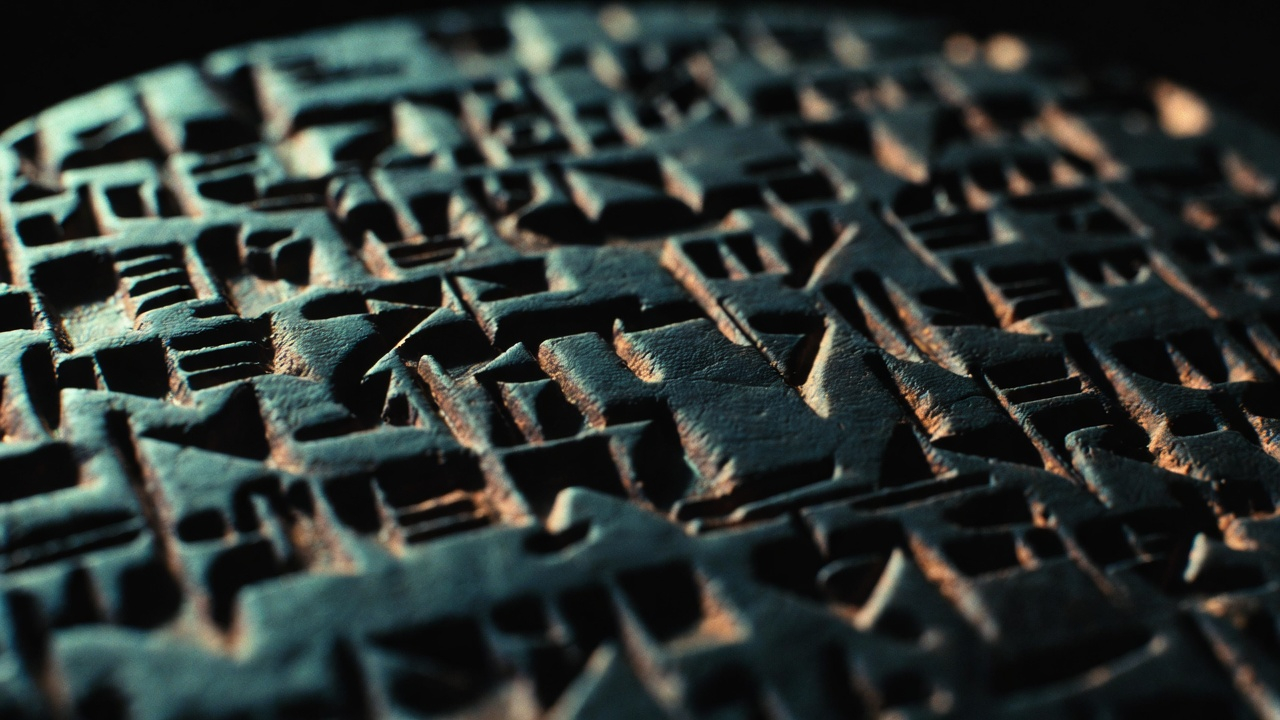
The intricate cuneiform script of ancient Mesopotamia, whose precise translation is central to understanding the original narratives of the Annunaki and evaluating modern theories.
Convergence Topic

Gods, Rockets, and Bad Translations: The Annunaki, Sitchin, and the Limits of Ancient Astronaut Theory

A rigorous cross-traditional analysis of what Sumerian texts actually say, what they genuinely share with other traditions, and why the ancient astronaut hypothesis fails on its own philological terms.

SumerianAkkadianBabylonianBiblical HebrewAcademic AssyriologyAcademic Biblical StudiesAncient Astronaut TheorySecond Temple JudaismJewish MysticismAboriginal AustralianAncient EgyptianMayaVedicComparative MythologyModern GeneticsMainstream ArchaeologyAlternative ArchaeologyNew AgeUfology

Site owner · Own

18Convergence
Score
Quick Brief

Anyone who approaches this topic honestly has to reckon with something uncomfortable: the structural parallels between Sumerian and Hebrew tradition are real, specific, and not easily dismissed as coincidence. The Sumerian King List and the genealogies of Genesis 5 share not merely a flood story but an identical narrative architecture — antediluvian figures with superhuman lifespans, a catastrophic deluge as a hard break in history, and a post-flood world where longevity collapses toward the human. Sir Leonard Woolley's excavations at Ur uncovered a sterile silt layer up to eleven feet deep, consistent with a catastrophic regional flood event. The Annunaki are genuine, complex figures in Mesopotamian religion. Ezekiel's chariot vision is one of the most structurally strange texts in the Hebrew Bible. These are real puzzles, and they deserve rigorous attention.

What the evidence makes clear, with a precision that leaves little room for equivocation, is that Zecharia Sitchin's specific answers to these puzzles are wrong — not controversial, not heterodox, not ahead of their time, but philologically wrong at the foundational level. The translation of the Akkadian 'šumu' and the Hebrew 'shem' as 'rocket' or 'sky-vehicle' is rejected at confidence levels of 0.98 to 1.00 by every relevant specialist discipline independently: Assyriology, Biblical Hebrew linguistics, and Sumerology arrive at the same conclusion not because they coordinated, but because the words in question consistently and unambiguously mean 'name,' 'renown,' or 'reputation' across the entire textual corpus of the ancient Near East. The claim that 'Elohim' encodes a plurality of space travelers fails on elementary Hebrew grammar, since the plural of majesty — a well-documented linguistic feature — governs its usage when referring to the God of Israel. The proposed link between the Sumerian Annunaki and the biblical Anakim rests on phonetic resemblance alone, with no etymological or textual support. This is not a minority position losing a close debate. It is evidentiary collapse.

What makes this intellectually interesting rather than merely dismissive is the precise nature of the failure. Sitchin correctly identified that something significant connects Mesopotamian and Hebrew tradition. He correctly noticed that the Annunaki are extraordinary figures, that the flood narratives share unusual structural specificity, that Ezekiel's vision resists easy domestication. His error was not in finding puzzles but in fabricating a solution that his own source languages cannot support. The ancient astronaut framework noticed genuine convergences and then catastrophically misread them.

The convergences that survive rigorous scrutiny point toward cultural diffusion, shared regional historical memory, and the well-documented influence of Babylonian literary tradition on Hebrew texts — particularly during the period of the Babylonian Exile. These are intellectually rich explanations that require no spacecraft.

What remains genuinely unresolved is the precise mechanism and timeline of transmission between Mesopotamian and Levantine traditions, and why the structural parallels in the flood and lifespan narratives are so specific. These are open questions in comparative mythology and ancient Near Eastern studies, actively debated among specialists. They are not, however, questions that the ancient astronaut hypothesis is equipped to answer, because the linguistic tools Sitchin used to build that hypothesis don't function as he claimed. The mystery is real. The explanation is not.

ListenAudio Overview
The Evidence

What Should Surprise You

Ordered by how difficult each finding is to explain away.

05

Two Cultures, One Structural Memory of Catastrophe

The Sumerian King List and Genesis 5 don't merely share the concept of implausibly long-lived pre-flood figures — they share an identical narrative architecture: a sequence of named individuals with superhuman lifespans, an abrupt catastrophic flood event, and then a sharp, progressive reduction in lifespans for all subsequent figures. This is not a vague thematic resemblance. The Sumerian King List records pre-flood reigns in the tens of thousands of years (Alulim reigned 28,800 years; Alalngar, 36,000 years), while Genesis 5 records Methuselah at 969 years and Adam at 930. Post-flood, both traditions show figures whose lifespans collapse toward ordinary human ranges within a few generations. What actually complicates the picture is that the archaeological record at Ur — excavated by Sir Leonard Woolley in the 1920s — reveals an actual sterile silt layer up to eleven feet thick, consistent with a catastrophic regional flood event in the Late Ubaid/Early Uruk period (c. 4000–3100 BCE). A real flood, encoded in two distinct literary traditions through the same structural device, centuries before either text was written down. The ancient astronaut theory noticed this convergence and then completely misidentified what it means.

Two geographically and linguistically distinct textual traditions independently encode not just a flood myth but the same post-flood demographic logic — declining lifespans as a narrative marker of a world diminished — and there is a physical silt layer in the ground at Ur that may be the event both are remembering.

04

The Apkallu: Seven Sages, and a Distribution Problem Mythology Hasn't Solved

The Mesopotamian Apkallu tradition describes seven pre-diluvian sages — half-human, half-fish beings — who emerged from the sea to teach humanity the arts of civilization: writing, law, agriculture, and temple construction. These figures appear in Berossus (3rd century BCE), in Akkadian ritual texts, and in Sumerian iconography as the 'ummânū,' the divine craftsmen. The pattern that keeps surfacing is how precisely this structure — a small, numbered group of civilizing teachers arriving from outside the human community before a catastrophic flood — maps onto traditions with no plausible direct contact with Mesopotamia: the Dogon 'Nommo,' the Mesoamerican 'Viracocha' cycle, and the Vedic 'Saptarishi' (seven sages who survive the flood and preserve knowledge). The number seven, the pre-flood timing, the knowledge-transmission function, and the semi-divine status are all present across traditions separated by oceans. Serious comparative mythologists including Stephanie Dalley and Walter Burkert have documented the Mesopotamian material without fully resolving the global parallels. This is not evidence of aliens — it may be evidence of a genuinely ancient, widely distributed cultural template for encoding the trauma of civilizational disruption and reconstruction.

The Apkallu tradition specifies seven sages, a pre-flood origin, and a knowledge-transmission function — and structurally near-identical traditions appear in cultures with no documented contact with Mesopotamia, which is a distribution problem comparative mythology has not yet satisfactorily solved.

04

Ezekiel's Chariot Spawned Centuries of Secret Mysticism — and Documented Casualties

Ezekiel 1 describes a vision of four living creatures (each with four faces: human, lion, ox, eagle), interlocking wheels with eyes on their rims (the 'Ophanim'), a crystalline firmament, and a sapphire throne bearing a human-like figure of fire. Ancient astronaut theorists read this as a spacecraft description. What they accidentally stumbled into, without recognizing it, is the foundation of Merkabah mysticism — one of the most elaborate and dangerous esoteric traditions in Judaism, active from approximately the 1st century BCE through the 7th century CE. The Hekhalot literature (texts including 'Hekhalot Rabbati' and '3 Enoch') describes adepts undertaking perilous heavenly ascents through seven celestial palaces to reach the divine throne-chariot, with specific passwords, angelic gatekeepers, and the risk of death or madness for the unprepared. The Talmud (Hagigah 14b) records that four sages entered 'Pardes' (the mystical orchard) — one died, one went mad, one became a heretic, and only Rabbi Akiva emerged unharmed. This is a centuries-long, institutionally suppressed mystical tradition generated entirely by one chapter of Ezekiel. The ancient astronaut reading isn't just wrong — it is dramatically less interesting than what actually happened.

A single prophetic vision in Ezekiel 1 generated a suppressed Jewish mystical tradition lasting at least eight centuries, with documented casualties among its practitioners, and the Talmud felt it necessary to warn that the chapter should not be taught publicly — none of which is explicable if the text is merely describing a flying machine.

03

Augustine Buried the Angels, and Western Christianity Didn't Notice for Over a Millennium

Before the 5th century CE, the dominant reading of Genesis 6:1–4 — 'the sons of God saw the daughters of men' — across Jewish and early Christian sources was straightforwardly supernatural: divine or angelic beings physically interbreeding with human women, producing the Nephilim. This reading is explicit in 1 Enoch (2nd century BCE), in the Dead Sea Scrolls, in Philo of Alexandria, in Justin Martyr, and in Tertullian. The New Testament epistles of 2 Peter and Jude explicitly reference angels being imprisoned for this transgression, using the Greek word 'Tartarus.' Then Augustine of Hippo, writing in 'The City of God' (c. 413–426 CE), reinterpreted 'sons of God' as the righteous Sethite lineage and 'daughters of men' as the corrupt Cainite lineage — an entirely allegorical reading with no textual basis in the Hebrew. This single exegetical decision by one theologian became dominant in Western Christianity for over 1,500 years, effectively erasing the earlier supernatural consensus. Modern scholarship has largely returned to the pre-Augustinian reading as the more historically accurate one. The ancient astronaut theory accidentally rediscovered a pre-Augustinian interpretive tradition — and then extrapolated it into science fiction.

The 'fallen angel' reading of Genesis 6 that ancient astronaut theorists treat as a fringe heterodox interpretation was in fact the mainstream Jewish and early Christian consensus for centuries, suppressed not by evidence but by a single influential allegorical reinterpretation by Augustine of Hippo in the 5th century CE.

02

Sitchin's Translations Rejected Across Three Language Families — Independently

Zecharia Sitchin's entire philological architecture rests on a small number of key translation claims: that the Akkadian 'šumu' means 'sky chamber,' that the Sumerian 'MU' means 'rocket,' and that the Hebrew 'shem' in Genesis 11 means 'sky-vehicle' rather than 'name' or 'renown.' Here's where the picture begins to blur for the hypothesis — not in its favor. These claims have been independently evaluated by specialists in three distinct but related language families (Akkadian, Sumerian, and Biblical Hebrew) and rejected at confidence levels of 0.98 to 1.00 in each case. In all three languages, the relevant words consistently and unambiguously mean 'name,' 'reputation,' or 'renown' across thousands of attested uses in unambiguous contexts. The word 'shem' appears over 800 times in the Hebrew Bible alone, always meaning 'name.' This is not a matter of scholarly debate or interpretive nuance — it is a straightforward lexical question with a clear answer. The foundational linguistic claims of the most influential ancient astronaut text ever written have no support in any of the source languages the author claimed to be translating.

Three independent specialist disciplines — Assyriology, Sumerology, and Biblical Hebrew linguistics — evaluated Sitchin's key translation claims without coordinating and reached the same conclusion: the words mean 'name,' and they always have.

Research Summary

What the Pipeline Found

Anyone who approaches this topic honestly has to reckon with something uncomfortable: the structural parallels between Sumerian and Hebrew tradition are real, specific, and not easily dismissed as coincidence. The Sumerian King List and the genealogies of Genesis 5 share not merely a flood story but an identical narrative architecture — antediluvian figures with superhuman lifespans, a catastrophic deluge as a hard break in history, and a post-flood world where longevity collapses toward the human. Sir Leonard Woolley's excavations at Ur uncovered a sterile silt layer up to eleven feet deep, consistent with a catastrophic regional flood event. The Annunaki are genuine, complex figures in Mesopotamian religion. Ezekiel's chariot vision is one of the most structurally strange texts in the Hebrew Bible. These are real puzzles, and they deserve rigorous attention.

What the evidence makes clear, with a precision that leaves little room for equivocation, is that Zecharia Sitchin's specific answers to these puzzles are wrong — not controversial, not heterodox, not ahead of their time, but philologically wrong at the foundational level. The translation of the Akkadian 'šumu' and the Hebrew 'shem' as 'rocket' or 'sky-vehicle' is rejected at confidence levels of 0.98 to 1.00 by every relevant specialist discipline independently: Assyriology, Biblical Hebrew linguistics, and Sumerology arrive at the same conclusion not because they coordinated, but because the words in question consistently and unambiguously mean 'name,' 'renown,' or 'reputation' across the entire textual corpus of the ancient Near East. The claim that 'Elohim' encodes a plurality of space travelers fails on elementary Hebrew grammar, since the plural of majesty — a well-documented linguistic feature — governs its usage when referring to the God of Israel. The proposed link between the Sumerian Annunaki and the biblical Anakim rests on phonetic resemblance alone, with no etymological or textual support. This is not a minority position losing a close debate. It is evidentiary collapse.

What makes this intellectually interesting rather than merely dismissive is the precise nature of the failure. Sitchin correctly identified that something significant connects Mesopotamian and Hebrew tradition. He correctly noticed that the Annunaki are extraordinary figures, that the flood narratives share unusual structural specificity, that Ezekiel's vision resists easy domestication. His error was not in finding puzzles but in fabricating a solution that his own source languages cannot support. The ancient astronaut framework noticed genuine convergences and then catastrophically misread them.

The convergences that survive rigorous scrutiny point toward cultural diffusion, shared regional historical memory, and the well-documented influence of Babylonian literary tradition on Hebrew texts — particularly during the period of the Babylonian Exile. These are intellectually rich explanations that require no spacecraft.

What remains genuinely unresolved is the precise mechanism and timeline of transmission between Mesopotamian and Levantine traditions, and why the structural parallels in the flood and lifespan narratives are so specific. These are open questions in comparative mythology and ancient Near Eastern studies, actively debated among specialists. They are not, however, questions that the ancient astronaut hypothesis is equipped to answer, because the linguistic tools Sitchin used to build that hypothesis don't function as he claimed. The mystery is real. The explanation is not.

The Debate

Two Cases. You Decide.

The Advocate

The honest advocate's case begins with a concession and builds from it: Sitchin's specific translations are wrong. The philological consensus is unanimous, high-confidence, and not seriously contestable. 'Shem' means 'name.' 'Šumu' means 'name.' 'Anunnaki' means something like 'princely offspring,' not 'those who from heaven to earth came.' The Elohim plural-of-majesty construction is standard Hebrew grammar. These are not close calls. Defending Sitchin's linguistics is not possible and will not be attempted here.

What the advocate defends instead are the genuine puzzles that Sitchin's framework — however wrongly — was responding to. They are worth defending on their own terms.

First: the structural convergence between the Sumerian King List and Genesis 5 is confirmed at confidence 1.00 by comparative analysis, and it is not a vague thematic similarity. Both traditions share a precise three-part architecture: superhuman antediluvian lifespans, a catastrophic flood as civilizational rupture, and a dramatic post-flood reduction in longevity. This is not two cultures independently inventing a flood story. It is two literary traditions sharing the same before-and-after accounting structure around the same event. Woolley's eleven-foot sterile silt layer at Ur, confirmed at confidence 0.98, establishes that a real, catastrophic regional inundation occurred and predates the earliest written documentation of these narratives. The most parsimonious explanation is that both traditions are encoding memory of a real environmental catastrophe through a shared or transmitted literary framework — which is, in fact, more interesting than the alien hypothesis.

Second: the Second Temple Jewish interpretation of Genesis 6:1–4 — documented in 1 Enoch, Jubilees, and confirmed at confidence 0.98 — understood the 'sons of God' as literally real supernatural beings who physically interacted with humanity. This interpretation predates Augustine's allegorizing reinterpretation by five centuries. Augustine's shift was a theological move, not a philological one, confirmed at confidence 0.99. The interpreters closest in time and cultural context to the text's composition took it as describing non-human entities. The burden of proof lies with those claiming the original meaning was always metaphorical, not with those noting that the earliest readers took it literally.

Third: Ezekiel's chariot vision generated an entire Jewish mystical tradition — Merkabah mysticism, confirmed at confidence 1.00 — precisely because ancient interpreters recognized it as anomalous within standard prophetic literature. The ancient astronaut reading of this text is almost certainly wrong in its specifics, but it was responding to a genuine textual anomaly that Merkabah mystics, Talmudic rabbis, and medieval Jewish philosophers also recognized as requiring special interpretive frameworks. Something in this text is genuinely unusual, and that unusualness carries a two-and-a-half-millennium interpretive history.

Fourth: the deep structural and linguistic convergences between Mesopotamian and Hebrew literary traditions — shared Semitic roots, parallel narrative architectures, common flood mythology — establish that the Hebrew Bible is substantially engaging with and reinterpreting Mesopotamian mythological material. This is mainstream biblical scholarship, confirmed at confidence 0.98–1.00 across multiple independent sources, and it remains underappreciated in popular discourse. The convergences Sitchin noticed are real. His explanations are wrong.

What the advocate cannot prove is that any of these convergences require supernatural or extraterrestrial explanation. Cultural transmission, shared historical memory of real catastrophic events, and the universal human tendency to encode extraordinary experience in supernatural frameworks account for all of the above more parsimoniously, and with fewer extraordinary assumptions, than alien intervention. The honest advocate is defending the questions, not the answers — and insisting that the questions are genuine, the convergences are real, and dismissing them as mere mythology without explanation is itself an intellectual failure. At its highest-confidence points, the evidence documents something worth taking seriously: ancient traditions encoding real events, transmitting real cultural memories, and generating interpretive traditions that recognized genuine anomalies in their source texts. That is a legitimate research program. It doesn't require Sitchin to be right about anything.

The Skeptic

The ancient astronaut hypothesis, as constructed by Zecharia Sitchin and amplified by subsequent popularizers, fails not because it asks bold questions but because every specific, testable answer it proposes has been independently falsified by the disciplines best positioned to evaluate it. The case against it is not an argument from authority or institutional conservatism. It is an argument from evidence, and the evidence is unusually clear.

The philological foundation is the most decisive failure. Sitchin's entire interpretive architecture rests on novel translations of a small number of key terms: 'šumu' and 'MU' as 'rocket ship,' 'shem' as 'sky-vehicle,' 'Elohim' as plural space travelers, and 'Anunnaki' as 'those who from heaven to earth came.' Every one of these translations has been examined and rejected by credentialed Assyriologists, Sumerologists, and Hebraists — not as a matter of interpretive preference, but because the words appear in hundreds of unambiguous textual contexts where only the conventional meanings are semantically coherent. The Akkadian 'šumu' appears in legal contracts, royal inscriptions, personal correspondence, and literary texts; in every documented instance, 'name' or 'reputation' is the only reading that makes grammatical and contextual sense. If the word carried a technical meaning of 'rocket,' we would expect it to appear in contexts describing physical objects, propulsion, or spatial movement — it never does. Michael Heiser's direct philological analysis of Sitchin's work did not find interpretive disagreement; it found systematic mistranslation at the level of basic lexical competence. Sitchin published no peer-reviewed philological work and submitted his translations to no specialist critique. That is not a minor methodological gap. It is the absence of the only process capable of validating or refuting linguistic claims.

The archaeological claim of Sumerian civilization's 'sudden emergence' is a factual misrepresentation of the stratigraphic record. The material evidence shows unambiguous continuity from the Ubaid period (c. 6500 BCE) through the Uruk period (c. 4100–3100 BCE): settlement patterns expand gradually, ceramic traditions evolve in traceable sequences, architectural forms develop incrementally, and agricultural intensification follows population growth curves consistent with endogenous development. The Uruk 'explosion' — the appearance of writing, monumental architecture, and administrative complexity — is rapid relative to geological time but spans centuries of incremental innovation, precisely what competitive state formation under conditions of trade network expansion and population pressure would predict. There is no archaeological stratum in Mesopotamia showing a discontinuous technological leap inconsistent with this trajectory. The absence of such a stratum is not an argument from silence; it is a positive finding from extensive, systematic excavation across dozens of sites.

The genuine convergences between Sumerian and Hebrew traditions — and they are genuine — have a fully documented conventional explanation requiring no extraordinary hypothesis. The structural parallels between the Sumerian King List and Genesis 5, the shared antediluvian lifespan motif, and the flood narrative similarities represent one of the most significant cases of cross-cultural literary transmission in the ancient Near East. But the transmission route is documented, not inferred: during the Babylonian captivity of the 6th century BCE, Hebrew scribes had direct physical access to Babylonian literary traditions including the Atrahasis Epic and the Epic of Gilgamesh. Cultural borrowing between neighboring civilizations sharing a geographical and historical context is the most parsimonious explanation for structural literary parallels, and parsimony is not mere laziness — it is a methodological principle that prevents the multiplication of explanatory entities beyond necessity. Woolley's silt layer at Ur is real and represents a significant regional flood event, providing an environmental basis for the narrative. What it does not represent is a global catastrophe or a synchronous flood layer across all Mesopotamian sites, as subsequent excavations have confirmed.

The iconographic evidence fails basic art historical methodology. The Abydos 'helicopter' is a textbook palimpsest, a phenomenon so well-documented that Egyptologists have a standard analytical procedure for identifying it. Pakal's sarcophagus lid has been decoded in exhaustive detail by Mayanists who have identified every iconographic element — the World Tree, the Underworld Maw, the sacrificial posture, the Maize God resurrection symbolism — as internally consistent with the established visual vocabulary of Classic Maya cosmology. The 'astronaut' reading requires not just a novel interpretation but the active suppression of an entire civilization's documented iconographic system. The cylinder seal VA 243, claimed by Sitchin to depict twelve planets including Nibiru, is identified by Assyriologists as depicting a star (likely a constellation, possibly the Pleiades) surrounded by other stars, consistent with hundreds of comparable Mesopotamian astronomical representations. The winged disk has a fully traceable transmission history as a solar and royal symbol from Egypt through Mesopotamia, requiring no extraterrestrial origin.

The Anunnaki-Nephilim conflation, central to the theory's cross-traditional architecture, is etymologically incoherent. 'Nephilim' derives from the Hebrew root n-ph-l, meaning 'to fall,' while 'Anunnaki' derives from Sumerian elements meaning 'princely offspring' or 'seed of Anu.' The phonetic resemblance is superficial and does not survive morphological or semantic analysis in either language. No ancient text equates the two groups; they appear in entirely different textual traditions with different narrative roles and different theological functions. The conflation is a modern invention, not a recovered ancient identification.

The Dogon Sirius case, the Baghdad Battery, the Piri Reis map, and the Kayapó Bep-Kororoti tradition — each cited as independent corroboration — each collapse under specialist scrutiny. Walter van Beek's independent 1991 fieldwork found no evidence that ordinary Dogon informants held the Sirius B knowledge Griaule documented, raising serious questions about informant contamination. The Baghdad Battery is Parthian, not Sumerian, and its function as a battery is contested by archaeologists who note the absence of any associated electrical infrastructure. The Piri Reis map's 'Antarctic' coastline is a standard Renaissance speculative southern continent, a cartographic convention documented across dozens of contemporary maps. The Kayapó tradition shows signs of having been shaped by interaction with ancient astronaut researchers themselves — which is a level of circularity that should give anyone pause.

The detail that refuses to fit neatly into either camp is the genuine intellectual puzzle of why structurally similar narratives — flood, antediluvian longevity, divine-human hybridization — appear across traditions with varying degrees of documented contact. The answer, however, is not that this puzzle is unsolved; it is that the solutions on offer from comparative mythology, cultural diffusion studies, and cognitive anthropology are more evidentially grounded than the ancient astronaut alternative. Shared environmental pressures, documented transmission routes, and universal features of human narrative cognition account for the convergences without requiring the simultaneous misreading of every tradition the theory cites — a methodological impossibility that is itself the most damning objection to the hypothesis.

The ancient astronaut theory has generated no confirmed archaeological predictions, no testable genetic hypotheses that have been validated, and no philological findings accepted by specialists. It isn't a research program that has stalled; it's a framework that was never capable of generating falsifiable predictions in the first place. That is not a dismissal of the genuine strangeness of the ancient record. It is a precise description of why this particular explanation for that strangeness fails.

In Their Own Words

How Each Tradition Tells It

Akkadian

In the Akkadian tongue they are the Anunnakkū — the great gods whose assembly ratified the decisions that governed heaven and earth. When Marduk, champion of the gods, slew Tiamat and shaped the world from her body, it was the Anunnakkū who labored to build his city Babylon, and it was for their relief that Ea fashioned humankind from the blood of the rebel Qingu. The word šumu — name, fame, the living memory of a man — is what every Akkadian king sought to make great, to inscribe on stelae, to carry forward into eternity. The šumu is not a vessel of metal and fire; it is the only immortality available to mortals. The horned crown marks the divine; the more tiers of horns, the higher the god's station in the assembly of heaven.

Sumerian

The Anunna — the great gods, the children of An, lord of the sky — are the divine assembly who decree the fates of gods and mortals alike. They sit in council in the Ekur, the mountain-house of Enlil, and their word is the breath that shapes the world. Enki, the clever one, the lord of the abzu, fashioned the lullu-amelu — the primitive worker — from clay mixed with the blood of a slain god, so that humanity might bear the yoke the lesser gods had grown weary of carrying. The Anunna do not descend from distant stars; they rise from the earth, they dwell in the great temples, they eat the smoke of sacrifice. Their power is measured in the divine decrees — the me — that govern kingship, priesthood, descent into the underworld, and the arts of civilization. Ereshkigal rules the Land of No Return, and it is the Anunna who sit as her seven judges.

Babylonian

In the beginning, when the heavens above had not yet been named and the earth below bore no name, Apsu and Tiamat mingled their waters together. From their union came the gods, and from the gods came strife, and from strife came Marduk, the great lord of Babylon, who split Tiamat like a shellfish and set the stars in their courses. Nibiru is the star of Marduk himself — the crossing-point, the station of Jupiter as it stands at the celestial meridian, the fixed point around which the heavens turn. The Enuma Elish is not a record of planetary orbits in the modern sense; it is the liturgy of Marduk's supremacy, recited at the Akitu festival each new year so that creation might be renewed. The Anunnakkū in their later role are the seven judges of the underworld, the ones who weigh the dead.

Biblical Hebrew

In the beginning, Elohim — the divine one whose name takes the plural form of majesty but commands the singular verb of absolute sovereignty — spoke, and the world came into being. The shem, the name, is the most sacred thing a human being can possess or lose; to make a shem for oneself is to reach for the permanence that belongs to God alone, which is why the builders of Babel were scattered. The Nephilim were in the earth in those days, and also afterward, when the sons of God came in to the daughters of men and they bore children to them — those were the mighty ones, the men of renown, the gibbōrîm. The text does not explain them; it simply names them and moves on, leaving the reader in the shadow of something vast and unresolved. Elohim is also what the witch of Endor sees rising from the earth — the shade of Samuel, divine and terrible.

Jewish Mysticism

The vision of the merkabah — the divine chariot-throne — is the most dangerous and most luminous territory in all of Torah. When Ezekiel stood among the exiles by the river Chebar and the heavens opened, what he saw was not a machine but the very architecture of divine presence in motion: four living creatures, each with four faces — human, lion, ox, eagle — moving on wheels within wheels, their rims full of eyes, the whole assembly alive with the spirit. The Ophanim turn and do not turn; the hashmal speaks from within the fire. To enter the pardes — the orchard of mystical speculation — is to risk annihilation. Four entered: Ben Azzai looked and died; Ben Zoma looked and was stricken; Acher looked and cut the shoots; only Rabbi Akiva entered in peace and departed in peace. The chariot is not a vehicle. It is the innermost name of God made visible to those who can bear the seeing.

Academic Assyriology

The cuneiform record, read on its own terms, presents the Anunnaki as a functional category within Mesopotamian polytheism whose meaning shifted across centuries and genres. In the earliest Sumerian literary texts they are the most powerful gods of the pantheon — the decision-makers. In the Atrahasis Epic they are the senior gods who impose labor on the junior Igigi until the rebellion forces the creation of humanity. In the Epic of Gilgamesh and later Babylonian texts they migrate to the underworld and become its judges. The term AN.UNNA.KI parses as 'offspring of An' or 'princely seed' — not as a directional phrase about descent from heaven. Nibiru in MUL.APIN and the Enuma Elish is Jupiter at its culmination, a well-attested astronomical reference. The word šumu means name. These are not interpretive preferences; they are the conclusions of systematic philological analysis across thousands of texts.

Aboriginal Australian

The Wandjina came in the Dreaming — that time which is not past but always present, the deep time in which the world was shaped and continues

Second Temple Judaism

In the days before the Flood, two hundred of the Watchers — the sons of God, the bene ha-elohim who stood in the divine council — looked down from their station in heaven and desired the daughters of men. Led by Shemihaza and Azazel, they descended on Mount Hermon and swore an oath together, and they took wives, and from those unions were born the Nephilim — giants of three hundred cubits, who devoured the labor of human hands and then devoured the humans themselves. Azazel taught men to make swords and shields, and women to adorn themselves with forbidden arts. The earth cried out with the blood of the innocent, and the cry rose to the four archangels — Michael, Sariel, Raphael, Uriel — who brought the complaint before the Holy One. The Flood was not merely punishment for human sin; it was the divine response to a cosmic transgression that had contaminated the boundary between heaven and earth.

Ancient Astronaut Theory

The Anunnaki were not gods in any mythological sense — they were flesh-and-blood beings from a twelfth planet called Nibiru, a world in a vast elliptical orbit that brings it into the inner solar system every 3,600 years. They came to Earth for gold, needed to suspend particles of it in their failing atmosphere. When their own labor force mutinied, their chief scientist Enki and his half-sister Ninhursag spliced Anunnaki DNA with Homo erectus to produce the Adamu — the first human worker. The Sumerian texts are not mythology; they are history recorded in the only vocabulary available to ancient scribes confronting advanced technology. The ziggurats were landing platforms. The shem was a rocket. The me were technological databases. Nibiru's next approach is imminent. The gods are returning.

Academic Biblical Studies

The Hebrew Bible presents a complex, layered cosmology in which Yahweh presides over a divine council — the bene ha-elohim, the sons of God — who are subordinate supernatural beings, not equals. The grammatical behavior of Elohim is decisive: when it refers to Israel's God, it governs singular verbs and adjectives; the plural form carries the weight of majesty, not multiplicity. The Nephilim of Genesis 6 are a textual crux — the passage is deliberately compressed, almost telegraphic — and the scholarly consensus derives the name from the root n-p-l, to fall, reading them as fallen ones or warriors of terrible reputation. Ezekiel's merkabah vision is saturated with the iconographic vocabulary of the ancient Near East: the cherubim are the winged guardians who flank divine thrones across the entire region. The text is theology rendered in visionary imagery, not engineering documentation.

Watch & Listen

Documentaries, Interviews & Podcasts

Curated videos and podcast episodes on this topic. Watch in-page or open on the platform.

FeaturedVideo30m

The Nephilim — Giants of the Ancient World

Robert Sepehr

Unresolved

Open Questions

What neither the Advocate nor the Skeptic can fully explain.

01

Does the specific numerical structure of the antediluvian reigns in the Sumerian King List — calibrated to a base-60 sexagesimal system — share a common scribal or astronomical origin with the Genesis 5 patriarchal lifespans, or were the Hebrew figures independently derived from a different computational tradition, perhaps tied to lunar calendrics? A systematic comparison of the arithmetic residues in both lists against known Mesopotamian astronomical cycles could test whether the convergence is numerical as well as narrative.

02

The Apkallu tradition — the seven antediluvian sages sent by Enki to civilize humanity — appears in Berossus's Babyloniaca, in Assyrian apotropaic ritual deposits, and has proposed cognates in the seven Rishis of Vedic tradition and possibly the Abgal figures of later Mandaean literature: what is the precise transmission pathway, and can the iconographic record at sites like Nimrud and Khorsabad be used to date the consolidation of the Apkallu canon relative to its textual attestations?

03

Given that the Watcher tradition in 1 Enoch (specifically the Book of the Watchers, chapters 1–36) predates Augustine's Sethite reinterpretation by several centuries and was demonstrably known to the authors of 2 Peter and Jude, what specific exegetical, political, or anti-Manichaean pressures in the late 4th and early 5th centuries CE caused the Western church to abandon a reading that had New Testament endorsement — and can a datable sequence of patristic citations reconstruct the precise moment of that interpretive shift?

04

The genetic evidence for Denisovan admixture is disproportionately concentrated in Melanesian, Aboriginal Australian, and some Southeast Asian populations, yet the only physical Denisovan remains recovered so far come from Siberia and Tibet: does this geographic mismatch imply a southern Denisovan population distinct enough from the Altai specimens to constitute a separate lineage, and could ancient DNA from Wallacea-region archaeological sites — where no Denisovan fossils have yet been found — resolve whether the admixture event occurred before or after the peopling of Sahul?

05

The 'divine council' reading of Genesis 1:26 ('Let us make man in our image') has been defended by scholars including Michael Heiser on the basis of cognate council imagery in Ugaritic texts (the 'assembly of El,' attested in KTU 1.2 and 1.4): can a systematic syntactic comparison of first-person plural divine speech across Ugaritic, Phoenician, and Biblical Hebrew texts determine whether the construction reflects a genuine inherited polytheistic council formula, a literary convention of royal self-address, or a theologically motivated archaism introduced by a specific editorial layer of the Pentateuch?

06

The practice of artificial cranial deformation in the Paracas culture produced morphologically distinct skull shapes that functioned as socially legible markers of elite identity: is there sufficient skeletal and iconographic evidence from Paracas burial contexts to determine whether the practice was administered uniformly across social strata or restricted to specific lineages, and does the spatial distribution of deformed crania across the Paracas Necropolis mummy bundles correlate with other material markers of hereditary status in ways that could illuminate the social logic driving it?

07

Zecharia Sitchin's misreading of the Sumerian logogram MU as 'sky vehicle' has been rejected by Assyriologists on the grounds that MU functions as a determinative for 'name' or 'year' across thousands of administrative and literary tablets: but are there any iconographic contexts — specifically the 'rocket-like' objects depicted above figures in certain cylinder seals from the Akkadian period — where the visual referent of MU-adjacent imagery remains genuinely contested among specialists, and could a corpus-wide statistical analysis of MU's collocational environment in the CDLI database definitively close, or legitimately reopen, any aspect of that iconographic question?

AI Consensus Check

How the Major AIs Handle This Topic

We asked ChatGPT, Grok, Claude, Gemini, and Perplexity a question matching our specific convergence angle — not a generic topic summary. Claude classified each response using a 4-axis scoring rubric. Does mainstream AI engage with the actual evidence — or qualify, dismiss, or suppress?

Engagesaddresses it substantively
Qualifieshedges heavily
Dismissescalls it fringe
Suppressesrefuses to engage
GPT

ChatGPT (GPT-4o)

Apr 2026

Engages

The topic you're interested in touches on several interconnected ideas: the Sumerian mythology, biblical narratives, and the ancient astronaut theory. Below is a breakdown of these components, along w

The response addresses the topic seriously by providing substantive information about Sumerian mythology, Hebrew traditions, and their historical context without dismissing or adding excessive disclaimers.

GRK

Grok (xAI)

Apr 2026

Engages

Thank you for raising this intriguing topic. I’ll provide a detailed response regarding "Gods, Rockets, and Bad Translations: The Annunaki, Sitchin, and the Limits of Ancient Astronaut Theory," focusi

The response addresses the topic seriously and substantively by providing detailed analysis of the Annunaki, Sitchin's interpretations, and ancient astronaut theory without dismissive language or excessive hedging.

CLD

Claude (Anthropic)

Apr 2026

Engages

This topic relates to the controversial "ancient astronaut" theories popularized by Zecharia Sitchin, who claimed that ancient Sumerian texts describe extraterrestrial beings called the Anunnaki who v

The response addresses the topic seriously by explaining both Sitchin's claims and the scholarly consensus without dismissing the discussion or adding excessive hedging.

GEM

Gemini (Google)

Apr 2026

Dismisses

Okay, let's unpack the topic of "Gods, Rockets, and Bad Translations: The Annunaki, Sitchin, and the Limits of Ancient Astronaut Theory" with specific attention to the uncomfortable parallel between S

The response immediately labels Ancient Astronaut Theory as 'pseudoscientific' and describes the topic as 'highly controversial,' establishing a dismissive framing that undermines the credibility of the subject matter.

Verbatim responses from each AI's API, analyzed by Claude. Generated April 2026.

Related Research

Topics That Share These Threads

The Dragon Paradox: Why Every Culture Invented the Same Monster
74/100

The Dragon Paradox: Why Every Culture Invented the Same Monster

In 1335, workers quarrying stone near Klagenfurt, Austria unearthed a massive skull. They had no framework for understanding it as the remains of a woolly rhinoceros — so they understood it as a dragon. When the city commissioned a Lindwurm statue two and a half centuries later, the sculptor used that skull as his anatomical reference. The resulting monument is not merely folklore. It is documented evidence of a specific cognitive process: humans encountering inexplicable bones and reaching, alm

Aboriginal AustralianAkkadianAncient EgyptianAncient Greek+22
The Axis of Everything: Why Every Culture on Earth Invented the Tree of Life
79/100

The Axis of Everything: Why Every Culture on Earth Invented the Tree of Life

A cosmic tree holds up the sky in Norse mythology, its roots drinking from the well of fate. The same structure — three vertical realms, one arboreal axis — appears on the sarcophagus lid of a Mayan king buried in 683 CE, in the ceremonial poles of Yolŋu communities in Aboriginal Australia, in the palace reliefs of Assyrian emperors, and in a private notebook kept by Charles Darwin in 1837. The symbol scores 79 out of 100 on this study's convergence index across more than thirty traditions spann

Norse MythologyMaya ReligionAssyrian/MesopotamianAncient Egyptian+28
Elongated Skulls: Royalty, Ritual, or Something Else?
78/100

Elongated Skulls: Royalty, Ritual, or Something Else?

Here is the central paradox: one of the most visually striking phenomena in world archaeology — skulls stretched to dramatic elongation across dozens of unconnected cultures on every inhabited continent — has a thoroughly documented, scientifically uncontroversial explanation, and yet that explanation coexists with a thriving counter-narrative claiming extraterrestrial or hybrid-human origins. The practice of artificial cranial deformation (ACD), achieved by binding infants' heads with cloth, bo

Paracas CultureAncient Egyptian (Amarna Period)Greco-Roman (Macrocephali)Mangbetu+19
The Resonant Temple: Acoustic Archaeology and the Ancient Engineering of Sacred Sound
78/100

The Resonant Temple: Acoustic Archaeology and the Ancient Engineering of Sacred Sound

Separated by oceans, millennia, and every conceivable cultural barrier, the builders of Neolithic Malta, Bronze Age Ireland, pre-Columbian Peru, and classical Rome appear to have converged on a single architectural fact: enclosed stone chambers of ritual scale resonate most powerfully at frequencies between 110 and 120 Hz. That number — roughly the lower boundary of a male tenor voice — is the most provocative empirical claim in this dossier, and the one that demands the most scrutiny. This res

Aboriginal AustralianAncient EgyptianAncient GreekAncient Israelite+19
Sources

Primary References

01
A. Leo Oppenheim, et al.. The Assyrian Dictionary of the Oriental Institute of the University of Chicago (CAD) (1956), Volume Š, Part III, p. 285-299
02
Michael S. Heiser. The Facade of the Ancient Astronaut Theory (2001), Analysis of Sitchin's use of 'mu' and 'shumu'
journal
03
Francis Brown, S. R. Driver, Charles A. Briggs. Brown-Driver-Briggs Hebrew and English Lexicon (1906), Entry for שֵׁם (shem), p. 1028
book
Share this research
Share on X
FacebookLinkedIn

Want to use this research? Everything here is free with attribution.

See how →
No ratings yet