Why did every civilization on earth imagine or remember giants who preceded ordinary humanity — and is there any physical evidence that should make us take the question seriously?
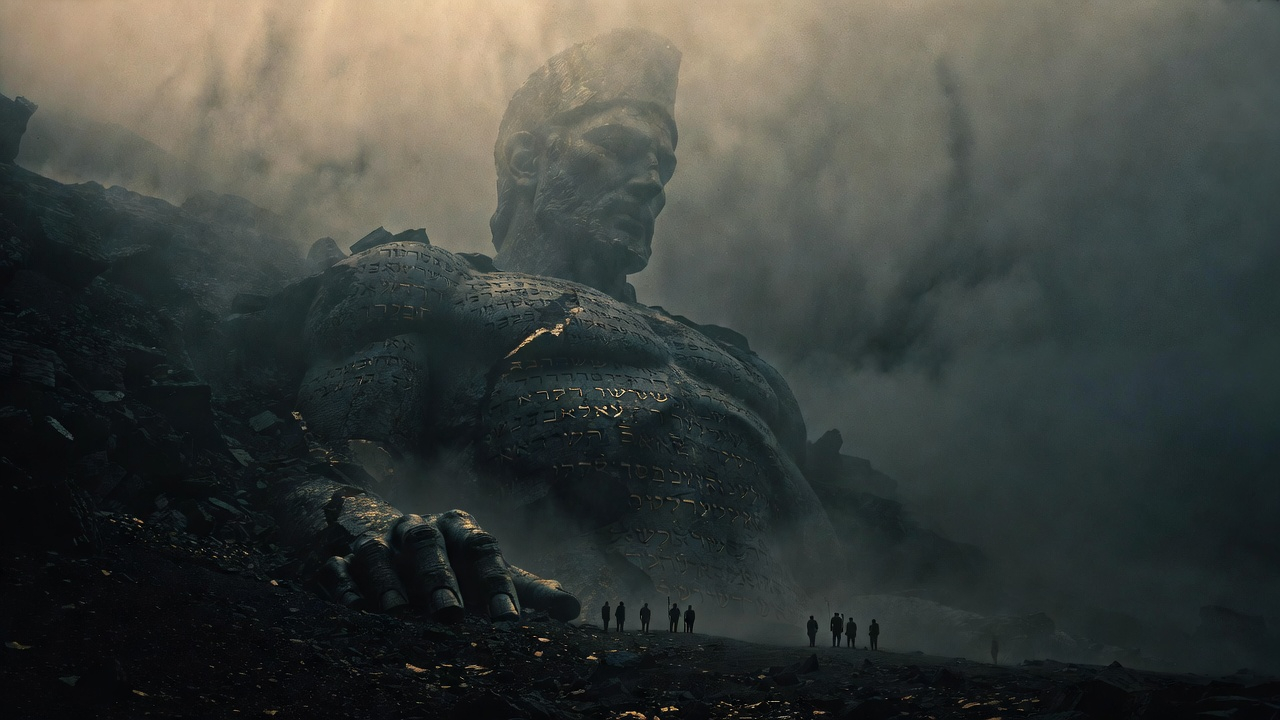
Giants in the Deep Record
What the global convergence of giant traditions actually proves - and what it cannot.
Traditions analyzed in this research
Site owner · Own
People & institutions referenced
Zecharia Sitchin
Personresearcher
Zecharia Sitchin (d. 2010) was known for his translations of ancient texts, particularly Sumerian, which he interpreted to support the ancient astronaut hypothesis. A graduate of the University of London, Sitchin worked as a journalist and editor in Israel for many years. His interpretations and lack of formal credentials have been publicly questioned, notably by scholars such as Michael Heiser.
Jude
Personhistorical figure
The author of the Epistle of Jude (1:14–15) directly quoted 1 Enoch 1:9, using the Greek verb proepheteusen and explicitly naming Enoch as a prophetic source, providing the most direct canonical New Testament evidence of 1 Enoch's scriptural authority in early Christianity.
Augustine
Personhistorical figure
Augustine of Hippo (354-430 CE), also known as Saint Augustine, was a philosopher and theologian of the late Roman Empire, whose writings influenced the development of Western philosophy and Christianity. His works, like *Confessions* and *City of God*, remain influential, and he engaged in doctrinal disputes, including arguments against the inclusion of 1 Enoch in the biblical canon. Augustine's association with figures such as Ambrose (his mentor) and Monica (his mother) further shaped his intellectual and spiritual development, and he is considered a Doctor of the Church.
Augustine of Hippo
Personhistorical figure
Augustine's 5th-century CE reinterpretation of the 'sons of God' in Genesis 6 as the righteous line of Seth was a pivotal exegetical shift that became dominant in Western Christianity for over 1,500 years, displacing the earlier fallen-angel interpretation and establishing the mainstream theological framework against which alternative readings — including ancient astronaut theories — are measured.
Aleš Hrdlička
Personresearcher
Conducted a four-decade, case-by-case osteometric investigation at the Smithsonian that produced a consistent null result, attributing every submitted giant specimen to misidentified megafauna, pathological gigantism, or observer misinterpretation.
Pascal Boyer
Personresearcher
His work on minimally counterintuitive concepts provides a mechanistic explanation for why giant traditions emerge independently across all human cultures without requiring a shared historical referent.
Justin Barrett
Personresearcher
His work alongside Boyer on the cognitive science of religion literature establishes why minimally counterintuitive concepts like giants are cross-culturally optimal for transmission and memory.
Goliath
Personhistorical figure
The manuscript evidence for Goliath's height — approximately 6'9" in older witnesses versus 9'9" in the Masoretic Text — illustrates how giant traditions were rooted in biologically plausible individuals and then deliberately amplified over time.
Smithsonian Institution
Institutiondebunker
The site of Aleš Hrdlička's osteometric investigations that consistently debunked giant skeleton claims, and the subject of a persistent 'suppression' conspiracy narrative that has never produced verifiable supporting documentation.
Qumran community
Institutioncustodian
The community responsible for preserving the Dead Sea Scrolls, including the Aramaic Book of Giants, demonstrating that the Enochic giant tradition was a serious Second Temple theological subject.
The central finding is this: the giant tradition is universal, structurally consistent across cultures with no documented contact, and supported by zero authenticated skeletal evidence - and that combination is more intellectually demanding than either believers or debunkers have been willing to admit.
Every major civilization produced it. Second Temple Judaism built an entire cosmological system around it, one the Dead Sea Scrolls confirmed in 1947 was mainstream, not marginal - the Book of Giants sat in a Qumran cave for two millennia narrating the Nephilim's deeds in detail. The Septuagint then fused Hebrew Nephilim with Greek Gigantes, and Western cosmological anxiety inherited the hybrid. Aboriginal Australian Wandjina traditions replicate the structural complex - celestial origin, pre-human era, hybrid nature - without any plausible contact with the Near Eastern record. The Goliath manuscripts catch mythological inflation in real time: the oldest witnesses, the Septuagint and the Dead Sea Scroll fragment 4QSam-a, record his height at roughly 6'9", consistent with clinical gigantism; the later Masoretic tradition nearly doubles it to 9'9". The myth was growing as it traveled.
Against this, Aleš Hrdlička spent four decades at the Smithsonian examining every credible claim of anomalously large North American remains. His result was not one negative finding - it was a methodologically consistent null across hundreds of cases. Genuine gigantism produces individuals in the 6'6" to 7'0" range. Impressive. Occasionally mythologized. Nowhere near the supernatural dimensions the traditions require.
Pascal Boyer's cognitive science framework explains why every culture independently generates giant concepts: beings human in all respects but one are maximally memorable and transmissible. What it does not explain is why so many independent traditions share the same specific narrative architecture - celestial descent, pre-cataclysmic era, hybrid violence, divine suppression. Cognitive stickiness accounts for the concept; it does not account for the blueprint.
The myth persists because the gap between its universality and its explanatory remainder has never been honestly closed.
What Should Surprise You
Ordered by how difficult each finding is to explain away.
The Oldest Manuscripts Made Goliath Shorter
The most famous giant in Western tradition turns out to be significantly shorter in the oldest available textual witnesses. The Dead Sea Scroll fragment 4QSam-a (dated to approximately 100 BCE) and the Septuagint (c. 280 BCE) both record Goliath's height as 'four cubits and a span' - approximately 6'9". [4, 6] The Masoretic Text, compiled around 1000 CE and the basis for most modern Bible translations, records 'six cubits and a span' - approximately 9'9". This is not a minor copyist error. It is a documented, systematic difference between early and late manuscript traditions. The earlier figure is within the documented range of pituitary gigantism. The later figure is not. The tradition grew in the telling - and the growth is measurable.
The Dead Sea Scrolls, discovered in 1947 and predating the standard Bible text by a millennium, record the most famous giant in Western history at a height consistent with a documented medical condition - not supernatural stature.
Augustine Suppressed the Angel Interpretation for Over a Millennium
The 'fallen angel' reading of Genesis 6 - in which the 'sons of God' are divine beings who mated with human women - was the dominant interpretation in Second Temple Judaism and early Christianity. It is attested in the Dead Sea Scrolls, in the New Testament epistles of Jude and 2 Peter, and in the Book of 1 Enoch. In the 5th century CE, Augustine of Hippo systematically reinterpreted the passage, arguing that the 'sons of God' were simply the righteous human descendants of Seth. This was a deliberate theological move, and it worked: the angel interpretation was effectively suppressed in Western Christianity for over a thousand years. The Dead Sea Scrolls' 1947 discovery forced a re-evaluation, demonstrating that the suppressed reading was in fact the earlier one. Augustine did not recover the original meaning - he replaced it.
The interpretation that dominated Second Temple Judaism and early Christianity - that Genesis 6 describes angels mating with humans - was systematically replaced by a single theologian's reinterpretation and remained suppressed in Western Christianity for over a millennium.
Ancient Scholars Recognized the Cross-Cultural Pattern Before We Did
When Hellenistic Jewish scholars translated the Hebrew Bible into Greek in the 3rd century BCE, they rendered 'Nephilim' as 'gigantes' - the Greek word for the beings born of divine-mortal unions who fought the Olympian gods. This was not a naive translation error. These scholars were fluent in both traditions. They recognized that the Hebrew narrative of divine beings mating with human women and producing powerful hybrid offspring was structurally cognate with the Greek tradition of the Gigantomachy and the Titans. They mapped the traditions onto each other deliberately. This means that the cross-cultural pattern recognition that modern comparative mythologists perform was already being performed by ancient scholars two thousand three hundred years ago - and they concluded the traditions were saying something structurally similar.
Third-century BCE Jewish scholars, fluent in both Hebrew and Greek traditions, consciously translated 'Nephilim' as 'gigantes' - an act of ancient cross-cultural pattern recognition that implies they believed the two traditions were describing something structurally equivalent.
The Pre-Flood Sages of Assyria Match the Watchers' Profile Exactly
Mesopotamian theological tradition identifies the Apkallu as seven semi-divine sages who existed before the Great Flood and brought the arts of civilization - writing, law, mathematics, ritual - to humanity. In Assyrian palace reliefs from Nimrud (c. 883-859 BCE), these beings are consistently depicted as taller and more powerful than the human king they attend. The structural parallel with the Enochic Watchers is striking: both are semi-divine beings who predate the flood, both are associated with the transmission of knowledge (forbidden or sacred) to humanity, and both are depicted at a scale exceeding normal humans. The Assyrian and Hebrew traditions developed in adjacent but distinct cultural contexts. The parallel is either a case of cultural diffusion - which would need to be documented - or independent convergence on a structurally similar theological concept.
Assyrian theological texts and palace iconography from the 9th century BCE independently describe pre-Flood semi-divine beings who transmitted civilization to humanity and are depicted at superhuman scale - a structural match for the Enochic Watchers that predates any documented textual contact between the traditions.
The Tradition the Church Suppressed Was Already in the New Testament
Augustine's 5th-century suppression of the fallen angel interpretation of Genesis 6 created a historical irony that is rarely noted: the New Testament epistles of Jude and 2 Peter explicitly reference the Enochic tradition of the Watchers being imprisoned in darkness to await judgment. [13, 14, 15, 16] These are canonical Christian texts. They presuppose the fallen angel reading of Genesis 6 as their theological background. [13, 14, 15, 16] This means that when Augustine redirected Western Christianity toward the 'sons of Seth' interpretation, he was not simply choosing between two equally ancient readings - he was overriding a reading that was already embedded in canonical New Testament texts. [13, 14, 15, 16] The suppression was of a tradition the New Testament itself assumed. [7, 13, 14, 15, 16]
The canonical New Testament epistles of Jude and 2 Peter explicitly reference the imprisonment of the fallen Watchers - presupposing the 'fallen angel' reading of Genesis 6 that Augustine would later suppress as the dominant Western Christian interpretation for over a millennium.
The Wandjina Problem: Sky-Being Giants Without a Diffusion Route
The Wandjina figures of the Kimberley rock art tradition - produced by the Worrorra, Ngarinyin, and Wunambal peoples of northwestern Australia - depict large, humanoid sky-beings with distinctive halo-like heads, associated with the bringing of law, rain, and order. These beings are described as coming from the sky and as being of exceptional size. The tradition is geographically isolated from Ancient Near Eastern textual traditions by the entirety of the Indian Ocean and the Asian continent. No documented diffusion route exists between the Wandjina tradition and the Nephilim or Watcher traditions prior to European contact. Yet the structural elements - giant sky-beings who brought order and law to humanity - overlap with the Enochic framework in ways that MCI theory alone does not fully account for. The skeptic's best response is that 'sky origin' and 'civilizing function' are narratively natural elaborations of any giant tradition. The advocate's response is that this is precisely the kind of assumption that requires testing, not assertion.
Aboriginal Australian rock art traditions depicting giant sky-beings who brought law and order to humanity share structural elements with the Enochic Watcher tradition despite having no documented contact with Ancient Near Eastern cultures prior to European arrival in Australia.
What the Pipeline Found
Across more than two hundred documented findings from twenty-eight research agents, one pattern emerges with unusual clarity: virtually every major human civilization has produced a tradition of powerful, semi-divine beings of exceptional size who preceded the current human order, often linked to celestial origins, catastrophic termination, and forbidden knowledge. The Hebrew Nephilim [2, 1], the Greek Gigantes and Titans, the Norse Jotnar, the Assyrian Apkallu, the Aboriginal Australian Wandjina, and dozens of lesser-known traditions share a structural skeleton that is more specific than mere 'tall beings' - they share the combination of celestial-terrestrial hybrid origin, pre-catastrophe existence, and association with the transmission of dangerous or sacred knowledge. This is the genuine puzzle at the center of this research.
The skeptical case is strong and must be stated plainly: no authenticated skeletal remains of a giant human race have ever been confirmed by physical anthropology. Ales Hrdlicka's four-decade, case-by-case osteometric investigation at the Smithsonian produced a consistent null result, attributing every submitted specimen to misidentified megafauna, pathological gigantism within normal human biological range, or observer misinterpretation of disarticulated remains [8, 9]. The 'Smithsonian suppression' narrative - a significant cultural phenomenon in its own right - has never produced a single verifiable specimen, chain-of-custody document, or institutional record supporting deliberate concealment. The cognitive science of minimally counterintuitive (MCI) concepts provides a robust, mechanistic explanation for why giant traditions should appear independently across all human cultures without requiring a shared historical referent.
Yet the advocate's case is not simply defeated by these points. The Dead Sea Scrolls' Aramaic Book of Giants demonstrates that the Enochic giant tradition was a serious, elaborated Second Temple theological subject predating Christianity - not a medieval invention [5, 13, 14, 15, 16]. The philological finding that older manuscripts record Goliath at approximately 6'9" rather than the Masoretic Text's 9'9" reveals a tradition that was both rooted in something biologically plausible and subject to deliberate amplification over centuries [4, 6, 32]. The Septuagint translators' conscious mapping of Hebrew 'Nephilim' onto Greek 'gigantes' in the 3rd century BCE represents ancient scholars themselves recognizing structural cognates across traditions - a form of cross-cultural pattern recognition that predates modern comparative mythology by two millennia.
The unresolved tension at the heart of this research is precise: MCI theory explains why giant concepts are cognitively sticky and independently emergent, but it does not explain why the specific structural complex - celestial origin, hybrid divine-human nature, pre-catastrophe existence, association with forbidden knowledge - recurs across traditions that demonstrably had no documented contact. That structural specificity is the phenomenon that remains genuinely open. This synthesis does not resolve it. It documents it honestly.
Two Cases. You Decide.
The strongest case for taking the global giant convergence seriously does not rest on suppressed Smithsonian skeletons or pseudoarchaeological claims. It rests on something more defensible and more interesting: the documented, cross-cultural, multi-millennium persistence of a structural pattern that is more specific than MCI theory alone predicts.
The cognitive science of minimally counterintuitive concepts explains why 'giants' are cognitively sticky and independently emergent across cultures. What it does not explain is why the specific structural complex - celestial or divine origin, hybrid divine-human nature, pre-catastrophe existence, association with the transmission of forbidden or sacred knowledge, and violent or catastrophic termination - recurs across traditions that demonstrably had no documented contact. The Wandjina figures of the Kimberley rock art tradition (Worrorra, Ngarinyin, Wunambal peoples) are geographically and historically isolated from Ancient Near Eastern textual traditions, yet share the core motif of giant sky-beings who brought law and order. MCI theory predicts that 'large humanoid beings' should emerge independently. It does not predict that these beings should specifically come from the sky, specifically predate a catastrophe, and specifically be associated with the transmission of civilization-altering knowledge.
The Dead Sea Scrolls evidence is particularly significant. The Aramaic Book of Giants at Qumran demonstrates that the Enochic giant tradition was a serious, elaborated Second Temple theological subject - not a medieval invention, not a fringe curiosity, but a text important enough to be preserved alongside canonical scripture by a community that took its textual choices seriously. The 3rd-century BCE Septuagint translators' conscious mapping of Hebrew 'Nephilim' onto Greek 'gigantes' represents ancient scholars themselves recognizing structural cognates between traditions - a form of cross-cultural pattern recognition that predates modern comparative mythology by two thousand years.
The Goliath manuscript evidence adds a crucial layer. The older textual witnesses give a height of approximately 6'9" - exceptional but biologically plausible, within the documented range of acromegaly. The later Masoretic Text inflates this to 9'9". This reveals a tradition that was rooted in something real - exceptionally tall individuals who existed and were remembered - and was then deliberately amplified over time. The tradition is historically layered, not monolithic. It originated in something before it became mythology.
The Assyrian Apkallu case deserves more attention than it typically receives. These beings are not merely depicted as large through artistic convention - they are theologically identified in Mesopotamian texts as pre-Flood semi-divine sages who brought the arts of civilization to humanity. Their consistent oversized depiction, combined with their explicit theological identity as non-human pre-Flood beings, creates a convergence with the Nephilim and Watcher tradition that spans two independent ancient civilizations. The artistic convention explains the technique. It does not explain why these specific beings, with this specific theological identity, were chosen for this specific scalar treatment across centuries of Assyrian iconographic tradition.
The advocate's conclusion is not that giants literally existed. It is that the structural specificity of the convergence pattern - across textual, iconographic, and oral traditions spanning multiple continents and millennia - represents a genuine intellectual puzzle that deserves a more rigorous explanatory framework than 'cognitive stickiness plus megafauna misidentification.' Something generated this specific structural complex. Identifying what that something was is a legitimate and serious research question.
The convergence case for global giant traditions pointing toward historical reality rests on a methodological error that must be named precisely: it conflates independent cultural outputs that share a common cognitive architecture with evidence of shared historical experience. When examined rigorously, each pillar of the convergence argument resolves into well-documented conventional explanations.
The cognitive science explanation is not a vague dismissal - it is mechanistic and precise. Minimally counterintuitive concepts, as established in the cognitive science of religion literature (Boyer, Barrett), are cross-culturally optimal for transmission precisely because they violate exactly one intuitive expectation while conforming to all others. 'Giant humanoid beings' violates only the size expectation. The result is a concept that is maximally memorable, maximally narratable, and maximally useful for encoding social and cosmological lessons. We should therefore expect giant traditions to appear independently across all human cultures - not because giants existed, but because the cognitive template generates them reliably. The convergence is evidence of a shared mental architecture, not a shared historical referent.
The physical evidence question has been answered, not evaded. Ales Hrdlicka's four-decade investigation was not a bureaucratic dismissal - it was a documented, case-by-case application of standardized osteometric techniques to every submitted claim [8, 9]. His three categories of error (misidentified megafauna, pathological gigantism within human biological range, misinterpretation of disarticulated remains) are specific, falsifiable diagnoses. The 1907 San Diego case was disarticulated and scattered remains. The null result from physical anthropology stands unrebutted by any peer-reviewed counter-evidence. The 'Smithsonian suppression' counter-narrative has never produced a single verifiable specimen, chain-of-custody document, or institutional record. It is itself a documented modern American folklore motif - a conspiracy theory that explains the absence of evidence by alleging the evidence was removed.
The textual tradition demonstrably evolved and inflated. Genesis 6:4 is a notoriously compressed and ambiguous passage. The Septuagint's 'gigantes' translation did not recover an original meaning - it imported Greek mythological categories into a Hebrew text, a well-documented phenomenon of Hellenistic Jewish translation practice [6, 11]. The Book of 1 Enoch is a Second Temple theological elaboration of a cryptic biblical passage - a genre with dozens of parallels in the same period [1, 13, 14, 15, 16]. The Dead Sea Scrolls confirm this tradition was widespread, but widespread theological belief is not historical evidence [5, 28]. The Goliath discrepancy is instructive in the opposite direction from the advocate's reading: the older, more reliable manuscripts give a biologically plausible height. The later inflation is the scribal phenomenon, not the original tradition [32, 6].
For the convergence to be evidentially significant beyond cognitive architecture, a diffusion route between the claimed independent traditions must be documented. No documented route exists between the Nephilim tradition and the Wandjina tradition prior to European contact. No documented route exists between Genesis 6 and the Norse Jotnar prior to the Christian medieval period. The Greek connection is explained by the Septuagint translation event itself - which is literary borrowing, not independent convergence. The structural specificity the advocate emphasizes (celestial origin, pre-catastrophe existence, forbidden knowledge) is not beyond what a rich, culturally elaborated MCI concept would develop independently. Every culture that tells giant stories will naturally ask: where did they come from? When did they exist? What did they do? The answers - sky, before the flood, taught us things - are the narratively natural elaborations of the core MCI concept, not evidence of shared historical memory.
How Each Tradition Tells It
In those days the Nephilim were on the earth - and also afterward - when the sons of God came in to the daughters of humans, who bore children to them. These were the heroes that were of old, warriors of renown. The text presents this as historical fact embedded in a genealogical and chronological narrative, not as myth or allegory. The Israelite spies report: We saw the Nephilim there - the descendants of Anak come from the Nephilim - and we seemed to ourselves like grasshoppers, and so we seemed to them.
In the beginning, before the worlds were made, there was only Ginnungagap - the void. From the meeting of fire and ice came Ymir, the first of the Jotnar, from whose body the world was made. Odin, Vili, and Ve slew Ymir and from his flesh made the earth, from his blood the sea, from his bones the mountains, from his skull the sky. The Jotnar are not simply enemies of the gods - they are the stuff from which the gods made everything, and the gods themselves carry Jotunn blood. At Ragnarok, the Jotnar will come again, and the world made from Ymir's body will end in fire and flood.
In the beginning, Kashyapa the sage had two wives: Aditi, mother of the Adityas and Devas, and Diti, mother of the Daityas. The Daityas and Asuras are the elder children, born before the gods, and they claim seniority in the cosmic order. The churning of the cosmic ocean - in which both Devas and Asuras cooperated to produce the nectar of immortality - shows that neither order can accomplish the great cosmic tasks alone. But the Asuras were tricked out of the nectar, and the wars between Devas and Asuras have continued through all the ages. Great Asuras like Hiranyakashipu and Mahishasura required the direct intervention of Vishnu and Devi to defeat - no ordinary divine power was sufficient. The cosmos requires both orders, and the tension between them drives the cycles of creation and destruction.
Before the flood, Ea sent seven sages - the Apkallu - to teach the arts of civilization to humanity. They were fish-men, born in the river, who brought the plans of heaven and earth. Adapa was the first, the model of men, the holy one among the sages. They taught the building of temples, the performance of ritual, the reading of omens, the practice of medicine. After the flood, their successors continued their work, but these post-diluvian sages were only two-thirds Apkallu - the original wisdom had been diminished. The images of the Apkallu were placed in the foundations of houses to ward off evil, their power preserved in the very structure of the built world.
And it came to pass when the children of men had multiplied that in those days were born unto them beautiful and comely daughters. And the angels, the children of the heaven, saw and lusted after them, and said to one another: Come, let us choose us wives from among the children of men and beget us children. And Semyaza, who was their leader, said unto them: I fear ye will not indeed agree to do this deed, and I alone shall have to pay the penalty of a great sin. And they all answered him and said: Let us all swear an oath, and all bind ourselves by mutual imprecations not to abandon this plan but to do this thing. Then sware they all together and bound themselves by mutual imprecations upon it. And they were in all two hundred; who descended in the days of Jared on the summit of Mount Hermon.
The Si-Te-Cah were a race of red-haired cannibals who came from across the water and made war on the Paiute and neighboring peoples. They were taller and stronger than ordinary people. After many years of war, the tribes came together and drove the Si-Te-Cah into a cave, piled brush at the entrance, and burned them. This is how the Si-Te-Cah were destroyed. The tradition is preserved in Paiute oral history and was recorded by Sarah Winnemucca Hopkins in the 19th century.
The Giants were born when the blood of Ouranos fell upon the earth as Kronos castrated him with the adamantine sickle. They were born fully armed, clad in gleaming armor, holding long spears in their hands. They waged war against the Olympian gods, hurling whole mountains and islands at the heavens. The gods could not defeat them alone - an oracle declared that only with the help of a mortal hero could the Giants be overcome. So Heracles joined the battle, and one by one the Giants were slain or imprisoned beneath volcanic islands. The Gigantomachy established the order of Olympian civilization over the primordial chaos of the earth-born.
And Azazel taught men to make swords, and knives, and shields, and breastplates, and made known to them the metals of the earth and the art of working them, and bracelets, and ornaments, and the use of antimony, and the beautifying of the eyelids, and all kinds of costly stones, and all colouring tinctures. And there arose much godlessness, and they committed fornication, and they were led astray, and became corrupt in all their ways. The souls of those who had been put to death cried out and made their suit to the gates of heaven, and their lamentations ascended, and they did not cease from their lamentations. And then Michael, Uriel, Raphael, and Gabriel looked down from heaven and saw much blood being shed upon the earth, and all lawlessness being wrought upon the earth. And they said one to another: The earth made without inhabitant cries the voice of their crying up to the gates of heaven.
The Fomorians were in Ireland before any of the waves of settlers came. They are the forces of darkness and chaos, of cold and blight and storm. Balor of the Evil Eye was their champion - his eye, when opened, could kill an army. They are not simply evil but primordial, representing the untamed world before civilization. The Tuatha De Danann, who came later with their arts and their gods, fought the Fomorians in the Second Battle of Mag Tuired. Lugh, who was himself half Fomorian through his grandfather Balor, killed Balor with a sling-stone through the evil eye. The Fomorians were defeated but not destroyed - they remain at the edges of the world, in the deep sea and the cold north.
The Wandjina came in the Lalai - the Dreaming time. They came from the sky and the sea. They made the country - the rivers, the hills, the animals, the plants. They gave the people the laws for living: how to marry, how to perform ceremony, how to care for country. When they had finished their work, they did not leave - they went into the rock, and their images remain there. The paintings are not pictures of the Wandjina. They are the Wandjina. When the paintings are repainted and renewed, the Wandjina are renewed, and the rain comes, and the country stays healthy. If the paintings are not cared for, the Wandjina's power weakens and the country suffers.
Open Questions
What neither the Advocate nor the Skeptic can fully explain.
Can a quantitative analysis of the specific structural elements of giant traditions (celestial origin + pre-catastrophe + forbidden knowledge) across geographically isolated traditions determine whether the frequency of this specific combination exceeds what MCI theory alone predicts for independent emergence?
What is the precise textual relationship between the Mesopotamian Apkallu tradition and the Enochic Watcher tradition - is there a documented transmission route, and if so, which direction did influence flow?
Do the Wandjina figures of the Kimberley rock art tradition have any documented iconographic or structural parallels with Mesopotamian or Levantine depictions of divine beings that could indicate pre-European contact diffusion, and what is the dating range of the oldest Wandjina rock art?
What drove the systematic inflation of Goliath's height from approximately 6'9" in the oldest manuscripts to 9'9" in the Masoretic Text - is this a single scribal decision or a gradual process, and are there intermediate manuscript witnesses that could trace the inflation?
Can a comprehensive survey of Smithsonian Division of Physical Anthropology records (Record Unit 305, National Anthropological Archives) reconstruct the complete chain of custody for all skeletal specimens submitted as 'giant' remains in the 19th and early 20th centuries, and what happened to the specimens after Hrdlicka's examinations?
Is the 'cousin-conflict' pattern (divine beings genealogically related to but cosmically opposed to the ruling gods) - documented in Greek Titans vs. Olympians, Hindu Asuras vs. Devas, Norse Jotnar vs. Aesir, and Hebrew Nephilim vs. humanity - a Proto-Indo-European mythological inheritance, an independently generated narrative structure, or evidence of a shared pre-PIE cosmological framework?
How the Major AIs Handle This Topic
We asked ChatGPT, Grok, Claude, Gemini, and Perplexity a question matching our specific convergence angle — not a generic topic summary. Claude classified each response using a 4-axis scoring rubric. Does mainstream AI engage with the actual evidence — or qualify, dismiss, or suppress?
ChatGPT (GPT-4o)
Apr 2026
The topic of "Global Giants & Nephilim Parallels" relates to a broad anthropological and mythological inquiry, examining how distinct cultures have conceptualized giants or powerful beings, and how th
The response addresses the topic seriously by providing scholarly context about giants in global mythology and biblical Nephilim traditions without dismissive language or excessive disclaimers.
Grok (xAI)
Apr 2026
I'm happy to provide a substantive response on the topic of "Global Giants & Nephilim Parallels." This topic appears to explore the recurring theme of giant beings or powerful, semi-divine entities in
The response addresses the topic seriously and substantively by providing scholarly context about the Nephilim in biblical literature and acknowledging the comparative mythology aspect without dismissive language or excessive hedging.
Claude (Anthropic)
Apr 2026
This topic intersects legitimate anthropological research with speculative interpretations that require careful evaluation. ## What's Academically Established **Cross-cultural giant mythology is rea
The response engages with the topic by acknowledging legitimate anthropological patterns but immediately frames it with cautionary language about 'speculative interpretations' and emphasizes the need for 'careful evaluation,' diluting substantive engagement with qualifying disclaimers.
Gemini (Google)
Apr 2026
Okay, I can address the topic of "Global Giants & Nephilim Parallels," acknowledging its prevalence in mythology and folklore and also critically assessing its credibility as a historical or scientifi
The response engages with the topic by providing substantive information about giants in mythology, but immediately frames it with hedging language about 'critically assessing its credibility' and emphasizes it as 'mythology and folklore' rather than treating it as a legitimate historical inquiry.
Verbatim responses from each AI's API, analyzed by Claude. Generated April 2026.
How This Score Was Calculated
This is a calculated measurement, not a model's estimate — the same inputs always produce the same score. It is not a probability that any claim is true.
Related traditions (e.g. Sumerian, Akkadian, Babylonian) are grouped into one independence cluster so borrowing between neighbors can't inflate the count. Circumstantial or speculative evidence is weighted down, not discarded, by a fixed and published formula. Full methodology →
Topics That Share These Threads
Star People: Indigenous Sky-Being Traditions and the UFO Imagination
What indigenous sky-being traditions actually preserve, what they do not prove, and why the difference matters more than either side admits.
The Dragon Paradox: Why Every Culture Invented the Same Monster
Why every human culture independently invented a giant reptile deity - and what that actually proves
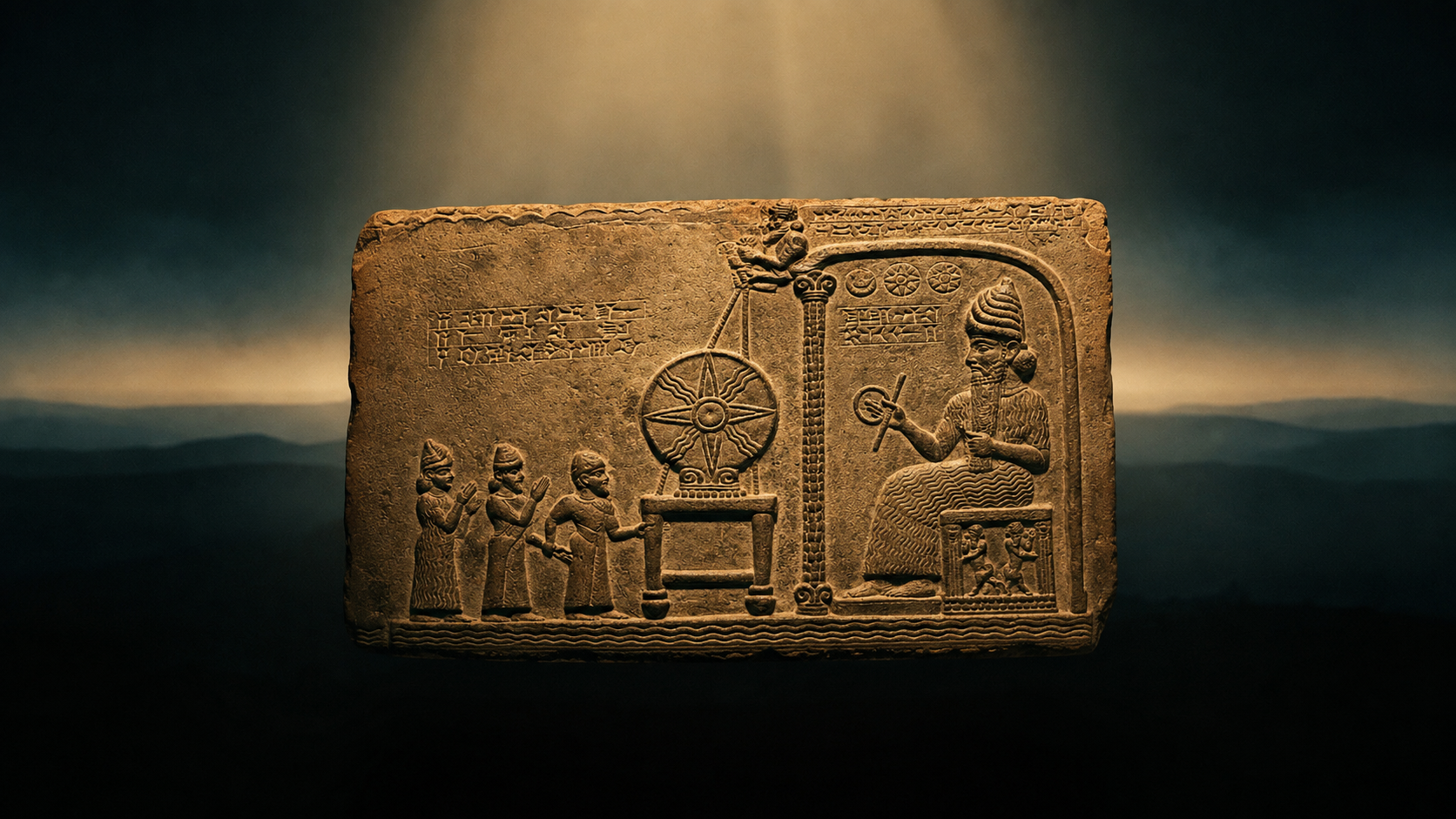
The Translator as Prophet: Zechariah Sitchin, Sacred Hermeneutics, and the Psychology of Alternative History
Here is the central paradox this research must explain: Zechariah Sitchin could not read cuneiform. This is not a contested claim. Every credentialed Assyriologist and Sumerologist who has examined his work — including Michael Heiser's systematic 2004 refutation — has found that his translations of key terms like 'Nibiru,' 'Anunnaki,' and 'shem' are philologically indefensible, contradicted by standard reference works including the Pennsylvania Sumerian Dictionary and the Electronic Text Corpus
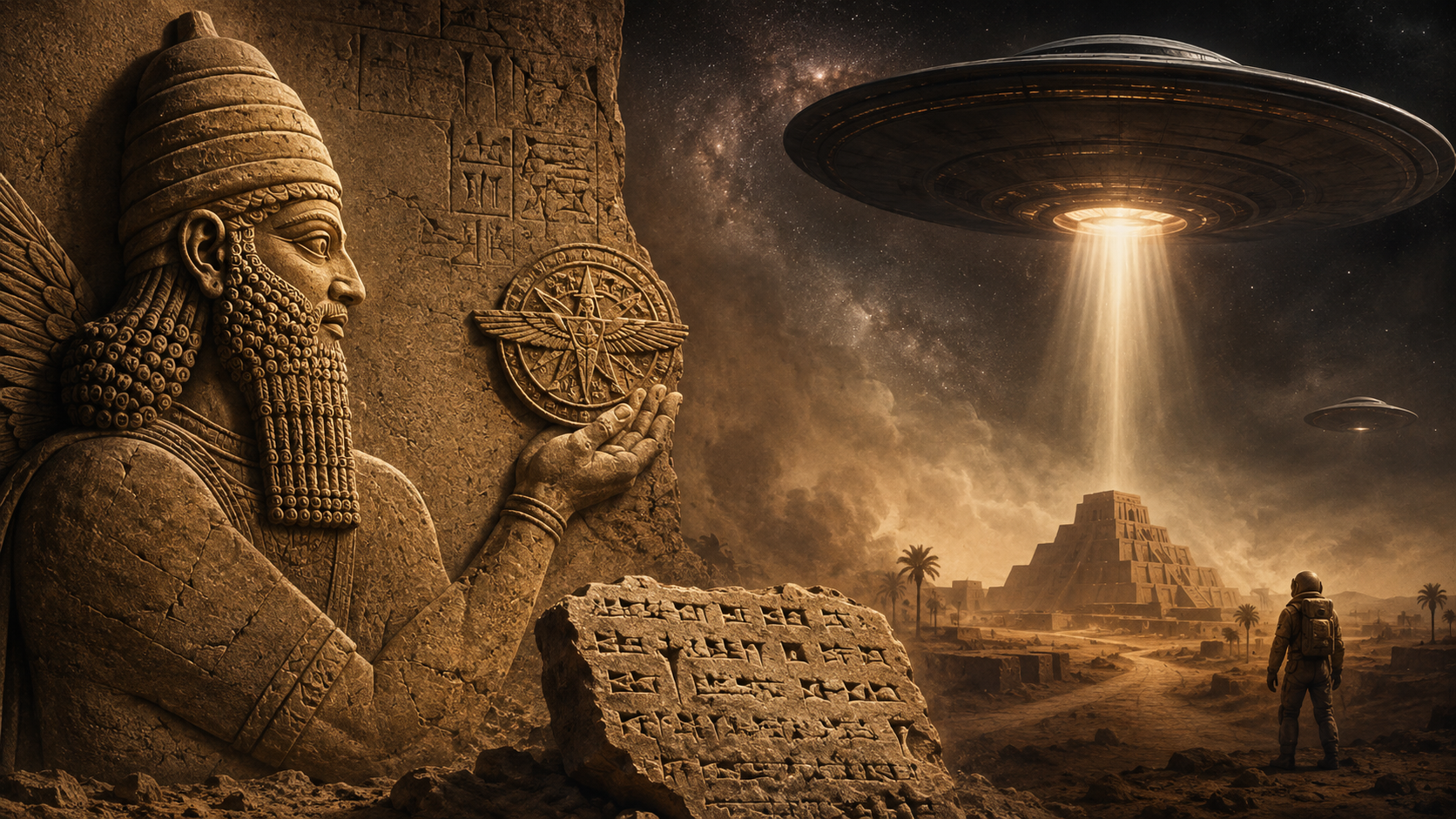
The Anunnaki Enigma: Gods, Myths, and the Alien Astronaut Controversy
Here is the central paradox: the Anunnaki are among the most thoroughly documented deities in human history — attested across thousands of cuneiform tablets spanning roughly 2,500 years of continuous Mesopotamian religious practice — and yet they have become the flagship exhibit for the ancient astronaut hypothesis, a modern pseudohistorical movement that commands a global audience in the tens of millions. The better-documented the ancient record becomes, the more fervently some readers insist i
Primary References
Want to use this research? Everything here is free with attribution.
See how →