Were the dramatically elongated skulls found on every inhabited continent shaped by human ritual, natural variation, or something the archaeological consensus still cannot fully explain?
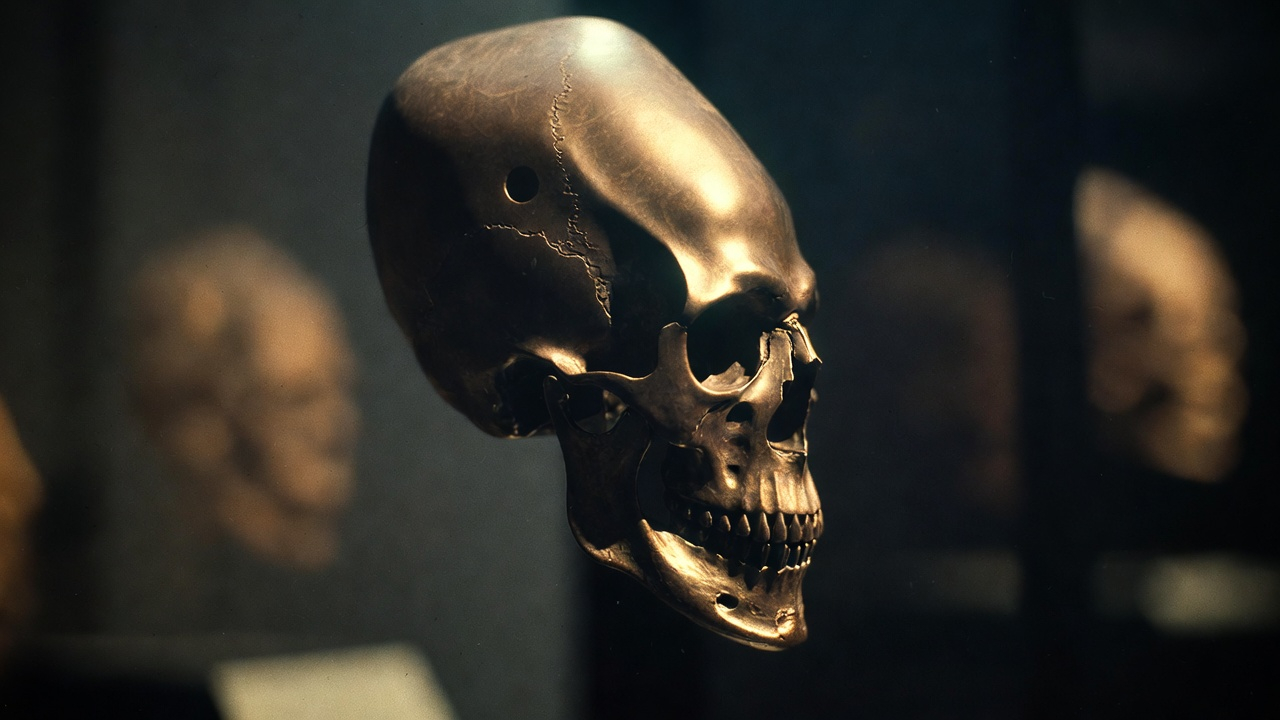
Shaped Heads, Sacred Status
What the global archaeology of cranial deformation actually reveals - and what the Paracas anomaly claims get right and wrong
Traditions analyzed in this research
Site owner · Own
People & institutions referenced
Brien Foerster
Personresearcher
Brien Foerster is known for promoting alternative archaeological theories, particularly concerning megalithic sites and elongated skulls, often self-published via platforms like YouTube and Ancient Origins. He founded Hidden Inca Tours and has appeared on Coast to Coast AM discussing ancient mysteries with colleagues like Chris Dunn. Foerster's claims about Paracas skulls have been deemed fringe by mainstream science. He attended an unspecified Canadian university, earning an Honours Bachelor of Science degree, and assisted with the Mo’okiha O Pi’ilani project in 1995.
Hippocrates
Personhistorical figure
Hippocrates was an ancient Greek physician who lived circa 450–380 BCE and is associated with the Hippocratic Corpus, a collection of early Ancient Greek medical works, although most of the writings were not authored by him but attributed to him by convention. He established the School of Kos, where he taught medicine. A primary scholarly debate concerns authorship of the Hippocratic Corpus.
Akhenaten
Personhistorical figure
Akhenaten was an Egyptian pharaoh of the 18th dynasty, reigning approximately from 1353 to 1336 BCE. He is known for his religious innovations, primarily the establishment of Atenism, which elevated the Aten (sun disk) to the status of the primary state deity. Akhenaten's political relationships included his father Amenhotep III, his presumed son Tutankhaten (later Tutankhamun), and potentially coregents such as Nefertiti and Smenkhkare; he faced conflicts with the priesthood of Amun.
Noah
Personhistorical figure
Referenced in the Book of Enoch as a figure with physical anomalies, cited as part of a convergent textual tradition associating physical anomaly with divine proximity.
Artificial cranial deformation (ACD) stands as one of the most geographically widespread and chronologically persistent body modification practices in the human archaeological record, documented on every inhabited continent except Australia, spanning from the Pleistocene to the early 20th century. The Paracas culture of coastal Peru (ca. 800 BCE - 100 CE) produced the most extreme documented examples of this practice, with skulls so dramatically elongated that they became the focal point of a modern alternative archaeology movement claiming non-human ancestry. This research synthesizes 217 findings across 26 research agents to assess both the legitimate scholarly questions the Paracas skulls raise and the specific claims that collapse under evidential scrutiny.
The genuinely surprising findings are not the ones promoted by alternative archaeology. The real jaw-drop is this: independently, across cultures with no documented contact, human societies arrived at the same counterintuitive insight - that infant skull plasticity during a narrow developmental window could be exploited to permanently encode social hierarchy into the body - and then consistently applied this technology to their elites, embedded it in cosmological frameworks associating physical anomaly with divine proximity, and in some cases used it as a visible diplomatic marker for high-status women marrying into foreign elites. The convergence is real. Its explanation, however, is cognitive and social, not extraterrestrial.
The specific anomalous claims about Paracas skulls - non-human DNA, 25% greater cranial volume, absent sagittal sutures indicating a separate species - fail against peer-reviewed evidence. Genomic analysis confirms standard Native American haplogroups. Osteological measurement confirms volume within normal human range. Absent sagittal sutures are explained by craniosynostosis, a documented medical condition. The DNA claims by Brien Foerster, publicly announced since 2013, have produced zero peer-reviewed publications after more than a decade - a pattern of non-validation that constitutes decisive negative evidence, not a delay.
What remains genuinely unresolved is more interesting than the alternative archaeology framing suggests. Why did the Paracas culture escalate ACD to the most extreme documented form in the archaeological record, beyond what any neighboring Andean culture practiced? What specific religious, political, or cosmological pressures drove that escalation? The Amarna Period iconographic elongation remains contested among Egyptologists - artistic convention, actual ACD, or pathology? These are legitimate scholarly questions that deserve rigorous investigation, not replacement by unfalsifiable claims about alien contact.
Watch the Narratives Light Up Across the Globe
If flood narratives spread by cultural contact, they should cluster along known trade and migration routes. Instead they appear in geographically isolated populations — Aboriginal Australia, the American Southwest, sub-Saharan Africa, and the Andes — separated by oceans and millennia. Drag the time scrubber to watch when each tradition first documented the event. Click any marker for the source.
When Each Tradition Documented the Event
For diffusion to explain shared narrative structure, the story must travel before it's recorded. This timeline shows the documented dates for each tradition — including oral traditions whose geological corroboration allows independent dating. Scroll right for the full picture. Click any marker to see the source.
What Should Surprise You
Ordered by how difficult each finding is to explain away.
The Most Extreme Skulls on Earth Were Made by Humans, on Purpose
The Paracas skulls are not merely elongated - they represent the most extreme documented form of annular cranial deformation in the entire archaeological record. The cultural commitment required to produce these shapes was extraordinary: tight cloth bands applied to the heads of infants over months or years, sustained by parents and communities who regarded the resulting morphology as a mark of distinction so important it was worth permanently reshaping a child's skull. The skulls produced are so dramatically different from unmodified human crania that even trained physical anthropologists encountering them for the first time report a visceral sense of encountering something non-human. That visceral response is real - and it is produced entirely by human cultural practice, not by non-human biology.
The Paracas skulls are the most morphologically extreme product of a documented human body modification practice - their apparent non-human appearance is the direct result of the most intense application of a technique practiced on every inhabited continent.
Hippocrates Recorded the First Nature-Versus-Nurture Debate Using Elongated Skulls
In the 5th century BCE, Hippocrates documented the Macrocephali of the Black Sea region and made an observation that was centuries ahead of its time: the practice began as intentional deformation but the people themselves believed it had become hereditary - that children of elongated-skull parents were born with naturally elongated skulls. This is the first recorded instance of the nature-versus-nurture debate applied to a physical trait, and it was triggered by observations of cranial deformation. Hippocrates was skeptical of the hereditary claim but documented it faithfully. The irony is that modern genetics has partially vindicated the intuition: some cranial morphology is heritable, and sustained ACD over generations may interact with developmental genetics in ways not yet fully studied [8, 22].
Hippocrates in the 5th century BCE recorded that a population practicing cranial deformation believed the trait had become naturally heritable - the first documented claim that an acquired physical modification had become genetic, 2,400 years before Darwin.
High-Status Foreign Women Were Identified by Their Skulls Across Ancient Europe
Peer-reviewed genetic analysis of Migration Period European skeletal assemblages has revealed a striking pattern: in some populations, artificial cranial deformation was practiced predominantly by women who were genetically distinct from the local population - women who had married into the local elite from elsewhere. Their elongated skulls were not just status markers but identity documents, permanently encoding their foreign origin and high-status lineage into their bodies. A woman arriving in a new community with an elongated skull was immediately, visually identifiable as someone of elite foreign origin. This is a level of social sophistication in body modification that has no parallel in modern practice - the skull as a diplomatic credential.
Genomic analysis of ancient European burial assemblages shows that cranially deformed individuals in some populations were predominantly high-status foreign-born women, suggesting the practice functioned as a permanent, visible diplomatic identity marker encoded in the body at birth.
The Ubaid Figurines Are 4,000 Years Older Than the Paracas Skulls and Show the Same Shape
The pre-Sumerian Ubaid culture of Mesopotamia (c. 6500-3800 BCE) produced anthropomorphic terracotta figurines with distinctly elongated, reptilian-like heads - nearly 4,000 years before the Paracas culture began [3, 21, 24]. These figurines have been interpreted variously as depicting gods, priests, or elite individuals [11, 21, 25]. They represent an independent iconographic tradition, geographically and chronologically remote from the Andes, in which the elongated head is associated with divine or elite status [3, 11, 21, 24, 25]. Whether these figurines depict actual ACD, a mythological being, or a purely artistic convention is unresolved - but their existence means the iconographic association between cranial elongation and divine or elite status predates the Paracas culture by millennia [3, 11, 21, 24, 25].
Ubaid culture terracotta figurines from 6500 BCE depict elongated-headed beings associated with divine or elite status - predating the Paracas culture by nearly 4,000 years and representing an independent Old World iconographic tradition with the same visual vocabulary.
The Paracas Escalation Has No Mainstream Explanation
Multiple Andean cultures practiced cranial deformation - the Tiwanaku, Wari, Moche, Nazca, and others all produced modified crania [4, 26]. But the Paracas skulls are categorically more extreme than any neighboring culture's examples. Mainstream archaeology identifies the practice as a status marker [4, 7, 12, 26] but does not explain why the Paracas escalated it to a degree unmatched anywhere in the world. This is a genuine explanatory gap. The generic 'status marker' hypothesis predicts variation in practice but does not predict that one culture would push the practice to its absolute biological limit while neighboring cultures practicing the same technique stopped well short of that limit. The specific cultural pressures - religious, political, cosmological - that drove this escalation remain unidentified in the peer-reviewed literature.
Multiple neighboring Andean cultures practiced the same annular deformation technique as the Paracas, yet no other culture anywhere in the world matched the Paracas in the extremity of the resulting morphology - a fact that the standard 'status marker' explanation does not account for.
Ancient Texts Across Three Unconnected Traditions Describe Anomalously Shaped Beings as the Source of Civilization
The Akkadian apkallu tradition describes seven semi-divine pre-Flood sages with non-human features who brought the arts of civilization to humanity. The Book of Enoch describes the patriarch Noah as born with an anomalous, non-human appearance suggesting divine paternity. Genesis 6:1-4 records the Nephilim as hybrid offspring of divine beings and human women. These three textually independent traditions - Mesopotamian, Jewish apocryphal, and Hebrew biblical - share a structural pattern: beings with physically anomalous characteristics are the source or custodians of civilizational knowledge. This pattern does not prove anything about the Paracas skulls. But it does establish that the cognitive association between physical anomaly and civilizational authority was culturally active in the ancient Near East, providing a framework within which the deliberate creation of physical anomaly through ACD becomes a rational elite strategy - you are not just marking status, you are claiming proximity to the source of civilization itself.
Three textually independent ancient Near Eastern traditions - Akkadian, Jewish apocryphal, and Hebrew biblical - independently describe physically anomalous beings as the custodians or sources of civilization, suggesting a deep cognitive association between physical distinctiveness and civilizational authority that may explain why ACD was so consistently applied to elites across cultures.
Each tradition tells the story through its own lens. Expand any card to read the full account. Filter by shared motif.
11 traditions documented · 0 shared structural motifs identified
What the Pipeline Found
Artificial cranial deformation (ACD) stands as one of the most geographically widespread and chronologically persistent body modification practices in the human archaeological record, documented on every inhabited continent except Australia, spanning from the Pleistocene to the early 20th century. The Paracas culture of coastal Peru (ca. 800 BCE - 100 CE) produced the most extreme documented examples of this practice, with skulls so dramatically elongated that they became the focal point of a modern alternative archaeology movement claiming non-human ancestry. This research synthesizes 217 findings across 26 research agents to assess both the legitimate scholarly questions the Paracas skulls raise and the specific claims that collapse under evidential scrutiny.
The genuinely surprising findings are not the ones promoted by alternative archaeology. The real jaw-drop is this: independently, across cultures with no documented contact, human societies arrived at the same counterintuitive insight - that infant skull plasticity during a narrow developmental window could be exploited to permanently encode social hierarchy into the body - and then consistently applied this technology to their elites, embedded it in cosmological frameworks associating physical anomaly with divine proximity, and in some cases used it as a visible diplomatic marker for high-status women marrying into foreign elites. The convergence is real. Its explanation, however, is cognitive and social, not extraterrestrial.
The specific anomalous claims about Paracas skulls - non-human DNA, 25% greater cranial volume, absent sagittal sutures indicating a separate species - fail against peer-reviewed evidence. Genomic analysis confirms standard Native American haplogroups. Osteological measurement confirms volume within normal human range. Absent sagittal sutures are explained by craniosynostosis, a documented medical condition. The DNA claims by Brien Foerster, publicly announced since 2013, have produced zero peer-reviewed publications after more than a decade - a pattern of non-validation that constitutes decisive negative evidence, not a delay.
What remains genuinely unresolved is more interesting than the alternative archaeology framing suggests. Why did the Paracas culture escalate ACD to the most extreme documented form in the archaeological record, beyond what any neighboring Andean culture practiced? What specific religious, political, or cosmological pressures drove that escalation? The Amarna Period iconographic elongation remains contested among Egyptologists - artistic convention, actual ACD, or pathology? These are legitimate scholarly questions that deserve rigorous investigation, not replacement by unfalsifiable claims about alien contact.
Two Cases. You Decide.
The global convergence of artificial cranial deformation represents a genuinely remarkable phenomenon in the archaeological record - not because it implies extraterrestrial contact, but because it reveals something profound about universal human cognition, social organization, and the deep structure of status signaling that mainstream archaeology has not fully theorized.
The independent discovery of infant skull malleability across geographically isolated cultures is not a trivial observation. The specific biological insight required - that the cranial plates of infants, during a narrow developmental window, respond permanently to sustained mechanical pressure - is non-obvious. It requires sustained observation of infant development, a theory of intervention, and a cultural commitment to apply pressure over months or years. That this insight was reached independently in coastal Peru, the Black Sea region, Central Africa, the Pacific Northwest, Mesoamerica, and Migration Period Europe represents a genuine convergent cognitive achievement.
More striking is the consistent social logic: across the Paracas culture, the Macrocephali documented by Hippocrates, the Hunnic and Alanic elites of Eurasia, the Chinookan peoples, and the Mangbetu of Central Africa, cranial elongation was independently associated with high status, nobility, or distinct elite identity. The geneticist-sourced finding that in some ancient European populations ACD was practiced predominantly by genetically distinct high-status women marrying into local elites adds a further dimension - the practice functioned as a cross-cultural diplomatic identity marker, permanently encoded in the body and visible at a glance. This is a sophisticated social technology.
The Paracas case represents the most extreme documented form of annular cranial deformation in the archaeological record. That escalation beyond neighboring Andean cultures is not explained by the generic 'status marker' hypothesis alone. What specific religious, political, or cosmological pressures drove the Paracas to push this practice further than any other documented culture? The convergent textual traditions - the Book of Enoch's anomalous Noah, the Nephilim of Genesis, the Akkadian apkallu sages - suggest ancient cultures systematically associated physical anomaly with divine proximity, providing a cognitive framework that makes the global adoption of ACD as an elite marker anthropologically coherent. The Paracas escalation may reflect an intensification of precisely this logic, and that question deserves rigorous archaeological investigation.
The convergence of cranial deformation practices across global cultures is precisely what basic principles of developmental biology, social psychology, and independent invention predict - and the case for a conventional explanation is not merely adequate but overwhelmingly superior to any alternative framing.
The mechanism of ACD has an independent invention barrier of essentially zero. Human infant skulls are uniquely plastic during the first two years of life, with unfused cranial plates that respond to sustained pressure. This is not a cultural secret requiring transmission - it is a biological fact discoverable by any observant caregiver who notices that infants carried in certain ways, or bound in certain cradle-board configurations, develop differently shaped heads. A tight cloth band or a board applied consistently during infancy produces the result. This is categorically different from the independent invention of writing or metallurgy, which require substantial accumulated technical knowledge. The two primary techniques - circumferential binding and board-based pressure - are not independent inventions of complex solutions but the only two mechanical options available given the geometry of the infant skull. There is no third technique.
The social logic is equally universal and independently derivable. Virtually every human culture marks social hierarchy visually. The head, as the most socially salient body part and the locus of identity, is a natural target for status marking. That multiple cultures independently chose cranial elongation as an elite marker is no more surprising than that multiple cultures independently chose ear piercing.
The specific anomalous Paracas claims collapse entirely under scrutiny. The 25% greater cranial volume claim is contradicted by every peer-reviewed osteological study - deformation changes shape, not volume. Absent sagittal sutures are explained by craniosynostosis, occurring in roughly 1 in 2,500 births. The Foerster DNA claims have produced zero peer-reviewed publications after more than a decade - not a delay but a pattern of systematic non-validation that is itself decisive negative evidence. Where actual peer-reviewed genetic analysis exists, it shows standard Native American haplogroups without exception.
The Amarna Period iconographic elongation is almost certainly artistic convention, not evidence of actual ACD: the distortions extend to the entire royal body as part of a documented theological program, disappeared immediately upon Akhenaten's death, and actual Amarna Period skeletal remains do not show systematic royal cranial deformation. Where ACD genuinely diffused - as in Migration Period Europe via Hunnic expansion - specific documented transmission routes with contemporary written attestation exist. No such route connects Paracas to any Old World population.
Both cases in full. Expand any argument to read the complete text.
The cross-tradition parallels in artificial cranial deformation represent a genuinely significant anthropological phenomenon, and the strongest case for their significance doesn't require extraordinary claims. It requires taking the ordinary evidence seriously.
The foundational observation is this: the independent discovery, across geographically isolated cultures on every inhabited continent, of the same non-obvious biological fact — that the infant skull is malleable during a narrow developmental window and can be permanently reshaped through sustained mechanical pressure — is not trivially explained.…
The pattern that keeps surfacing is the convergence of ACD with elite status.…
The textual traditions reinforce this pattern from a different angle.…
The Paracas case is the most important legitimate puzzle.…
The Amarna iconographic evidence presents a separate legitimate question.…
The loose thread that refuses to be tied: there is no peer-reviewed ancient DNA study specifically addressing the Paracas skulls with modern sequencing methods.…
The mainstream explanation for elongated skulls across global cultures — including the celebrated Paracas specimens — is not merely adequate but constitutes one of the most thoroughly supported cases in all of bioarchaeology.…
The foundational argument rests on developmental biology.…
The social logic is equally universal and independently derivable.…
The specific anomalous claims about Paracas skulls require direct falsification rather than mere skepticism, and the evidence permits exactly that.…
The DNA claims advanced by Brien Foerster represent the most methodologically significant failure in this entire discourse.…
Where genuine diffusion of ACD occurred, the evidence is specific and traceable.…
The Egyptian Amarna case deserves particular care.…
The contradiction worth lingering on is this: the skeptic must honestly acknowledge three genuine unresolved tensions.…
How Each Tradition Tells It
The Mangbetu described the practice of Lipombo - the binding of infants' heads to produce elongated skulls - as a mark of beauty, majesty, and higher intelligence. An elongated head was understood as the natural form of a superior person. The practice was associated with the Mangbetu aristocracy and was a visible marker of belonging to the ruling class. European observers in the 19th and early 20th centuries documented the practice while the Mangbetu themselves described it as an enhancement of natural human beauty toward its highest expression.
The Book of Enoch frames the Watchers' descent and the birth of the Nephilim as a cosmic transgression - divine beings crossing the boundary between their realm and the human world, producing offspring who were neither fully divine nor fully human. The anomalous appearance of Noah at birth - described as luminous, white-haired, with eyes that illuminate the room - is understood as a sign of divine paternity, causing his father Lamech to fear that his wife had lain with a Watcher. The tradition treats physical anomaly as a legible divine signature, a mark that cannot be hidden or mistaken.
The Paracas culture left no deciphered written record. Their practice is reconstructed entirely from skeletal remains, burial goods, and iconography. The extreme cranial deformation was applied systematically to individuals buried with the most elaborate grave goods, suggesting it marked the highest social stratum. The culture is extinct and has no direct surviving oral tradition. Contemporary Andean indigenous communities in the Ica Valley region maintain a general ancestral connection to the coastal cultures but do not preserve specific Paracas oral traditions about the meaning of the practice.
Spanish colonial chronicles record Andean traditions describing Viracocha as a white-bearded, tall, physically anomalous being who appeared after a great flood, created the sun and moon, taught humanity the arts of civilization, and then walked west across the Pacific Ocean, promising to return. His companions were similarly described as physically distinct from ordinary Andean people. The traditions do not specifically describe cranial elongation, but the structural association between physical distinctiveness and civilizational authority is central to the Viracocha narrative. Some Andean communities interpreted the arrival of Spanish conquistadors as the return of Viracocha, a misidentification that had catastrophic consequences.
The apkallu are described in Akkadian texts as 'puradu-fish of the sea' - beings who emerged from the primordial waters sent by the god Ea/Enki to instruct humanity. They are described as possessing melammu - the awe-inspiring divine radiance that surrounds supernatural beings and marks them as categorically different from ordinary humans. The seven apkallu before the Flood are understood as fully non-human; the apkallu after the Flood are human sages who carry a diminished version of the original divine wisdom. The tradition frames civilization itself as a gift from physically anomalous, semi-divine beings to an otherwise ignorant humanity.
Roman historians Ammianus Marcellinus and Jordanes described the Huns as deliberately deforming the heads of their male children with tight bandages, producing elongated skulls that were understood as marks of warrior nobility and ethnic identity. The Romans described this practice with a mixture of horror and fascination, treating it as evidence of the Huns' fundamental otherness. Gothic and Alanic groups who adopted the practice under Hunnic influence were understood by Roman observers as having been culturally absorbed into the Hunnic identity - the skull shape was a visible declaration of political and cultural allegiance.
The Amarna Period theological program, as expressed in the Great Hymn to the Aten attributed to Akhenaten himself, describes the pharaoh as the sole son of the Aten, the only being through whom the Aten's creative power flows to humanity. The elongated iconographic forms of the royal family are understood within this framework as depicting the divine body - a body that is simultaneously male and female, human and cosmic, earthly and solar. The royal family's physical distinctiveness in art is not a description of how they looked but of what they were: the Aten's living image on earth, categorically different from ordinary human bodies.
In Hippocrates' account, the Macrocephali themselves described their elongated heads as the most noble physical form possible - the head being the most important part of the body, its elongation was the most distinguished mark a person could bear. They believed, and told Hippocrates, that children born to elongated-skull parents were themselves born with naturally elongated skulls, meaning the nobility had become encoded in the bloodline itself. Hippocrates recorded this belief while remaining skeptical, noting that the practice clearly began as artificial deformation.
Within the alternative archaeology framework promoted by Brien Foerster and L.A. Marzulli, the Paracas skulls are described as physical evidence of a non-human or hybrid human lineage - beings with fundamentally different genetics, larger brains, and anomalous physical features who were the original elite of ancient Andean civilization. This framework draws on the Nephilim tradition, the Viracocha narrative, and the Akkadian apkallu tradition to argue that ancient texts preserve memories of actual encounters with these beings. The DNA claims are presented as scientific confirmation of what the ancient texts already suggested. The framework explicitly frames mainstream archaeology's conventional explanations as either ignorant or deliberately suppressive of evidence that would 'change history.'
Open Questions
What neither the Advocate nor the Skeptic can fully explain.
What specific religious, cosmological, or political pressures drove the Paracas culture to achieve the most extreme documented form of annular cranial deformation in the archaeological record, substantially beyond what neighboring Andean cultures practicing the same technique produced?
Do the Amarna Period royal skeletal remains, when subjected to modern CT scanning and morphometric analysis, show any evidence of actual cranial deformation or pathological conditions such as Marfan syndrome or craniosynostosis, or is the iconographic elongation purely a theological artistic convention?
Can genomic analysis of the Ubaid culture figurines' associated burial populations reveal whether the elongated-head iconography corresponded to actual ACD practice among Ubaid elites, or was it purely mythological?
What is the precise developmental genetic interaction between sustained ACD over multiple generations and heritable cranial morphology - did Hippocrates' Macrocephali have any empirical basis for their belief that the trait had become hereditary?
Why does the archaeological record show ACD absent in Aboriginal Australian cultures when it is present on every other inhabited continent - is this a genuine absence or a gap in the archaeological record?
Can high-resolution isotopic and genomic analysis of the genetically distinct high-status women with ACD in Migration Period European assemblages identify their geographic origins and map the diplomatic networks that transmitted the practice?
What is the relationship between the Paracas ACD tradition and the later Nazca and Tiwanaku cultures - did the practice diminish, transform, or intensify as Paracas cultural influence waned?
How the Major AIs Handle This Topic
We asked ChatGPT, Grok, Claude, Gemini, and Perplexity a question matching our specific convergence angle — not a generic topic summary. Claude classified each response using a 4-axis scoring rubric. Does mainstream AI engage with the actual evidence — or qualify, dismiss, or suppress?
ChatGPT (GPT-4o)
Apr 2026
The phenomenon of elongated skulls refers to the practice of cranial modification or cranial deformation, which is a form of body modification that has occurred across various cultures throughout hist
The response addresses elongated skulls seriously as a documented historical and anthropological phenomenon, providing factual information about cranial modification practices across various cultures without dismissive language or excessive hedging.
Grok (xAI)
Apr 2026
Thank you for bringing up such an intriguing topic. Let’s dive into the subject of elongated skulls, exploring what is known, the scientific consensus, cultural contexts, and the credibility of variou
The response addresses the topic seriously by acknowledging it as intriguing, providing factual information about cranial deformation practices across cultures, and promising a reasoned scientific assessment without dismissive language or excessive hedging.
Claude (Anthropic)
Apr 2026
## What We Know About Elongated Skulls Elongated skulls are indeed found across many ancient cultures worldwide, from the Paracas culture of Peru to ancient Egypt, from the Huns of Central Asia to ce
The response addresses the topic seriously with factual information about artificial cranial modification, providing scientific context and archaeological evidence without dismissive language or excessive hedging.
Gemini (Google)
Apr 2026
Okay, let's break down the topic of elongated skulls and address its credibility. **What I Know About Elongated Skulls:** * **Physical Phenomenon:** Elongated skulls are found archaeologically acr
The response addresses the topic seriously by providing factual information about elongated skulls as archaeological phenomena and explaining the scientific consensus on cranial deformation without dismissive language or excessive hedging.
Verbatim responses from each AI's API, analyzed by Claude. Generated April 2026.
How This Score Was Calculated
This is a calculated measurement, not a model's estimate — the same inputs always produce the same score. It is not a probability that any claim is true.
Related traditions (e.g. Sumerian, Akkadian, Babylonian) are grouped into one independence cluster so borrowing between neighbors can't inflate the count. Circumstantial or speculative evidence is weighted down, not discarded, by a fixed and published formula. Full methodology →
Hover a segment to see sources
Topics That Share These Threads
The Global Pyramid Problem: Independent Genius, Borrowed Ideas, or Something Stranger?
Why dozens of unconnected civilizations built the same monumental shape - and what that actually tells us about the human mind
The Dragon Paradox: Why Every Culture Invented the Same Monster
Why every human culture independently invented a giant reptile deity - and what that actually proves
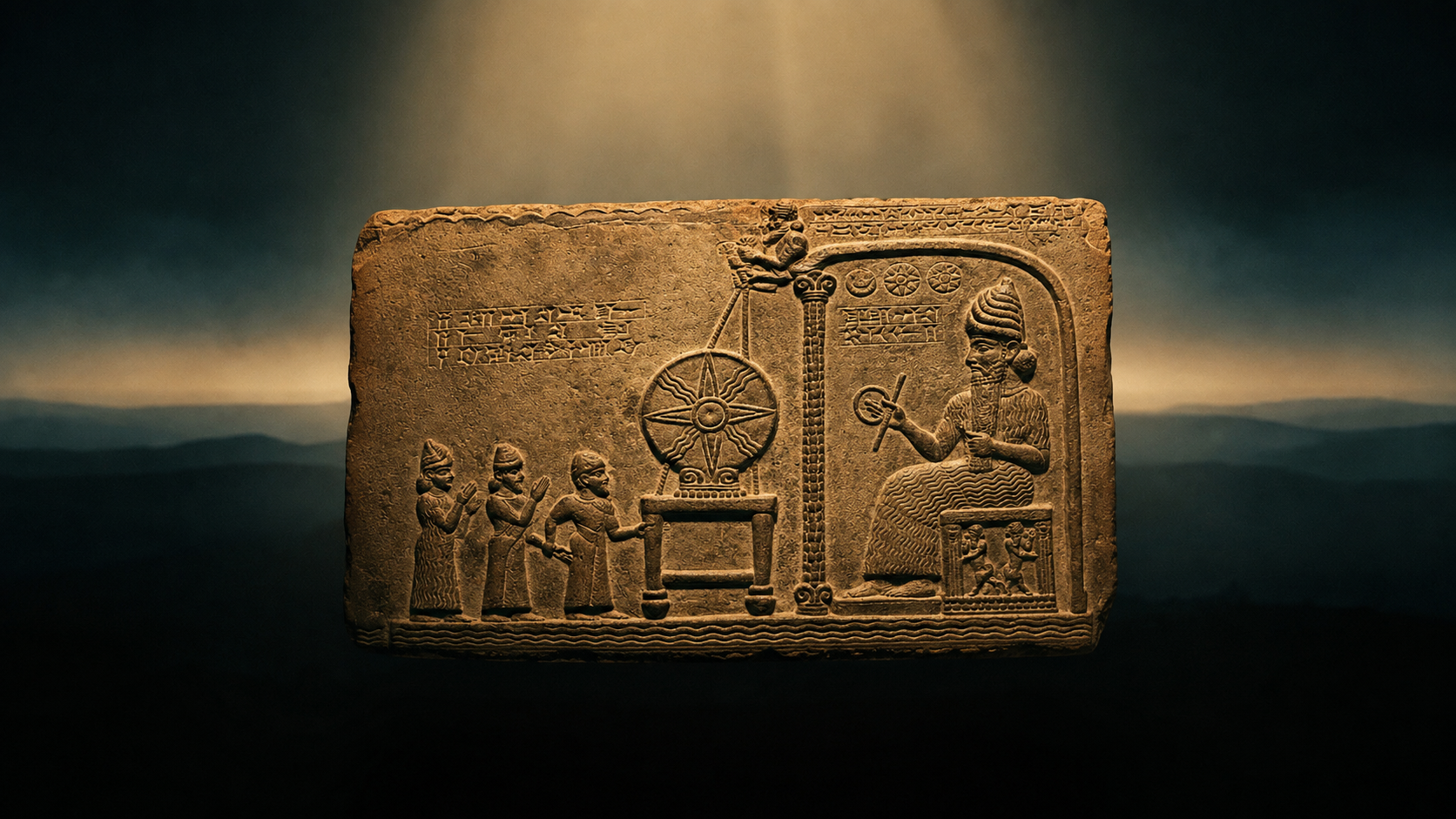
The Translator as Prophet: Zechariah Sitchin, Sacred Hermeneutics, and the Psychology of Alternative History
Here is the central paradox this research must explain: Zechariah Sitchin could not read cuneiform. This is not a contested claim. Every credentialed Assyriologist and Sumerologist who has examined his work — including Michael Heiser's systematic 2004 refutation — has found that his translations of key terms like 'Nibiru,' 'Anunnaki,' and 'shem' are philologically indefensible, contradicted by standard reference works including the Pennsylvania Sumerian Dictionary and the Electronic Text Corpus

The Smithsonian's Buried Past: Suppression, Science, and the Politics of American Archaeology
How documented institutional racism, ideological science, and legitimate repatriation law created the perfect conditions for a suppression myth - and why the truth is more troubling than the conspiracy.
Primary References
Want to use this research? Everything here is free with attribution.
See how →