Why do the most thoroughly documented gods in human history inspire more belief in alien intervention the more clearly scholars prove that belief wrong?
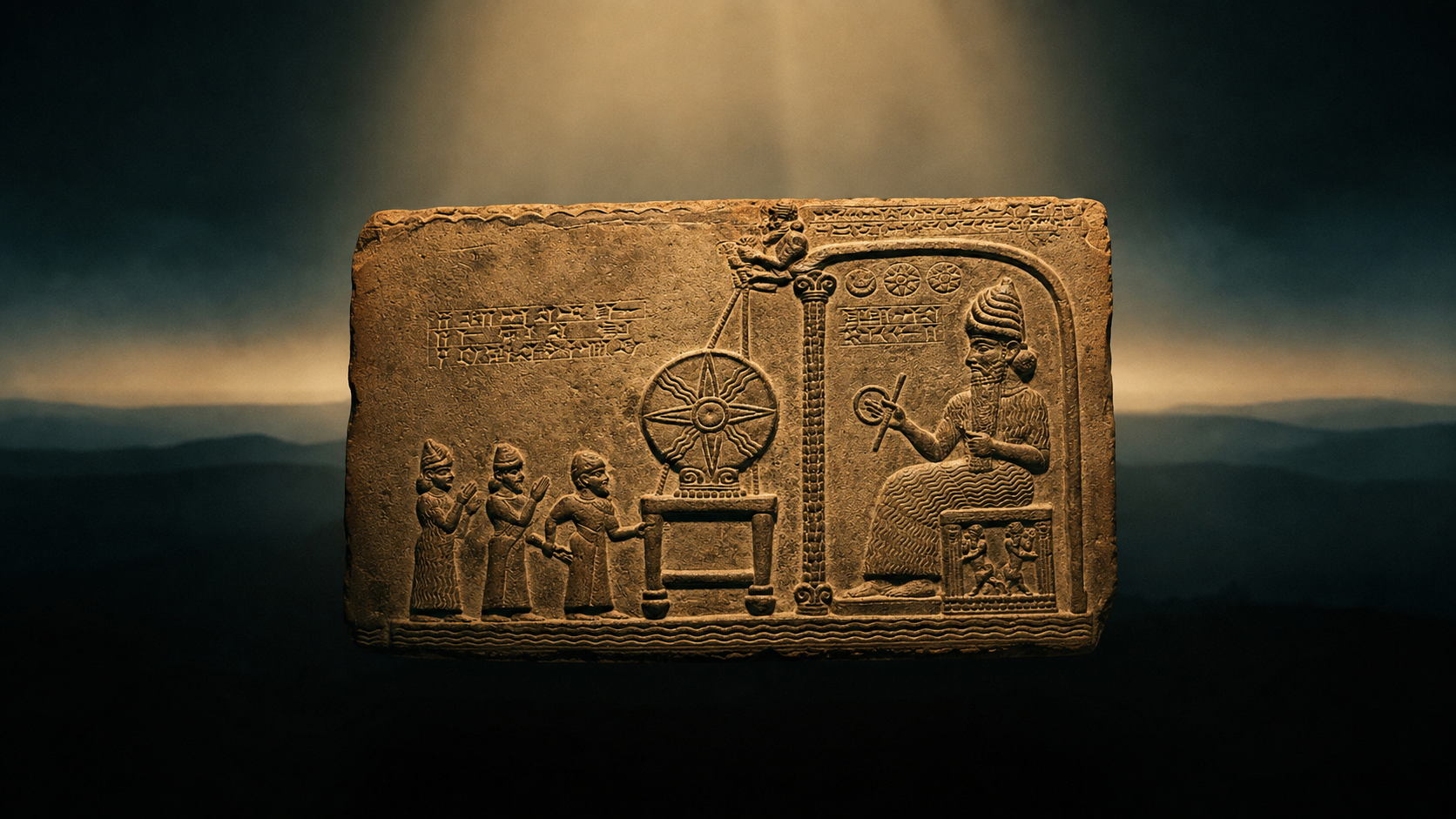
The Anunnaki Enigma: Gods, Myths, and the Alien Astronaut Controversy
How ancient Mesopotamia's most powerful deities became the center of a modern pseudohistorical phenomenon, and what the evidence actually shows.
Traditions analyzed in this research
Site owner · Own
People & institutions referenced
The single most important finding here is not about aliens — it is about the inversion: the Anunnaki are among the best-documented deities in the ancient world, attested across 2,500 years of cuneiform record in four independent scribal traditions, and that very thoroughness has made them more, not less, susceptible to fringe reinterpretation.
The textual record is unambiguous. "Anunnaki" means offspring of An, the sky god — a statement of divine lineage. Across Early Dynastic Sumerian through Neo-Babylonian Akkadian, these figures decree fates, govern the underworld, and judge the dead. No tablet describes extraterrestrials, genetic engineers, or visitors from a rogue planet. "Nibiru" appears in Old Babylonian to Hellenistic astronomical texts as a reference point, most likely Jupiter or a meridian crossing. Zecharia Sitchin's 1976 reinterpretation of these terms has been rejected not as a matter of scholarly taste but because his translations fail at the level of grammar and lexicon. The archaeological and genetic records return the same null finding: nothing from any Mesopotamian excavation is inconsistent with human capability.
Three genuine open questions remain. The precise transmission pathway between Mesopotamian divine-council theology and its Israelite counterpart is actively debated. Cross-cultural flood myth parallels — the Atrahasis Epic predates Genesis by roughly a millennium with striking structural overlap — may reflect direct literary borrowing, independent response to shared geological memory, or both; the mechanism is unresolved. And the cognitive and social conditions that made the Anunnaki theological system so durable and so exportable across unrelated cultures remain incompletely explained.
That last gap is the honest one, and it matters: the ancient astronaut hypothesis survives not because the evidence supports it but because mainstream scholarship has not yet fully accounted for why divine-council theology keeps reasserting itself across unconnected human minds, leaving an explanatory vacuum that pseudohistory is structurally optimized to fill.
What Should Surprise You
Ordered by how difficult each finding is to explain away.
The Flood Blueprint That Predates Genesis by a Millennium
The Atrahasis Epic, composed in Old Babylonian cuneiform around 1700 BCE, contains a narrative sequence so structurally close to the Genesis flood account that coincidence strains credibility: a divine council deliberates and votes to destroy humanity, a single righteous man is warned by a sympathetic deity, he builds a vessel, loads animals, survives the flood, and lands on a mountain. The parallel is not impressionistic. It is sequential and architectural. The Genesis account was composed, in its earliest strands, no earlier than the tenth century BCE, placing the Atrahasis version roughly 700 to 1,000 years prior. What actually complicates the picture is not that parallels exist (comparative mythology expects them) but that the specific mechanism of the divine council's deliberation, including the gods' regret and internal disagreement, appears in both traditions. This is not a vague thematic echo. It is a shared narrative grammar, and the transmission pathway from Mesopotamia to the Levant remains, as the scholarly record acknowledges, incompletely resolved.
The Atrahasis Epic's divine council votes on human extinction using a procedural structure that reappears, nearly step-for-step, in a text composed in a different language by a different culture roughly a thousand years later.
Two Thousand Years of Theological Consistency, Unbroken
The Anunnaki theological system is attested in cuneiform sources from the Early Dynastic period (c. 2900 to 2350 BCE) through the Neo-Babylonian empire in the sixth century BCE, a continuous, internally consistent tradition spanning nearly 2,500 years. Across Sumerian, Akkadian, Babylonian, and Assyrian scribal traditions, the Anunnaki are described with stable functional attributes: a collective divine assembly, fate-decreeing authority, and, in later texts, a role as underworld judges of the dead. These are not a single text or a single culture but independent scribal traditions, operating across different languages and political regimes, that maintained structural coherence about the same divine figures across a timeframe longer than the entire history of Christianity to the present day. Physical corroboration comes from cuneiform tablets excavated at multiple independent sites. The loose thread that refuses to be tied is this: theological systems of such complexity rarely survive political upheaval, language shift, and imperial succession without significant doctrinal mutation, and the Anunnaki tradition did so for twenty-five centuries.
A religious tradition that remained structurally coherent across language changes, imperial collapses, and 2,500 years of continuous scribal transmission is, by any measure of comparative religion, an extraordinary case of institutional theological stability.
Antediluvian King Reigns Encode a Base-60 Mathematical System
The Sumerian King List records antediluvian rulers with reign lengths that appear absurd on their face: figures like 28,800 years, 36,000 years, and 43,200 years. These numbers have been dismissed as mythological inflation, and they may well be. But when subjected to mathematical analysis, they are not random. They are products and multiples of the Sumerian base-60 sexagesimal system, the same numerical framework that gave us the 360-degree circle, the 60-minute hour, and the 60-second minute, conventions still in use today. The reign of Alulim, the first listed king, is given as 28,800 years, which is 8 × 60 × 60. The total of all antediluvian reigns sums to 432,000 years, a number with deep resonance in Babylonian astronomical calculation. The numbers in the King List are not arbitrary large figures; they are arithmetically structured. Whether this encodes a genuine historical memory, a cosmological framework, or a scribal mathematical exercise remains genuinely unresolved, and that ambiguity is precisely the point.
The supposedly fantastical reign lengths of Sumerian antediluvian kings are not random mythological inflation, they are precise multiples of 3,600, the Sumerian unit called a 'sar,' revealing an embedded mathematical architecture that no ancient astronaut theory is needed to make astonishing.
The Divine Council Parallel That Crosses a Language Boundary
Genesis 6:1 to 4 describes 'sons of God,' bene ha-elohim in Hebrew, taking human wives and producing the Nephilim, described as 'the mighty men who were of old, the men of renown.' Mainstream scholarship, including Mark S. Smith's 'The Origins of Biblical Monotheism,' has established that the Israelite divine council, a heavenly assembly of divine beings presided over by a chief deity, shares structural features with the Mesopotamian divine assembly in which the Anunnaki function. The detail that refuses to fit neatly into either a borrowing or an independent-development narrative is the specificity of the parallel: a chief deity presiding over a ranked assembly of lesser divine beings who interact with humanity, decree fates, and in some traditions produce hybrid offspring. The mechanism, whether direct literary borrowing, shared proto-Semitic substrate, or convergent theological development, remains an active scholarly debate without full resolution. That mainstream scholars, not fringe theorists, treat this as a serious philological and theological problem is itself worth noting.
The structural architecture of the Israelite divine council, including ranked divine beings, a presiding deity, and semi-divine offspring of human women, maps closely enough onto the Mesopotamian Anunnaki assembly that credentialed philologists treat the relationship as an open and consequential research problem.
The Palimpsest That Fooled a Generation of Viewers
The Abydos 'helicopter hieroglyphs,' carvings at the Temple of Seti I dated to the 19th Dynasty (c. 1290 to 1213 BCE), have circulated for decades in ancient astronaut literature as evidence of ancient knowledge of modern vehicles, including what appear to be a helicopter, a submarine, and an aircraft. The mainstream explanation is a palimpsest: later hieroglyphs were carved over earlier ones, and the overlapping strokes create accidental visual combinations that resemble modern technology to pattern-seeking human perception. What is genuinely interesting here is not the alien claim (that is straightforwardly wrong) but the demonstration of how powerfully the human visual system imposes familiar forms onto ambiguous stimuli. The Abydos case is a documented, well-studied instance of pareidolia operating at a civilizational scale, producing a manufactured mystery that persisted in popular culture for decades despite a straightforward epigraphic explanation available to anyone who examined the stratigraphy of the carving layers. The carvings require no ancient technology to be remarkable.
The Abydos carvings are a documented case study in how overlapping hieroglyphic palimpsest, combined with human pattern recognition, generated a globally circulating false mystery that outlasted the careers of the scholars who debunked it.
The Null Finding Is Itself a Significant Archaeological Result
Extensive excavation across Mesopotamian sites, including Ur, Uruk, Nippur, Nineveh, Lagash, and dozens of others, conducted by independent research teams across more than a century of professional archaeology, has produced a material culture record entirely consistent with human technological development. It contains no artifacts, skeletal remains, or inscriptions that require a non-terrestrial explanation. This null finding carries genuine evidentiary weight. In archaeology, the systematic absence of anomalous material across hundreds of independent excavations, spanning multiple institutions and national programs, is not a non-result. It is a result. The evidentiary saturation here is unusually high: genetics, osteology, material culture, and epigraphy all return the same null finding across the same timeframe and geography. What emerges from the evidence, then, is a sociological and epistemological puzzle worth examining on its own terms, that this level of convergent absence has not closed the popular debate is itself a phenomenon demanding explanation.
One hundred years of systematic excavation at the most intensively investigated archaeological sites on Earth returned zero material anomalies requiring non-human explanation, and the popular debate continued regardless, which tells us something important about how extraordinary claims actually function in public culture.
34588ea6-73bb-48b1-82ee-ca5c2bf9eb34
Site owner · Own
What the Pipeline Found
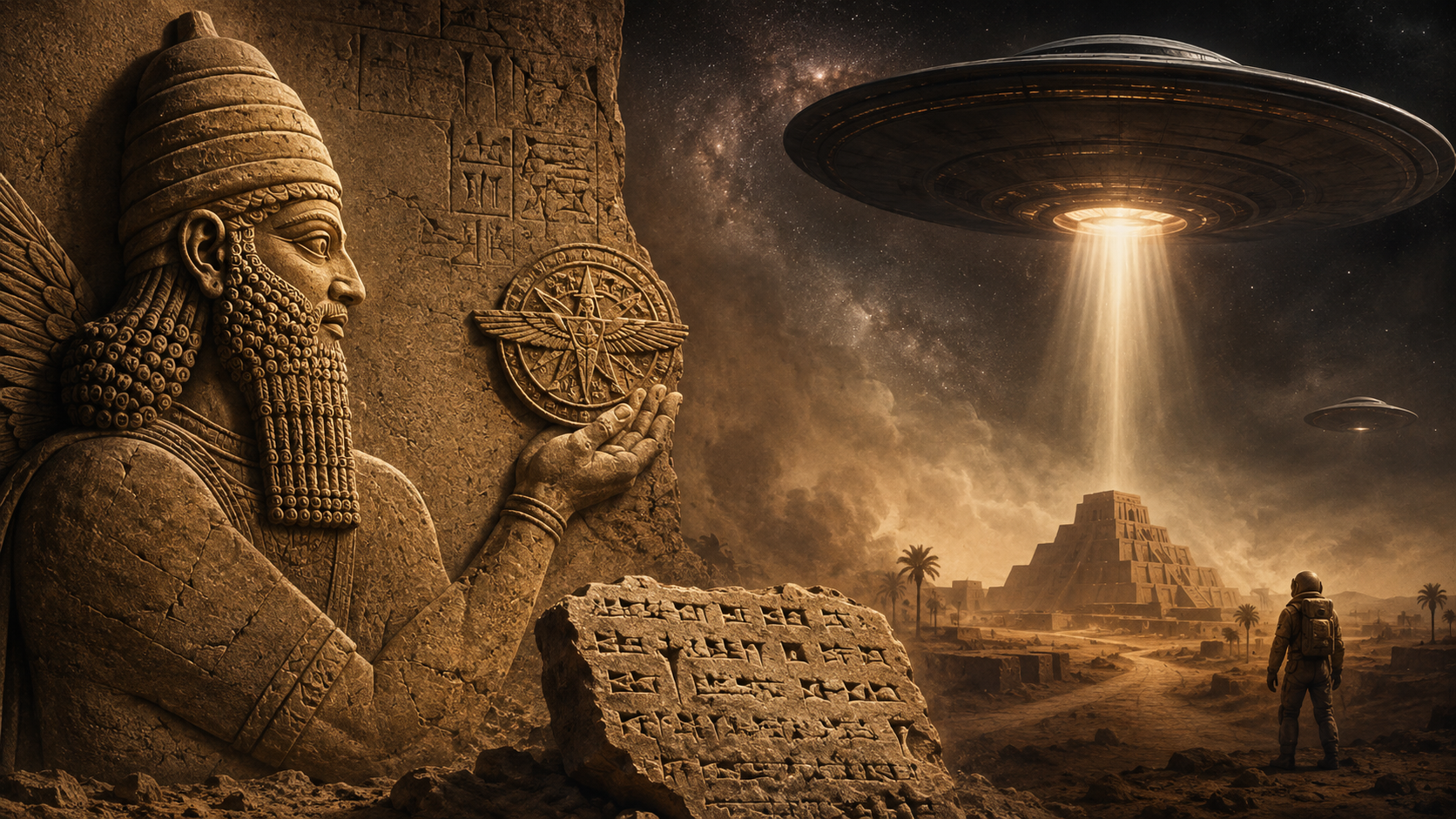
Here is the central paradox: the Anunnaki are among the most thoroughly documented deities in human history, attested across thousands of cuneiform tablets spanning roughly 2,500 years of continuous Mesopotamian religious practice, and yet they have become the flagship exhibit for the ancient astronaut hypothesis, a modern pseudohistorical movement commanding a global audience in the tens of millions. The better-documented the ancient record becomes, the more fervently some readers insist it conceals a suppressed truth. That inversion is itself a phenomenon demanding serious explanation.
What the evidence actually shows is unambiguous on the core questions. The term 'Anunnaki' derives from the Sumerian 'a-nun-na,' meaning 'offspring of An,' the sky god, a designation of divine lineage, not planetary origin. From the Early Dynastic period (c. 2900 to 2350 BCE) through the Neo-Babylonian era, the cuneiform record is internally consistent across independent Sumerian, Akkadian, Babylonian, and Assyrian scribal traditions: the Anunnaki are high-ranking gods who decree fates, govern the underworld, and judge the dead. Not once do these texts describe them as extraterrestrials, genetic engineers, or visitors from a body called Nibiru.
The astronomical term 'Nibiru' appears in Old Babylonian to Hellenistic texts as a celestial reference point, most likely Jupiter or a specific meridian crossing, and carries none of the planetary-beyond-Pluto meaning that Zecharia Sitchin assigned it in 1976. Sitchin's philological claims have been independently rejected by credentialed Assyriologists and Sumerologists at multiple institutions, not as a matter of interpretive preference, but because his translations do not survive contact with the actual grammar and lexicon of the source languages. The archaeological record adds a further null finding: no physical artifact, skeletal remain, or structural anomaly from any Mesopotamian excavation is inconsistent with human capability or suggestive of non-terrestrial origin. Genetics extends that null finding across the entire relevant timeframe.
What actually complicates the picture is not that the ancient astronaut theory exists (fringe reinterpretations of ancient religion have a long history) but that this particular version achieved such cultural penetration despite the evidentiary situation being so thoroughly settled. Strong cross-disciplinary agreement on the textual and archaeological record coexists with genuinely open questions: the cultural transmission mechanisms behind Mesopotamian religious influence, and the cognitive architecture that makes divine-council theology so persistently compelling across unrelated cultures, remain unresolved. The Abydos 'helicopter hieroglyphs,' a palimpsest produced by later carvings overlapping earlier ones, illustrate the pattern precisely, a mundane and well-understood epigraphic phenomenon becomes, for a significant audience, proof of suppressed ancient technology.
Three tensions deserve honest acknowledgment. The mechanisms of cross-cultural flood myth transmission (direct literary borrowing, independent response to shared geological events, or some combination) are not fully established. The relationship between Mesopotamian divine-council theology and its Israelite counterpart is accepted in mainstream scholarship, but its precise transmission pathway, whether direct borrowing or parallel development from shared proto-Semitic substrates, is still actively debated. Most consequentially, the specific social, environmental, and cognitive conditions that produced the Anunnaki theological system and drove its remarkable cross-cultural influence remain incompletely explained, leaving a genuine explanatory gap that the ancient astronaut hypothesis rushes to fill, however illegitimately.
This dossier proceeds in that order: what the texts say, what Sitchin claimed they say, why the scholarly rejection is decisive, and why millions of people remain unconvinced. That last question turns out to be considerably more interesting than the alien hypothesis itself.
Two Cases. You Decide.
The strongest case for the significance of the Anunnaki tradition is not the ancient astronaut hypothesis, that case collapsed under philological scrutiny decades ago, but something more intellectually demanding: the argument that Mesopotamian theological tradition represents one of humanity's most consequential and underappreciated cultural achievements, whose influence on subsequent civilization is still being mapped.
Begin with what the evidence actually establishes. The Anunnaki are attested continuously across roughly two millennia of cuneiform documentation, Sumerian, Akkadian, Babylonian, Assyrian, with a structural consistency that is itself remarkable. A divine assembly that decrees fate, arbitrates cosmic order, and governs the underworld is not a local or ephemeral tradition. It is a sustained theological system, transmitted with high fidelity across political upheaval, dynastic change, and linguistic shift. The ORACC corpus and Dalley's translations make this accessible to any serious reader, and the consistency across those sources is the finding worth dwelling on.
The cross-cultural influence is where the case becomes genuinely significant. Mark S. Smith's work on Israelite religion and Michael Heiser's analysis of the divine council establish, not speculatively but as mainstream scholarly consensus, that the bene ha-elohim of Genesis 6 and the sod elohim of Psalm 82 are structurally and linguistically downstream of Mesopotamian divine council theology. The Nephilim narrative is not independently invented; it inherits a framework. This means the Anunnaki tradition is a direct ancestor of theological concepts that now shape the beliefs of approximately four billion people, a historically significant claim that requires no extraterrestrial supplement.
The flood narrative convergence adds a further dimension. The Atrahasis Epic predates the Genesis account and shares specific structural elements (divine deliberation, chosen survivor, vessel, restoration) that mainstream scholarship attributes to direct literary transmission. Andrew George's critical edition of Gilgamesh makes the textual relationship clear. The geological record confirms that post-glacial sea-level rises of 120 to 130 meters over several millennia would have produced catastrophic flooding across precisely the regions where these myths originate, and the convergence between geological event and mythological memory is a legitimate research question, not a fringe one.
What the advocate cannot prove, and must not pretend to prove, is any extraterrestrial dimension. The archaeological null finding is total: no skeletal anomalies, no material culture inconsistent with human developmental trajectories, no ancient genomic signatures of non-terrestrial intervention. Ancient DNA studies of Mesopotamian populations confirm fully human ancestry. Sitchin's specific translation errors, including his misreading of AN, his fabrication of the Nibiru planetary interpretation, and his mistranslation of Anunnaki itself, are documented against primary sources by credentialed Assyriologists and are not contested by any qualified philologist.
The honest advocate's position is this: the Anunnaki tradition matters because it demonstrates that early literate human civilization produced a theological system of extraordinary sophistication, one that directly shaped the Abrahamic religious inheritance, encoded genuine historical memory of catastrophic environmental events, and sustained itself with remarkable fidelity across two thousand years, all through entirely human cognitive and cultural processes. The absence of extraterrestrial evidence does not diminish this achievement. It makes it more remarkable. The question the evidence actually demands is not 'were they aliens?' but 'what conditions of human cognition, social organization, and environmental experience produced a cosmology this durable and this influential?' Serious scholarship is still working to answer it, and it is worth asking.
The skeptical position here is not rhetorical posturing. It reflects the unusual situation in which every evidentiary pillar of the opposing hypothesis has been independently examined and found to rest on a single, documentably flawed foundation. The extraterrestrial Anunnaki hypothesis is not a case where heterodox scholars disagree with mainstream ones. It is a case where one non-credentialed author, Zecharia Sitchin, produced a series of translation claims beginning in 1976 that no professional Assyriologist or Sumerologist, across nearly five decades and dozens of independent reviews, has ever endorsed.
Michael S. Heiser (1963 to 2023), whose doctoral training at the University of Wisconsin-Madison was specifically in Hebrew Bible and Semitic Languages, documented the errors with the precision of a specialist. Sitchin's rendering of 'Anunnaki' as 'those who from heaven to earth came' has no grammatical or lexical basis in Sumerian. The term means, straightforwardly, 'offspring of An' or 'those of princely seed.' The sign AN means 'heaven' or 'sky,' not spacecraft. The astronomical term Nibiru refers variously to Jupiter, a specific star, or a celestial crossing point in genuine Mesopotamian astronomical texts; it does not describe a planet with a 3,600-year elliptical orbit. The late Simo Parpola, one of the foremost Assyriologists of the twentieth century, similarly found no basis for Sitchin's readings in the primary cuneiform record. This is not scholarly disagreement. It is documented error.
The textual record itself is unambiguous and has been so since the first systematic translations of cuneiform in the nineteenth century. Sumerian and Akkadian texts from approximately 2500 BCE onward consistently present the Anunnaki as a collective of major deities associated with the divine assembly, underworld judgment, and the decreeing of fate. The Atrahasis Epic and the Enuma Elish describe the creation of humanity to relieve the lesser gods of labor, a theological statement about divine hierarchy and human purpose that is entirely coherent within the religious imagination of ancient Mesopotamia and requires no extraterrestrial gloss. No primary text contains any reference to space travel, a planetary origin, genetic engineering, or technology inconsistent with ancient Mesopotamian religious convention. The 'mystery' of these texts was manufactured in 1976, not discovered.
The archaeological record is equally decisive, and the logic here deserves careful statement. The absence of evidence for extraterrestrial presence in Mesopotamia is not the informal fallacy of treating absence as disproof. It is the expected outcome of an exhaustive search in one of the most intensively investigated archaeological regions on Earth. Decades of systematic excavation have produced zero material culture anomalies: no non-terrestrial isotopic signatures, no metallurgy inconsistent with the documented trajectory of ancient Near Eastern metalworking, no skeletal remains with non-human morphology. Ancient DNA analysis of Mesopotamian human remains shows a population with entirely expected evolutionary ancestry. The human genome, now readable with sufficient resolution to detect population bottlenecks, admixture events, and selective sweeps, tells a coherent evolutionary story with no chapter requiring extraterrestrial authorship.
The specific claims that circulate most widely in popular discourse collapse under direct examination. The Abydos 'helicopter hieroglyphs' are a physically documented palimpsest, later carvings overlaid on earlier ones, with residual plaster creating a visual illusion that disappears once the stratigraphy of the stone is understood. This is not a contested interpretation; it is what palimpsests do. The Dogon 'Sirius B knowledge,' cited by Robert Temple in 'The Sirius Mystery' (1976, the same year as Sitchin) as evidence of ancient extraterrestrial contact, was subsequently investigated by anthropologist Walter van Beek, who found that Dogon informants in the 1990s showed no knowledge of Sirius B and that the original data may reflect contamination from contact with Western-educated informants. The Credo Mutwa 'Chitauri' tradition, frequently cited as independent Zulu corroboration of alien contact, is not corroborated by mainstream Zulu ethnography, and Mutwa's relationship to authentic Zulu traditional knowledge is disputed within the Zulu community itself.
The Sumerian King List's antediluvian reigns of tens of thousands of years are consistent with well-documented literary conventions for encoding dynastic legitimacy across ancient Near Eastern and biblical traditions, the same convention that produces the 900-year lifespans of Genesis 5. The winged figures and horned caps of Mesopotamian iconography are interpreted as spacesuits by ancient astronaut proponents, while the same artistic conventions applied to clearly mythological creatures in the same corpus are quietly ignored. The pattern that keeps surfacing is confirmation bias operating at a structural level: the hypothesis is constructed to be unfalsifiable because any evidence can be reinterpreted to fit it and contradictory evidence can be dismissed as misidentification.
The cross-cultural convergences that appear most compelling to the advocate position have documented explanations that require no extraordinary mechanisms. The global distribution of flood narratives has a natural experiential basis in the post-glacial sea-level rise of 120 to 130 meters between approximately 20,000 and 7,000 years ago, which inundated vast coastal territories on every inhabited continent and provided a universal foundation for catastrophic flood memory. The specific structural parallels between the Mesopotamian flood narrative and the Hebrew account have a documented transmission route: geographic proximity, centuries of cultural contact, and the Babylonian exile of 597 to 538 BCE, during which Israelite scribes had direct access to Mesopotamian literary traditions. The divine council motif, appearing across cultures, reflects a universal tendency of hierarchical human societies to model divine governance on their own political structures, a principle so well established in comparative religion that it requires no extraordinary supplement. Graham Hancock's 'lost civilization' hypothesis, while more sophisticated than Sitchin's and drawing on genuine archaeological anomalies, similarly lacks the material evidence required to confirm it and has not been validated by the mainstream researchers who have engaged with it.
What the skeptic cannot fully account for is worth stating honestly, because intellectual honesty is what distinguishes this position from the one it opposes. The precise social, environmental, and cognitive conditions that produced the Anunnaki theological system, and the mechanisms by which Mesopotamian religious ideas achieved such remarkable cross-cultural influence, remain incompletely characterized. The emergence of complex urban civilization in southern Mesopotamia in the fourth and third millennia BCE, with its sophisticated administrative systems, astronomical observation, and literary production, is genuinely remarkable and not yet fully explained in all its particulars. The debate between direct literary borrowing and parallel development from shared proto-Semitic religious substrates, in the case of the divine council parallel between Mesopotamian and Israelite religion, is still active in the scholarly literature. These are real gaps.
But gaps in the mainstream explanation are not evidence for the alternative. The appropriate response to an incomplete explanation is more archaeology, more philology, more ancient DNA analysis, not the substitution of a hypothesis that has been examined across four evidentiary domains and found wanting in all of them. The Anunnaki are among the most important deities in the ancient world. Their texts are among the oldest sustained literary records of human religious imagination. The civilization that produced them is genuinely extraordinary. None of that requires extraterrestrial authorship, and claiming it does is not a tribute to the ancients. It is a refusal to credit what human beings, without assistance, have repeatedly demonstrated themselves capable of.
How Each Tradition Tells It
For us, the Anunnaki are the 'a-nun-na', the princely offspring, born of the great god An. They are the revered deities of our pantheon, not beings from some distant star. They gather in the divine assembly, holding the tablets of destiny
Documentaries, Interviews & Podcasts
Curated videos and podcast episodes on this topic. Watch in-page or open on the platform.
The Nephilim — Giants of the Ancient World
Robert Sepehr
Open Questions
What neither the Advocate nor the Skeptic can fully explain.
Can computational analysis of cuneiform variant manuscripts across the ORACC corpus identify statistically significant patterns of doctrinal drift or deliberate scribal standardization in Anunnaki theology between the Early Dynastic and Neo-Babylonian periods, and if so, what political or institutional pressures correlate with those changes?
What is the minimum set of direct textual contacts required to explain the specific procedural parallels between the Atrahasis flood council narrative and the Genesis account, and can the Babylonian exile of 597 to 538 BCE alone account for the transmission, or do earlier Levantine borrowing routes need to be modeled?
Do the arithmetically structured reign lengths in the Sumerian King List reflect a deliberate cosmological encoding by a specific scribal school, a retrospective mathematical rationalization of earlier oral tradition, or an administrative convention for legitimizing dynastic succession, and can these hypotheses be distinguished through comparison with contemporary administrative tablets from the same period?
Why does the divine council theology of Mesopotamia, including ranked divine assemblies, a presiding sky deity, and semi-divine offspring, appear with structural specificity in Israelite religious texts while leaving comparatively faint traces in Egyptian religious literature, despite Egypt's geographic proximity and centuries of documented cultural exchange with the Levant?
What cognitive and institutional mechanisms allowed the Anunnaki theological system to maintain structural coherence across language shifts from Sumerian to Akkadian to Babylonian, when comparative evidence from other ancient religious traditions suggests that major linguistic transitions typically produce significant doctrinal mutation within two to three generations?
Can ancient sediment core data from the Persian Gulf and the Black Sea be correlated with sufficient chronological precision to identify specific flooding events between 20,000 and 7,000 years ago that would have been catastrophic at the scale of a regional human population, and do those events align with the internal chronological markers embedded in the Atrahasis Epic's narrative structure?
How the Major AIs Handle This Topic
We asked ChatGPT, Grok, Claude, Gemini, and Perplexity a question matching our specific convergence angle — not a generic topic summary. Claude classified each response using a 4-axis scoring rubric. Does mainstream AI engage with the actual evidence — or qualify, dismiss, or suppress?
ChatGPT (GPT-4o)
Aug 2026gpt-4o
The claim regarding the Anunnaki, as framed, is intertwined with the broader "ancient astronaut" hypothesis, which posits that extraterrestrial beings visited Earth and influenced early human cultures.
Unable to classify response.
Grok (xAI)
Aug 2026grok-3
**The evidence supports the simpler explanation: the Anunnaki are indigenous Mesopotamian deities, not evidence of alien contact.** The framing itself highlights the core issue.
Unable to classify response.
Claude (Anthropic)
Aug 2026claude-sonnet-4-20250514
Unable to classify response.
Gemini (Google)
Aug 2026gemini-2.0-flash
Unable to classify response.
Perplexity (sonar)
Aug 2026sonar
The evidence **does not** support an “independent emergence across isolated cultures” for the Anunnaki claim as framed here; it supports a much simpler explanation: a **Mesopotamian deity complex** that was preserved and reused across successive Mesopotamian civilizations, then later reinterpreted by modern writers as …
Unable to classify response.
Verbatim responses from each AI's API, analyzed by Claude. Generated August 2026.
Topics That Share These Threads
Star People: Indigenous Sky-Being Traditions and the UFO Imagination
What indigenous sky-being traditions actually preserve, what they do not prove, and why the difference matters more than either side admits.
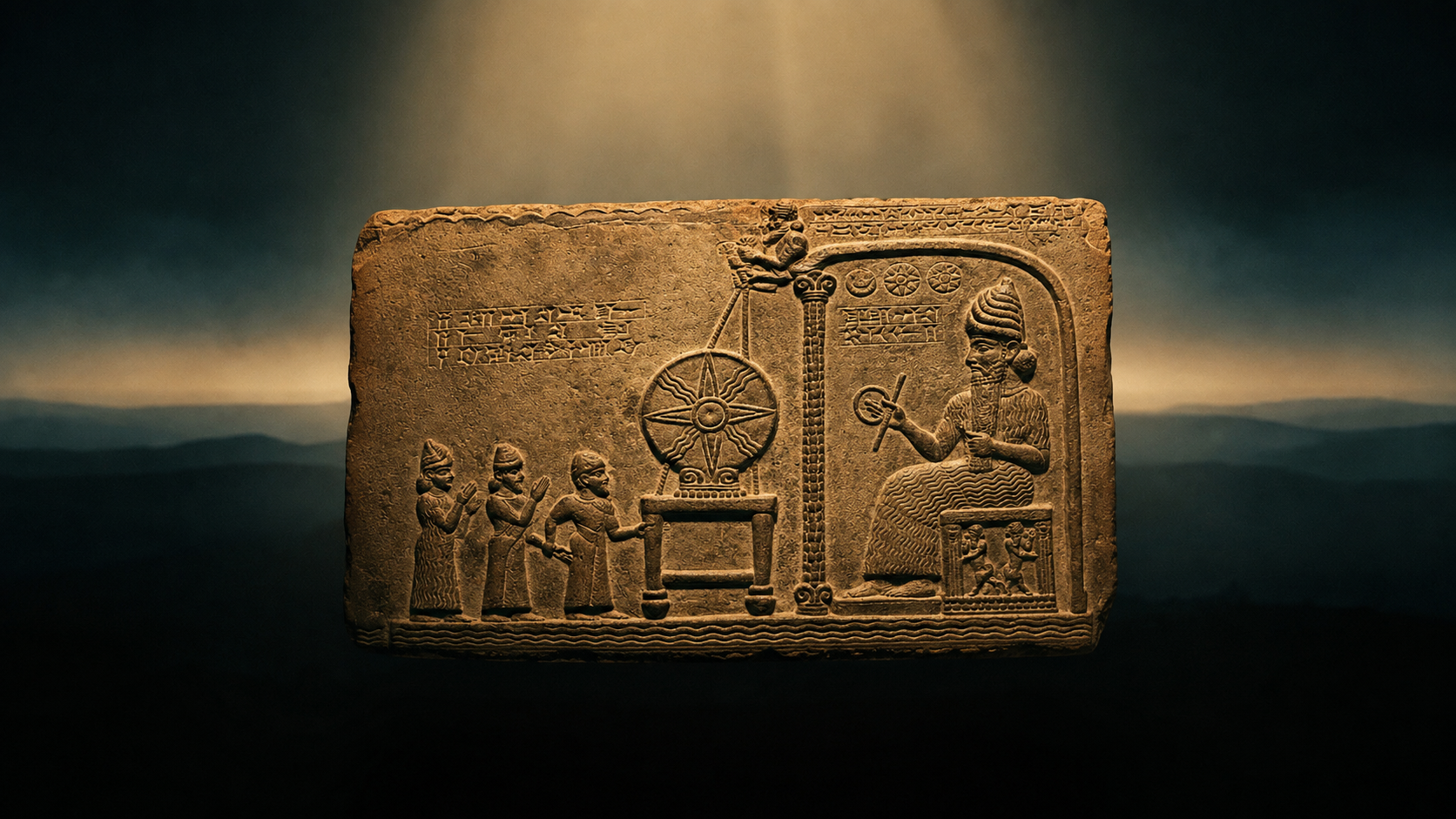
The Translator as Prophet: Zechariah Sitchin, Sacred Hermeneutics, and the Psychology of Alternative History
Here is the central paradox this research must explain: Zechariah Sitchin could not read cuneiform. This is not a contested claim. Every credentialed Assyriologist and Sumerologist who has examined his work — including Michael Heiser's systematic 2004 refutation — has found that his translations of key terms like 'Nibiru,' 'Anunnaki,' and 'shem' are philologically indefensible, contradicted by standard reference works including the Pennsylvania Sumerian Dictionary and the Electronic Text Corpus
The Global Pyramid Problem: Independent Genius, Borrowed Ideas, or Something Stranger?
Why dozens of unconnected civilizations built the same monumental shape - and what that actually tells us about the human mind

The Philadelphia Experiment: How a Sailor's Marginalia Became America's Most Durable Naval Myth
How one man's letters, a bureaucratic curiosity, and real wartime technology fused into America's most durable naval myth.
Primary References
Want to use this research? Everything here is free with attribution.
See how →