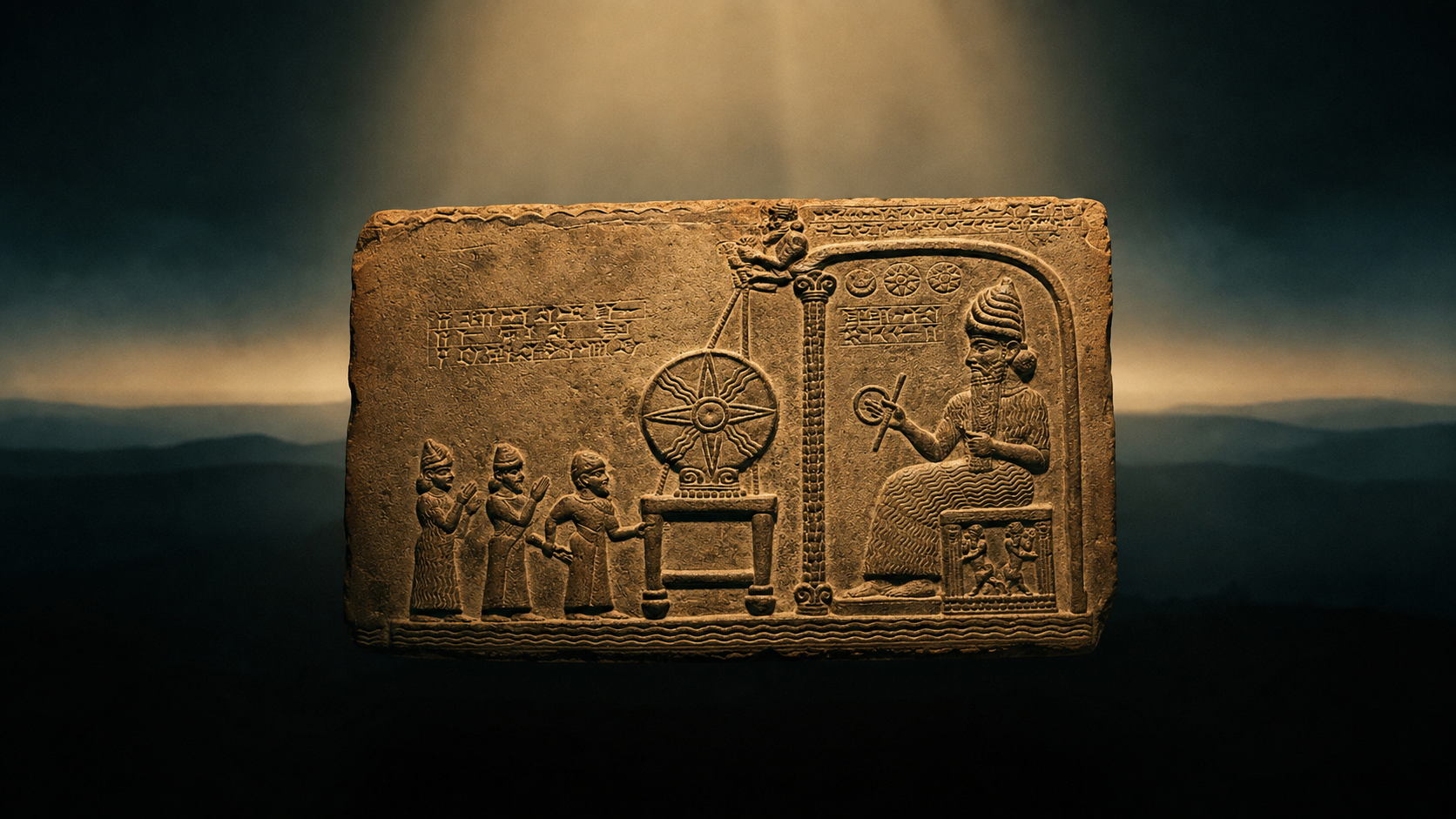
The Anunnaki Enigma: Gods, Myths, and the Alien Astronaut Controversy
How ancient Mesopotamia's most powerful deities became the center of a modern pseudohistorical phenomenon, and what the evidence actually shows.
Traditions analyzed in this research
Site owner · Own
The Anunnaki are ancient Mesopotamian gods. Thousands of clay tablets describe them over 2,500 years. So why do millions of people believe they were aliens?
The tablets are not mysterious. Professional translators have read them for over a century. The Anunnaki are divine beings who decree fate and judge the dead. No tablet mentions spaceships, genetic engineering, or a hidden planet. The alien interpretation traces to one author in 1976. His translations have been rejected by every qualified scholar who checked them. The real surprise is not that the theory exists. It is that it spread so far despite the evidence being so settled.
But something genuinely strange sits inside the real texts. The Mesopotamian flood story predates Genesis by a thousand years. The impossibly long king reigns follow a hidden mathematical pattern. What produced a theology this durable, and why does it keep resurfacing in forms its creators would not recognize?
In 1976, a self-taught linguist named Zecharia Sitchin published "The 12th Planet." He claimed that Sumerian cuneiform tablets described an advanced alien race called the Anunnaki who came from a hidden planet, Nibiru, and genetically engineered humans as a slave species. The book sold millions of copies. It spawned an industry of sequels, documentaries, and online communities that persists today.
Sitchin was not working from a scholarly vacuum. Real cuneiform tablets had been translated since the mid-1800s. By the time he wrote, thousands of texts were catalogued and understood. The Anunnaki were well known to specialists as Mesopotamian deities. The word itself means "offspring of An," the sky god. Nibiru appears in genuine astronomical texts as a reference to Jupiter or a celestial crossing point. Professional Assyriologists found that Sitchin's readings did not match the grammar, vocabulary, or content of the source languages. His translations were not controversial. They were incorrect.
What makes the story worth examining is not whether Sitchin was right. That question was answered decades ago. The deeper puzzle is what the real tablets actually contain and why they keep generating extraordinary claims. The Mesopotamian religious tradition is one of the oldest sustained intellectual achievements in human history. Its influence runs through the foundations of Western religion. The genuine mysteries inside these texts are stranger and more consequential than the alien theory that overshadows them.
The cuneiform record is enormous, specific, and largely translated. Three findings show what it actually contains and why it keeps generating questions that outlast easy answers.
The Flood Blueprint That Predates Genesis by a Millennium
The Mesopotamian flood story was written around 1700 BCE. It shares not just a theme but a precise sequence with the Genesis account. A divine council votes to destroy humanity. A chosen man builds a boat. He survives. That structural blueprint appeared roughly a thousand years before the biblical version.
The Atrahasis Epic's divine council votes on human extinction using a procedural structure that reappears, nearly step-for-step, in a text composed in a different language by a different culture roughly a thousand years later.
That shared blueprint did not appear from nowhere. Its source culture left a massive trail.
Two Thousand Years of Theological Consistency, Unbroken
The Anunnaki appear consistently across four different scribal traditions spanning 2,500 years. Different languages, different empires, same gods, same roles. That kind of theological stability across millennia of political upheaval is exceptionally rare. The consistency itself is the finding that needs explaining.
A religious tradition that remained structurally coherent across language changes, imperial collapses, and 2,500 years of continuous scribal transmission is, by any measure of comparative religion, an extraordinary case of institutional theological stability.
And then the numbers inside those texts reveal a deeper puzzle.
Antediluvian King Reigns Encode a Base-60 Mathematical System
The Sumerian King List gives ancient rulers reign lengths of tens of thousands of years. Those numbers look absurd. But they are not random. Every one is a clean product of the base-60 number system the Sumerians invented. The same system we still use for minutes and degrees. Whether this encodes history, cosmology, or something else remains an open question.
The supposedly fantastical reign lengths of Sumerian antediluvian kings are not random mythological inflation, they are precise multiples of 3,600, the Sumerian unit called a 'sar,' revealing an embedded mathematical architecture that no ancient astronaut theory is needed to make astonishing.
The textual record is specific enough to close some questions permanently. It is also rich enough to keep others wide open. That combination is exactly why serious people still disagree about what matters here.
The DebateTwo Cases. You Decide.
Every credentialed translator agrees on what the tablets say. But why this particular theology became so influential, and why it keeps being reinterpreted, is a question both sides answer very differently.
Mesopotamian theology is a direct ancestor of ideas that now shape the beliefs of four billion people. The divine council, the flood narrative, the structure of cosmic judgment all trace back to these tablets. The real significance requires no aliens. It is that human beings built something this influential entirely on their own.
Every specific claim about alien Anunnaki rests on one author's translations. No qualified scholar has ever endorsed them. The archaeological record across one of the most excavated regions on Earth has produced zero material evidence of non-human presence. Gaps in mainstream explanation are not evidence for the alternative.
That disagreement is not a modern invention. Cultures across millennia have encountered these same stories and drawn conclusions that have almost nothing in common with each other.
In Their Own WordsHow Different Cultures Tell It
For us, the Anunnaki are the 'a-nun-na', the princely offspring, born of the great god An. They are the revered deities of our pantheon, not beings from some distant star. They gather in the divine assembly, holding the tablets of destiny
The full picture on The Anunnaki Enigma: Gods, Myths, and the Alien Astronaut Controversy is free.
6 findings, 1 cultural perspective, full debate, timeline, sources with credibility ratings — everything, free with an account. No ads, no sponsors.