Why did a book quoted as prophecy inside the New Testament, copied obsessively at Qumran, and still read as scripture by millions today get quietly erased from the Western Bible — and who decided it was too dangerous to keep?

The Book They Buried Twice
How 1 Enoch went from canonical scripture to forbidden text to archaeological revelation - and what that trajectory exposes about the politics of the Bible itself.
Traditions analyzed in this research
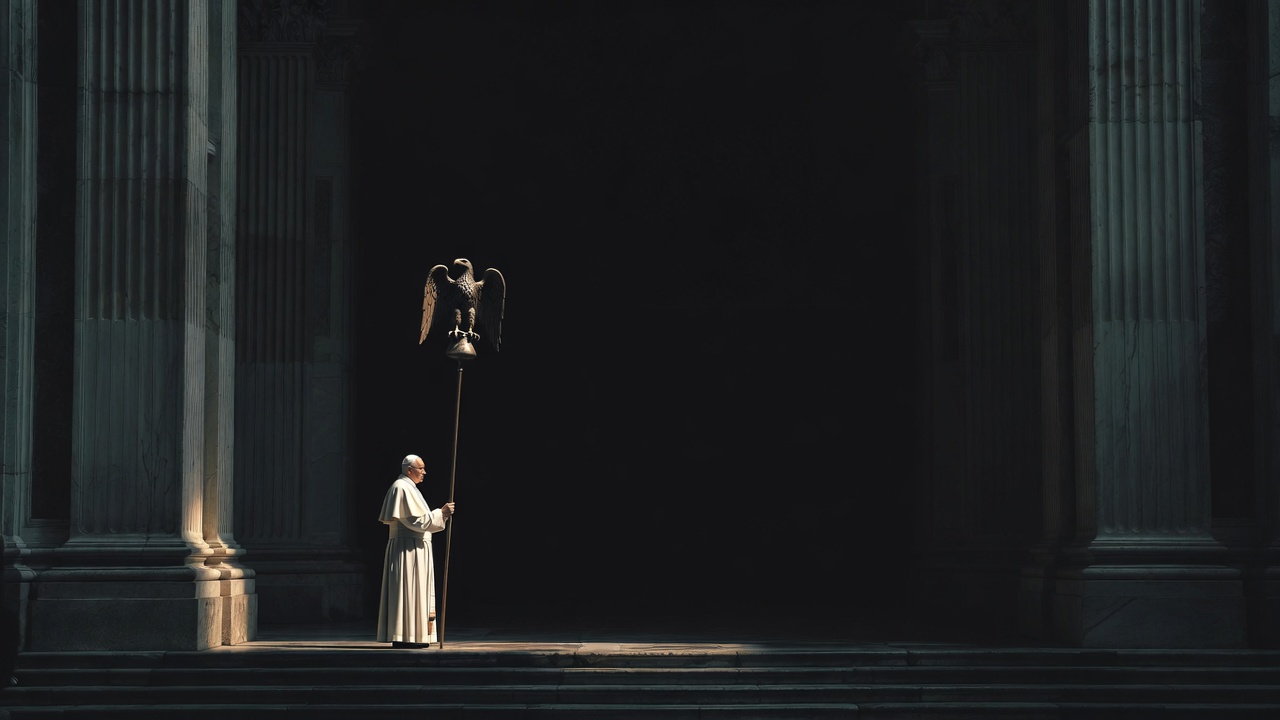
Grok Imagine / xAI · AI Generated
People & institutions referenced
Isaiah
Personhistorical figure
ISAIAH is a Minnesota-based activist organization affiliated with the Gamaliel Foundation and Faith in Action. Executive Director Doran Schrantz leads the organization which is known for its left-of-center policy positions. ISAIAH's affiliations with the Gamaliel Foundation, an organization inspired by Saul Alinsky, are obscured to maintain a grassroots appearance, a practice viewed as controversial.
Paul
Personhistorical figure
The Apostle Paul's description of being 'caught up to the third heaven' is identified as a canonical first-person account of an out-of-body experience, a core phenomenon in modern NDE research, linking scriptural tradition to the dossier's cross-cultural convergence argument.
James Bruce
Personhistorical figure
Bruce returned from Abyssinia in 1773 carrying Ge'ez manuscripts of 1 Enoch, forcing Western biblical scholars to confront a theological tradition they had effectively forgotten and enabling modern scholarly study of the complete text.
Tertullian
Personhistorical figure
Writing around 200 CE, Tertullian argued for 1 Enoch's authenticity and its status as prophetic scripture, representing one side of the patristic debate over the book's canonical authority.
Jude
Personhistorical figure
The author of the Epistle of Jude (1:14–15) directly quoted 1 Enoch 1:9, using the Greek verb proepheteusen and explicitly naming Enoch as a prophetic source, providing the most direct canonical New Testament evidence of 1 Enoch's scriptural authority in early Christianity.
Augustine
Personhistorical figure
Augustine of Hippo (354-430 CE), also known as Saint Augustine, was a philosopher and theologian of the late Roman Empire, whose writings influenced the development of Western philosophy and Christianity. His works, like *Confessions* and *City of God*, remain influential, and he engaged in doctrinal disputes, including arguments against the inclusion of 1 Enoch in the biblical canon. Augustine's association with figures such as Ambrose (his mentor) and Monica (his mother) further shaped his intellectual and spiritual development, and he is considered a Doctor of the Church.
Augustine of Hippo
Personhistorical figure
Augustine's 5th-century CE reinterpretation of the 'sons of God' in Genesis 6 as the righteous line of Seth was a pivotal exegetical shift that became dominant in Western Christianity for over 1,500 years, displacing the earlier fallen-angel interpretation and establishing the mainstream theological framework against which alternative readings — including ancient astronaut theories — are measured.
Enoch
Personhistorical figure
The Book of 1 Enoch is pseudepigraphically attributed to Enoch, described as the seventh from Adam, whose prophetic voice is cited in the canonical Epistle of Jude.
Aratus
Personhistorical figure
Aratus is cited as an example of a non-canonical source quoted rhetorically by a New Testament author, used to argue that citation does not imply canonical endorsement.
Menander
Personhistorical figure
Menander is cited alongside Aratus and Epimenides as a pagan author quoted by Paul, illustrating that New Testament citation does not constitute canonical authentication.
Epimenides
Personhistorical figure
Epimenides is cited as a non-canonical pagan source quoted by Paul, used to contextualize Jude's citation of 1 Enoch as rhetorical appropriation rather than scriptural endorsement.
Ethiopian Orthodox Tewahedo Church
Institutioncustodian
The Ethiopian Orthodox Tewahedo Church has continuously preserved 1 Enoch as canonical scripture (Henok) within its official 81-book canon, empirically falsifying claims of universal Christian exclusion of the text.
Qumran community
Institutioncustodian
The Second Temple Jewish community at Qumran preserved at least eleven Aramaic manuscript fragments of 1 Enoch among the Dead Sea Scrolls, treating Enochic literature as central to their library.
Jerusalem Temple
Institutionrelated
The Jerusalem Temple establishment is referenced as an institution with which the Qumran community had documented ideological conflicts, helping explain the sectarian library choices reflected in the Dead Sea Scrolls.
Roman Catholic Church
Institutiongatekeeper
The Roman canonical tradition is implicitly referenced as the institutional authority whose consolidation excluded 1 Enoch from the Western Christian biblical canon.
Byzantine Church
Institutiongatekeeper
Byzantine councils are referenced as part of the Roman and Byzantine canonical consolidation process from which the Ethiopian Orthodox Church remained isolated, leading to divergent canonical outcomes.
Alexandrian Christianity
Institutioncustodian
Fourth-century Alexandrian Christianity is identified as the source from which the Ethiopian Orthodox Church received its traditions, including the inclusion of 1 Enoch in its canon, before Roman canonical consolidation was complete.
The canonical New Testament quotes 1 Enoch and calls its author a prophet. No church council has ever formally explained why his book isn't scripture. That silence is the story.
Jude 1:14-15 cites 1 Enoch 1:9 verbatim and deploys the Greek *proepheteusen* - "he prophesied" - with Enoch named explicitly as the source. This is not literary borrowing. It is attribution. Whatever interpretive escape routes exist - and there are defensible ones, since Paul quotes Greek poets without endorsing their canons - the baseline fact stands: a canonical author treated a now-excluded text as prophetic authority, and the tradition that inherited his letter has never cleanly accounted for the asymmetry.
The archaeological record sharpens the problem. Qumran yielded at least eleven Aramaic manuscript fragments of 1 Enoch, more copies than the site produced of Esther or Ezra. The fragments are pre-Christian, Semitic, and definitively not a late fabrication retrofitted to embarrass orthodoxy. The Essene community copied this text at a rate that exceeded their investment in books that later became canonical. That is a data point, not a proof - the Qumran community's angelology and solar calendar made them unusually receptive to Enochic literature, and their enthusiasm cannot be generalized to all of Second Temple Judaism. But the manuscript density still demands explanation.
The Ethiopian Orthodox Tewahedo Church provides the institutional counterweight Western scholarship has mostly declined to engage seriously. Fifty million Christians read 1 Enoch as scripture today, in Ge'ez, within an 81-book canon continuous from the Aksumite Kingdom. The text did not disappear. It migrated to a tradition that Europe forgot until James Bruce carried manuscripts home from Abyssinia in 1773.
The "buried twice" thesis holds: first by patristic consensus, where Tertullian defended Enoch and Augustine won; second by geography, which made that victory look universal when it was merely Western.
Canon formation was political before it was theological, and the communities that valued Enoch most simply lost the argument.
What Should Surprise You
Ordered by how difficult each finding is to explain away.
The Bible Quotes a Book It Banned
The canonical New Testament Epistle of Jude, affirmed at the Council of Carthage in 397 CE and never seriously challenged for removal from the Western canon, directly quotes 1 Enoch 1:9 at verses 14-15. The Greek text uses 'proepheteusen' - 'he prophesied' - the same formal attribution language used when New Testament authors cite Isaiah or the Psalms. Jude further identifies the source as 'Enoch, the seventh from Adam,' a genealogical detail drawn from the Enochic tradition, not from Genesis. The Christian Bible therefore contains, inside its own pages, a formal prophetic citation of a book it excludes. The Church has acknowledged this for sixteen centuries and has never produced a resolution that satisfies the internal logic of its own canonical theory.
The Greek verb 'proepheteusen' in Jude 1:14 is the same word used to introduce quotations from Isaiah - not a casual literary allusion, but a formal prophetic attribution.
The Qumran Community Owned More Copies of Enoch Than of Esther
When archaeologists catalogued the Dead Sea Scrolls, they found eleven Aramaic manuscript fragments of 1 Enoch (4Q201-4Q212, 1Q23-1Q24) and zero copies of the canonical book of Esther. The Qumran community - almost certainly the Essenes - preserved more physical copies of 1 Enoch than of several texts that would become canonical Hebrew Bible. The oldest of these fragments, from the Astronomical Book (4Q208-4Q209), are palaeographically dated to the late third or early second century BCE, making them among the oldest surviving Jewish manuscripts of any kind. This is not a matter of interpretation. It is a count from an excavation report. A major Jewish community in the Second Temple period treated Enochic literature as more central to their library than what later became canonical scripture.
The Qumran community preserved zero copies of Esther and eleven copies of 1 Enoch - a ratio that inverts the priorities of every subsequent Jewish and Christian canonical tradition.
An Ancient Church Never Lost the Book
The standard narrative presents 1 Enoch as a text that was excluded, lost, and then recovered. That narrative is only true for Western Christendom. The Ethiopian Orthodox Tewahedo Church, one of the oldest continuously existing Christian institutions in the world - receiving its traditions from Coptic Alexandria in the fourth century CE - never excluded 1 Enoch. It sits in their official 81-book canon today as Henok. Their iconographic tradition includes direct visual representations of the Watchers and the Nephilim that are completely absent from Western Christian art, demonstrating not passive preservation but active theological engagement across centuries. The text was not universally buried. It was buried by one branch of Christianity, in one geopolitical context, for reasons that are historically traceable and institutionally specific.
The Ethiopian Orthodox Tewahedo Church's canon has included 1 Enoch continuously since the fourth century CE - meaning the book was never lost to them, only to us.
The Exclusion Was Argued, Not Obvious
Tertullian, writing circa 200 CE and one of the most influential theologians in early Latin Christianity, explicitly defended 1 Enoch's authenticity and prophetic status. He argued it survived the Flood through Noah and cited Jude's quotation as evidence of apostolic endorsement. Augustine of Hippo, writing circa 426 CE, argued for exclusion on grounds of doubtful antiquity and potential for doctrinal error. Between those two positions lies two centuries of contested institutional argument. The exclusion of 1 Enoch was not a self-evident recognition of a spurious text - it was a theological argument that was decided by later institutional authority. Tertullian lost. But the fact that Tertullian made the argument at all, and made it seriously, is the evidence that the exclusion was contingent, not inevitable.
Tertullian - the man who gave Latin Christianity its core theological vocabulary, including the word 'Trinity' - argued that 1 Enoch should be in the Bible.
A Scottish Traveler Recovered What Rome Buried
By the fifth century CE, 1 Enoch had effectively ceased to exist in Western European libraries. No Latin manuscripts survived. No Greek manuscripts were known. For over a millennium, Western Christianity operated without access to a text that its own New Testament quoted as prophecy. In 1773, Scottish traveler James Bruce returned from Ethiopia with three Ge'ez (Ethiopic) manuscripts of the complete text. European scholarship was forced to confront a complete ancient document it had lost entirely. The subsequent discovery of the Dead Sea Scrolls in 1947-1956 confirmed that the Ethiopian manuscripts were faithful to an ancient Semitic original. The trajectory - canonical text, institutional exclusion, physical disappearance, recovery by a traveler from a geographically isolated church, archaeological confirmation - is itself one of the most extraordinary stories in the history of any text.
The Dead Sea Scrolls confirmed that the Ethiopic manuscripts James Bruce carried out of Africa in 1773 were faithful to Aramaic originals over two thousand years old - meaning the Ethiopian Church had preserved the text accurately across the entire period of its absence from Western scholarship.
The Watchers' Knowledge List Matches the Technologies of the Neolithic Revolution
The Book of Enoch names specific Watchers and assigns to each a category of forbidden knowledge transmitted to humanity: Azazel teaches metallurgy and the crafting of weapons and cosmetics; Semjaza leads the descent; other named Watchers teach enchantments, astrology, the cutting of roots, and the knowledge of signs. This is not a generic 'fallen angels taught humans things' narrative. It is a specific, itemized list of technologies and knowledge systems. The technologies named - metalworking, cosmetics, astronomical calculation - correspond precisely to the categories of innovation that archaeologists associate with the transition from Neolithic to Bronze Age cultures in the ancient Near East. The Enochic text frames these innovations not as human achievements but as transgressive divine gifts with catastrophic consequences. Whether this reflects a cultural memory of a genuinely disruptive technological transition, a theological explanation for the origins of violence and corruption, or something else entirely is an open question - but the specificity of the list is not accidental.
The named Watchers in 1 Enoch are assigned specific technologies to teach humanity - and the list maps onto the precise categories of innovation that define the archaeological transition from Neolithic to Bronze Age civilization in the Levant.

Environmental — AI Hero
Grok Imagine / xAI · AI Generated
What the Pipeline Found
The Book of Enoch is not a fringe curiosity. It is a text that was treated as authoritative scripture by at least one major Second Temple Jewish community, directly quoted as prophecy inside the canonical New Testament, continuously preserved as official scripture by one of the world's oldest Christian churches, and then physically lost to Western civilization for over a millennium before being recovered by an eighteenth-century Scottish traveler and confirmed authentic by twentieth-century archaeology. Each of those facts is individually documented and uncontested by serious scholarship. Together, they force a question that the Western canonical tradition has never fully answered: why does the Christian Bible contain a book (Jude) that treats as authoritative prophecy a book (1 Enoch) that the same canon excludes?
The Dead Sea Scrolls discovery between 1947 and 1956 at Qumran produced at least eleven Aramaic manuscript fragments of 1 Enoch, more copies than the community preserved of the canonical books of Esther (zero copies) or Ezra-Nehemiah. Palaeographic dating places the oldest fragments (the Astronomical Book, 4Q208-4Q209) in the late third or early second century BCE, definitively establishing the text's pre-Christian Semitic antiquity. The Ethiopian Orthodox Tewahedo Church has never excluded the text - it sits in their official 81-book canon as Henok, preserved through an unbroken tradition traceable to fourth-century Alexandrian Christianity. These are not interpretations. They are artifact counts and institutional records.
What is genuinely surprising - even to a sceptical historian - is not that 1 Enoch was excluded, but that the exclusion required a fight. Tertullian defended its canonicity circa 200 CE. Augustine argued for exclusion circa 426 CE. The text was debated, not dismissed. Its exclusion was a contingent historical outcome decided by identifiable institutional actors at identifiable moments, not a self-evident recognition of a spurious text. The Skeptic's strongest counter-argument is also correct: this is how canon formation works for dozens of texts, and the Qumran community's specific sectarian theology explains their prioritization of Enoch without requiring any claim about the text's universal authority. Both positions are defensible. The honest synthesis is that 1 Enoch occupied genuine scriptural authority in multiple ancient communities, that its exclusion was contested and regionally specific, and that the canonical paradox embedded in Jude has never been cleanly resolved - only managed.
What remains genuinely unresolved is the mechanism and motivation of exclusion with precision. The mundane explanations - pseudepigraphical character, absence from the Hebrew Bible, complex angelology - are sufficient but not exhaustive. Whether the text's specific cosmological and angelological content (the Watchers, the Nephilim, the 364-day solar calendar, the heavenly throne room) created doctrinal problems for developing Christology and ecclesiology in ways that drove exclusion rather than merely accompanied it is a question the evidence foregrounds but does not close.
Two Cases. You Decide.
The case for the historical significance of 1 Enoch and its canonical suppression rests on four independent, archaeologically and textually verified pillars that together demand explanation.
First, the Qumran evidence is physically unimpeachable. Eleven Aramaic manuscript fragments of 1 Enoch, catalogued and dated, more copies than the community preserved of Esther (zero) or Ezra-Nehemiah. The Astronomical Book fragments (4Q208-4Q209) are palaeographically dated to the late third or early second century BCE, closing the debate about whether the text was a Christian-era invention. A major Second Temple Jewish community treated Enochic literature as more central to their library than texts that later became canonical. This is not an interpretation - it is an artifact count from an excavation report.
Second, the canonical paradox inside the New Testament is logically irresolvable on the Church's own terms. Jude 1:14-15 quotes 1 Enoch 1:9 using 'proepheteusen' - the same formal prophetic attribution language used when New Testament authors quote Isaiah. The genealogical detail ('seventh from Adam') is drawn from the Enochic tradition, not Genesis. The Christian Bible contains a book that treats as authoritative prophecy a book the same canon excludes. The Church has managed this paradox for sixteen centuries without resolving it.
Third, the Ethiopian Orthodox Tewahedo Church empirically falsifies the claim of universal exclusion. This is not a fringe sect - it is one of the oldest continuously existing Christian institutions in the world, receiving its traditions from Alexandrian Christianity in the fourth century CE, before the Roman canonical consolidation was complete. Its 81-book canon includes 1 Enoch as Henok, and its iconographic tradition depicts Enochic narratives - the Watchers, the Nephilim - in ways entirely absent from Western Christian art. The exclusion was specific, regional, and institutional.
Fourth, the Church Fathers' documented division reveals a genuine theological argument that was decided by institutional authority, not by consensus. Tertullian defended the text circa 200 CE. Augustine argued for exclusion circa 426 CE. The gap between those two positions is not theological clarity - it is two centuries of contested institutional politics. The exclusion of 1 Enoch was a contingent historical outcome, and the evidence for that contingency is inside the patristic record itself.
The narrative of 1 Enoch as a 'text too dangerous for the Bible' is rhetorically compelling and historically misleading. Each pillar of the convergence argument, examined carefully, reduces to a well-documented, mundane historical process.
The Qumran manuscript count is the most egregious statistical manipulation in this discussion. Eleven Enoch fragments are compared to Esther's zero copies - but Esther's absence from Qumran is a known artifact of the community's specific sectarian theology. They used a solar calendar and had documented ideological conflicts with the Jerusalem Temple establishment; Esther's nationalistic, Temple-adjacent narrative was theologically uncongenial to them. Compare Enoch's eleven fragments not to Esther but to the Torah (200+ manuscripts at Qumran), Psalms (39 manuscripts), or Isaiah (21 manuscripts). Against that comparison class, Enoch's eleven fragments represent a popular but clearly secondary text, not near-canonical scripture. The framing exploits a carefully selected comparison to manufacture a false equivalence.
Jude's citation of 1 Enoch is significant but proves selective rhetorical use, not canonical endorsement. Paul quotes Aratus, Menander, and Epimenides - pagan Greek poets - in canonical New Testament texts. No one argues those poets should be canonized. The citation pattern is rhetorical appropriation of culturally familiar material, not formal scriptural authentication. Furthermore, Jude itself was among the antilegomena - the disputed books - in early Christianity, which complicates using it as the anchor of a canonical paradox. A disputed book citing a non-canonical text creates a paradox only if both are treated as settled canonical authorities.
The Ethiopian Orthodox canon's inclusion of 1 Enoch is explained entirely by documented ecclesiastical isolation. Ethiopia received Christianity from Alexandria before universal canonical decisions were made, then remained outside subsequent Roman and Byzantine councils for centuries. Its 81-book canon also includes Jubilees, 1-3 Meqabyan, and Sinodos accepted by no other Christian tradition. The Ethiopian canon is an artifact of a specific historical trajectory - isolation producing divergence - not a preserved original Christianity against which Western decisions should be measured.
Finally, the suppression narrative has no evidentiary basis. The Shepherd of Hermas, the Didache, the Gospel of Peter, the Apocalypse of Peter - all had significant early Christian circulation and were excluded through the same documented institutional processes. Pseudepigraphical attribution, absence from the Hebrew Bible as received by Rabbinic Judaism, and theologically complex angelology are sufficient mundane explanations. No conspiracy is required, and none is evidenced.
How Each Tradition Tells It
The Quran preserves Enoch as the prophet Idris, mentioned twice: 'And mention in the Book, Idris. Indeed, he was a man of truth and a prophet. And We raised him to a high station' (Quran 19:56-57). Islamic tradition identifies Idris with the Enoch of the Hebrew Bible and associates him with wisdom, writing, and astronomical knowledge. Some Islamic scholars identify Idris with Hermes Trismegistus of the Hermetic tradition, making him the patron of esoteric knowledge. The Watchers narrative does not appear in the Quran in the Enochic form, though Islamic tradition preserves a story of the angels Harut and Marut who descended to Babylon and taught humans magic - a narrative that parallels the Watcher tradition. The Quran's treatment of Idris is brief but dignified: he is a prophet of high station, not a controversial figure.
The Gnostic traditions that engaged with Enochic material read the Watchers' descent not as a fall from righteousness but as a revelation of the material world's true nature. The archons - the lesser divine beings who created and govern the material world - are the Gnostic equivalent of the Watchers, but their transgression is not sexual desire for human women but the act of creation itself: they fashioned the material world as a prison for divine sparks of light that properly belong in the pleroma (the fullness of the divine realm). The knowledge the Watchers transmitted - in the Gnostic reading - becomes gnosis, the salvific secret knowledge that allows the divine spark within each human to recognize its true origin and escape the material prison. The Enochic narrative of forbidden knowledge transmitted by divine beings is revalued: the knowledge is not the source of corruption but the path of liberation.
For the community at Qumran, Enoch was not simply a prophet but the first recipient of the cosmic secrets that defined their entire way of life. The angel Uriel revealed to Enoch the true calendar - 364 days, divided into four seasons of 13 weeks, with every festival falling on the same day of the week every year. This calendar was not a human invention but a divine ordinance written into the structure of creation itself. The Jerusalem Temple priests, who used a lunar calendar, were therefore not merely mistaken - they were celebrating the festivals on the wrong days, offering sacrifices at the wrong times, and their entire sacrificial system was therefore invalid. The community at Qumran understood itself as the true Israel, preserving the true calendar, waiting in the wilderness for the final cosmic conflict in which the Sons of Light would defeat the Sons of Darkness. Enoch's books were the foundation of this self-understanding.
The text opens: 'The words of the blessing of Enoch, wherewith he blessed the elect and righteous, who will be living in the day of tribulation, when all the wicked and godless are to be removed.' Enoch does not write theology - he reports. He is taken up by angels, carried through the heavens, shown the storehouses of the winds and the waters, the prison of the stars that transgressed their paths, the place prepared for the fallen Watchers. He sees the Watchers themselves - 'like men' but enormous, their faces burning like the sun - weeping and begging him to intercede with God for them, because they have left their proper station, taken wives from among the daughters of men, and taught humanity the arts of war and seduction. God refuses the intercession. The Watchers are bound under the hills of the earth until the day of judgment. Their children, the Nephilim, devour one another and the earth. The text describes this not as myth but as witnessed testimony: Enoch saw it, was commissioned to declare it, and wrote it down for the generations that would come after the Flood.
The Mesopotamian tradition does not speak of Watchers who fell through lust. It speaks of the apkallu - the seven sages, fish-bodied and wise, who emerged from the primordial sea (the Apsu) before the Flood and taught humanity the arts of civilization: agriculture, writing, kingship, temple-building, divination. They were sent by the god Enki/Ea to establish civilizational order. After the Flood, four more apkallu appeared, but they were diminished - partly human, no longer purely divine. The tradition is one of gift rather than transgression: the sages came to help, not to rebel. The Enochic tradition inverts this valuation - the same basic narrative of divine beings transmitting civilizational knowledge becomes a story of cosmic crime and its catastrophic consequences. The structural parallel between apkallu and Watchers is one of the most studied problems in comparative ancient Near Eastern religion.
Prometheus does not descend to take a wife. He steals. He takes fire from the hearth of the gods on Olympus and carries it down to humanity hidden in a fennel stalk, because Zeus had withheld it to keep humans weak and dependent. The act is framed as theft from the divine realm on behalf of humanity - an act of defiant love for the creatures he had shaped from clay. The consequences are immediate and catastrophic: Zeus chains Prometheus to a rock in the Caucasus, where an eagle devours his liver daily, regenerating each night for eternity. And Zeus sends Pandora - the first woman, a gift that is a punishment - whose jar releases all the evils that afflict humanity. The Greek tradition shares with the Enochic the structure of a divine being transmitting forbidden knowledge with catastrophic consequences, but the moral valuation is inverted: Prometheus is a hero, not a criminal, and his punishment is unjust tyranny, not divine justice.
In the Ethiopian tradition, Henok is a prophet of the same order as Isaiah or Jeremiah - not a curiosity, not an apocryphal supplement, but a book of the Bible. The liturgical and homiletical tradition engages with its content directly. The Watchers' fall is understood as a historical event that explains the origin of the demonic forces that afflict humanity. Enoch's translation without death is understood as a prefiguration of the resurrection - a righteous man taken up by God before the general resurrection, preserved in a state of blessedness. The Ethiopian iconographic tradition depicts the Watchers as enormous, luminous beings descending from the heavens toward human women, and the Nephilim as monstrous figures whose violence fills the earth. These are not marginal images in Ethiopian Christian art - they are part of the visual vocabulary of sacred history.
After Augustine's influential arguments against 1 Enoch's canonicity in the early fifth century, the Western Latin tradition effectively closed the question. Jerome's Vulgate did not include it. The text ceased to be copied. By the medieval period, Western Christian scholars knew of the Book of Enoch primarily through references to it in other texts - Jude's citation, patristic discussions - but the text itself was inaccessible. When Richard Laurence published the first English translation in 1821, based on Bruce's Ethiopian manuscripts, Western scholars encountered the complete text as a novelty. The dominant Western Christian framing since Augustine has been that 1 Enoch is a pseudepigraphical text of the Second Temple period - historically interesting, theologically instructive about the world of early Christianity, but not scripture. The canonical paradox created by Jude's citation is acknowledged but managed through the argument that New Testament authors could cite non-canonical texts without endorsing them as scripture.
Open Questions
What neither the Advocate nor the Skeptic can fully explain.
Can a systematic comparison of the Ge'ez manuscripts of 1 Enoch brought to Europe by James Bruce in 1773 with the Aramaic fragments from Qumran (4Q201-4Q212) identify specific textual variants that would allow scholars to reconstruct the transmission route from Aramaic original through Greek intermediary to Ethiopic final form, and what would such variants reveal about which communities made editorial decisions and when?
What specific doctrinal developments in second- through fourth-century Christology made the Enochic angelology - particularly the Watchers' physicality and the Nephilim's biological existence - incompatible with emerging orthodox theology, and can the timing of Enoch's exclusion be correlated precisely with specific Christological controversies such as the Arian debate?
Is there recoverable evidence for the existence of Greek manuscripts of 1 Enoch in circulation in the Western Mediterranean before the fifth century CE, and if so, at what point and by what institutional mechanism did they cease to be copied and preserved?
The Qumran community's 364-day solar calendar, derived from or aligned with the Enochic Astronomical Book, placed them in direct liturgical conflict with the Jerusalem Temple's lunar calendar. To what extent was the Qumran community's preservation of Enochic texts a deliberate act of institutional counter-identity, and can the manuscript count of Enochic texts be correlated with specific phases of the community's documented conflict with the Temple establishment?
Does the Ethiopian Orthodox Tewahedo Church's continuous iconographic tradition depicting Enochic narratives (the Watchers, the Nephilim) preserve visual conventions traceable to pre-fourth-century Alexandrian Christian art, and if so, what does this reveal about the visual culture of Alexandrian Christianity before the Western canonical consolidation?
The Epistle of Jude's canonical status was itself disputed in antiquity (Eusebius listed it among the antilegomena). Is there a recoverable historical argument that Jude's inclusion in the Western canon was partly motivated by or partly complicated by its citation of 1 Enoch, and did any patristic author explicitly address this tension?
How the Major AIs Handle This Topic
We asked ChatGPT, Grok, Claude, Gemini, and Perplexity a question matching our specific convergence angle — not a generic topic summary. Claude classified each response using a 4-axis scoring rubric. Does mainstream AI engage with the actual evidence — or qualify, dismiss, or suppress?
ChatGPT (GPT-4o)
Apr 2026gpt-4o
The Epistle of Jude (verses 14-15) references Enoch's prophecy, which aligns with passages found in the Book of Enoch (1 Enoch 1:9).
This sentence demonstrates substantive engagement with archaeological evidence supporting the text's historical importance. The response directly addresses the specific framing about Enoch being 'too dangerous' by providing concrete evidence of its widespread ancient acceptance. No factual errors detected, and the response includes specific references to Jude 14-15, 1 Enoch 1:9, and the Ethiopian Orthodox canon.
Grok (xAI)
Apr 2026grok-3
The framing suggests a kind of conspiracy or deliberate suppression ("buried twice," "too dangerous for the Bible"), and the question posed is whether the evidence supports a pattern of independent emergence across isolated cultures or if there is a simpler explanation.
The response directly engages with the specific framing about the Book of Enoch being 'buried twice' and provides substantive factual details including the specific New Testament reference (Jude 1:14-15 quoting 1 Enoch 1:9). It addresses the convergence evidence across cultures (Ethiopian Christians, Qumran manuscripts, early Christian communities) without dismissive language or unsolicited caveats. The response treats the historical claims seriously and provides specific textual references.
Claude (Anthropic)
Apr 2026claude-sonnet-4-20250514
**Manuscript evidence at Qumran**: This is correct.
The response directly addresses the 'buried twice' suppression framing while providing substantive factual details including manuscript counts at Qumran, specific New Testament references (Jude 1:14-15), and Ethiopian Orthodox demographics. It engages with the specific claim rather than substituting a generic discussion, though it does add some mild qualifying language about the complexity of the suppression narrative.
Gemini (Google)
Apr 2026gemini-2.0-flash
**The Claim:** "The Book They Buried Twice: Enoch, the Watchers, and the Text Too Dangerous for the Bible" is framing the Book of Enoch as a text deliberately suppressed and hidden from Western believers, implying a conspiracy or deliberate choice to exclude it due to its "dangerous" content.
The response directly engages with the specific 'buried twice' and 'too dangerous' framing rather than substituting a generic discussion. It provides specific citations (Jude 14-15, 1 Enoch 1:9, Qumran manuscripts) and demonstrates knowledge of the material. However, it adds mild qualifying language with 'needs qualification' and frames the conspiracy angle as 'debatable' rather than exploring the suppression claims substantively.
Perplexity (sonar)
Apr 2026sonar
The claim contains several accurate elements but misrepresents the historical record in ways that suggest a conspiratorial "buried twice" narrative without sufficient support.
The opening immediately frames the topic as a "conspiratorial narrative," though it does engage with the specific "buried twice" framing from the prompt. The response provides substantial specifics including references to Jude, Qumran manuscripts, Ethiopian Orthodox tradition, and the canonization process. However, the dismissive framing and mild disclaimers about "oversimplification" prevent full engagement.
Verbatim responses from each AI's API, analyzed by Claude. Generated April 2026.
How This Score Was Calculated
This is a calculated measurement, not a model's estimate — the same inputs always produce the same score. It is not a probability that any claim is true.
Related traditions (e.g. Sumerian, Akkadian, Babylonian) are grouped into one independence cluster so borrowing between neighbors can't inflate the count. Circumstantial or speculative evidence is weighted down, not discarded, by a fixed and published formula. Full methodology →
Topics That Share These Threads

Tartaria: The Empire That Never Was — and the Real History That Made the Myth Possible
How a genuine geographic term for Central Asia's forgotten civilizations became the scaffolding for one of the internet's most elaborate historical conspiracies - and what the evidence actually shows.
Rome to Rome: How the Catholic Church Inherited an Empire
How the Catholic Church became the institutional heir of the Roman Empire - through documented inheritance, deliberate forgery, and the longest administrative handoff in Western history.

The Shroud of Turin: The Artifact That Physics Can't Reproduce and History Can't Explain
The Shroud of Turin encodes properties that no medieval forger could have conceived and no modern laboratory has fully replicated - and the one test that could settle the question has been blocked for thirty-five years.

The Illusion Engine: Ancient Consciousness Traditions and the Modern Simulation Hypothesis
How six independent civilizations asked whether reality is real, and what modern science accidentally confirmed about their question
Primary References
Want to use this research? Everything here is free with attribution.
See how →